

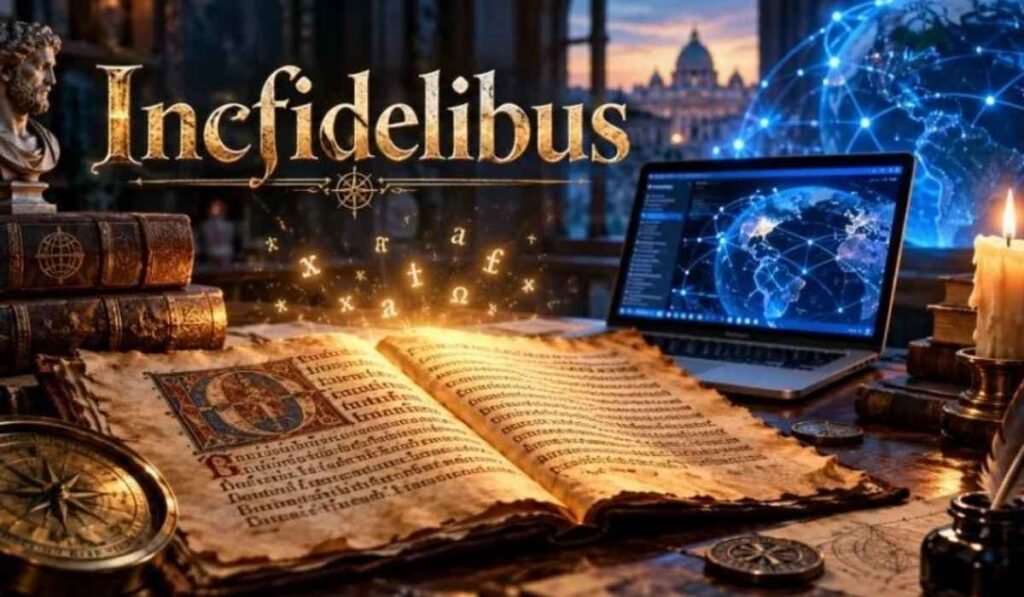
Incfidelibus is a term deeply rooted in historical, ecclesiastical, and theological discourse, capturing the complexities of faith, heresy, and regional identity throughout medieval European history. As scholars continue to explore ancient manuscripts and papal decrees, understanding this concept offers invaluable insight into how medieval institutions interacted with dissenters, non-believers, and distant territories. The implications of this designation extended far beyond mere religious categorization, shaping political alliances, cultural exchanges, and the very administrative boundaries of the evolving church. By examining these multifaceted dimensions, modern historians can better appreciate the intricate social dynamics that defined an era of profound transformation and ideological struggle.
Quick Bio
| Attribute | Detail |
|---|---|
| Term | Incfidelibus |
| Primary Domain | Ecclesiastical History & Theology |
| Historical Context | Medieval Europe & Papal Administration |
| Core Focus | Dissent, Non-belief, and Regional Jurisdictions |
| Significance | Reflects church policies, heresy tracking, and cultural boundaries |
Understanding the Historical Origins of Incfidelibus
The emergence of incfidelibus within medieval documents highlights a period of intense theological scrutiny and administrative centralization by ecclesiastical authorities. Scribes and chroniclers frequently employed specific Latin terminology to delineate orthodox populations from those perceived as straying from established doctrine. This careful categorization served both spiritual and political functions, establishing clear boundaries between the faithful and those deemed outside the communion of the church. Analyzing these foundational records reveals a deliberate effort by medieval leaders to standardize religious practice across disparate territories. Consequently, studying these origins provides a clearer picture of how institutional power was projected during centuries marked by rapid geopolitical shifts and deep ideological divisions.
The Role of Papal Decrees in Shaping Religious Dissent

Papal authority played a pivotal role in defining how communities associated with incfidelibus were managed, monitored, and sometimes persecuted by regional powers. Popes issued numerous bulls and directives that classified dissenting groups, outlining specific protocols for local clergy to identify and address non-conformity. These official documents were not merely theoretical exercises; they carried severe real-world consequences for populations living under suspicion of heresy or apostasy. Church administrators relied on these decrees to justify interventions in local governance and theological education. Over time, this centralized oversight fostered a rigid framework that discouraged independent theological inquiry while simultaneously hardening communal identities against external pressures and imperial ambitions.
Linguistic Evolution and Manuscript Traditions
Tracing the linguistic journey of incfidelibus through surviving manuscript traditions reveals fascinating shifts in clerical terminology and regional dialect influences. Copyists working in monastic scriptoriums frequently adapted older terms to fit contemporary theological debates, ensuring the vocabulary remained relevant to current controversies. These textual variations offer modern linguists a unique window into the transmission of ideas across different European regions and monastic networks. Furthermore, the careful preservation of these documents underscores the immense value placed on written authority during an era of widespread oral communication. By comparing various manuscript witness accounts, researchers can reconstruct how specific theological concepts transformed over centuries of continuous copying.
Theological Implications of Non-Belief and Heresy

In medieval theology, the conceptualization of incfidelibus bridged the gap between outright rejection of Christian dogma and subtle deviations in sacramental practice. Scholars debated whether individuals living in distant lands without exposure to the gospel shared the same culpability as active heretics within Christian realms. These nuanced distinctions heavily influenced missionary strategies, penitential systems, and the theological justification for crusades and territorial expansion. The ongoing debate forced theologians to refine their understanding of free will, divine grace, and the universal reach of salvation. Ultimately, these discussions laid the groundwork for later philosophical inquiries into the nature of belief, moral responsibility, and religious tolerance in the modern world.
Socio-Political Dynamics in Borderland Regions
Borderlands where Christian kingdoms intersected with non-Christian territories provided a fertile ground for the application and reinterpretation of incfidelibus policies. Local lords and military commanders often navigated these sensitive frontiers through pragmatic alliances rather than rigid ideological enforcement. Such practical necessities frequently brought them into conflict with zealous ecclesiastical authorities who demanded strict adherence to canonical separations. These tensions illustrated the persistent gap between high-level theological doctrine and the messy realities of daily frontier existence. Communities thriving in these transitional zones developed unique cultural syncretism, blending diverse traditions while remaining perpetually vulnerable to shifting political winds and external military threats.
The Impact of Crusading Ideology on Regional Identity
The crusading movement fundamentally altered how European societies perceived populations categorized under the broad umbrella of incfidelibus and external adversaries. Preachers utilized impassioned rhetoric to mobilize vast armies, framing military campaigns as righteous duties to reclaim sacred spaces and defend the faith. This powerful ideological wave deeply influenced chivalric literature, local folklore, and collective memory across multiple generations of knights and peasants alike. However, the lived experience of crusading often revealed complex commercial and diplomatic interactions that contradicted simplistic narratives of holy war. Analyzing these contrasting realities helps historians understand the multifaceted nature of medieval identity construction during times of profound international conflict.
Monastic Networks and the Preservation of Knowledge
Monasteries acted as the primary hubs for recording, debating, and transmitting information concerning incfidelibus and theological controversies throughout the medieval period. Monks spent countless hours illuminating manuscripts, compiling chronicles, and corresponding with sister institutions across distant geographical boundaries. These extensive networks ensured that intellectual developments in urban centers quickly reached remote rural communities and vice versa. The preservation of these texts allowed subsequent generations of scholars to trace the evolution of church policies and intellectual resistance movements. Without the diligent labor of these scribes, much of our current understanding of medieval religious administration and dissent would be entirely lost.
Canon Law and the Codification of Church Authority
The systematic development of canon law provided the legal apparatus necessary to address challenges posed by incfidelibus within Christian society. Prominent jurists compiled authoritative texts that harmonized contradictory papal rulings, establishing clear procedures for inquisitorial investigations and canonical trials. This legal framework notively strengthened the institutional power of the papacy while simultaneously limiting the arbitrary punishment of suspected dissenters. Codification ensured greater consistency across various dioceses, transforming a loose collection of regional customs into a unified judicial system. Consequently, canon law became an indispensable instrument for maintaining doctrinal orthodoxy and suppressing unauthorized religious movements across medieval Europe.
Art, Architecture, and Visual Culture as Propaganda
Visual culture in medieval churches frequently reinforced prevailing theological stances regarding incfidelibus through striking frescoes, stained glass windows, and sculptural programs. Artisans crafted intricate imagery that contrasted the orderly salvation of the faithful with the chaotic fate of those outside the church. These visual representations served as effective educational tools for an overwhelmingly illiterate populace, instilling profound moral lessons during regular worship services. Commissioned by wealthy patrons and ecclesiastical leaders, such artwork also projected tangible power and ideological dominance. Studying these surviving architectural masterpieces offers contemporary researchers invaluable clues about how medieval communities visually articulated their deepest spiritual convictions and societal boundaries.
Economic Ramifications of Religious Exclusion
Policies surrounding incfidelibus often carried significant economic consequences, influencing trade routes, property rights, and taxation within medieval realms. Dissenting communities or merchants from non-Christian regions frequently faced restrictive commercial regulations, special levies, or outright expulsion. Conversely, pragmatic rulers occasionally granted protections to minority groups when economic benefits outweighed ideological concerns, creating ongoing friction with local bishops. These financial maneuvers demonstrate that geopolitical survival and commercial prosperity regularly intersected with religious legislation. Examining these economic records sheds light on the material motivations driving high-level political decisions throughout the medieval and early modern transformation periods.
Literary Depictions in Epic Poetry and Chronicles
Medieval epic poetry and national chronicles frequently mirrored societal anxieties concerning incfidelibus by featuring dramatic encounters with foreign adversaries and internal heretics. Authors of iconic works utilized these literary tropes to explore themes of loyalty, betrayal, heroism, and divine favor during times of crisis. These narratives were widely recited in royal courts and public marketplaces, shaping public perception and reinforcing cultural stereotypes. Rather than offering objective historical accounts, these texts functioned as powerful cultural artifacts that reflected the psychological landscape of their creators. Deciphering the underlying messages within these epic poems enriches our comprehension of medieval worldview and artistic expression.
The Evolution of Inquisitorial Tribunals
The establishment of formal inquisitorial tribunals marked a dramatic shift in how ecclesiastical authorities investigated and prosecuted allegations related to incfidelibus. Staffed by trained theologians, primarily from the Dominican and Franciscan orders, these tribunals introduced systematic evidence-gathering and meticulous record-keeping. This institutionalized approach aimed to root out hidden dissent while offering accused individuals opportunities for repentance and reconciliation with the church. Although modern perceptions often focus exclusively on the punitive aspects, the historical reality involved complex legal procedures designed to preserve institutional stability. Investigating tribunal archives provides fascinating details about everyday medieval life, personal beliefs, and social tensions.
Intellectual Debates in Medieval Universities
The rise of medieval universities fostered vibrant intellectual environments where scholars fiercely debated theological questions surrounding incfidelibus and divine justice. Masters of theology at Paris, Oxford, and Bologna engaged in rigorous scholastic disputations, applying Aristotelian logic to matters of faith and revelation. These academic debates occasionally pushed the boundaries of orthodoxy, prompting careful oversight and occasional censorship from university chancellors and papal legates. Despite such institutional constraints, these centers of learning nurtured brilliant minds who laid the intellectual foundations for future philosophical and scientific revolutions. Exploring university curricula and lecture notes highlights the sophisticated nature of medieval intellectual life.
Missionary Endeavors and Cross-Cultural Encounters
Efforts to convert populations perceived as incfidelibus led to ambitious missionary expeditions into Asia, Africa, and the remote frontiers of Europe. Friars and diplomats braved perilous journeys to establish contact with foreign rulers, engaging in complex theological and diplomatic negotiations. These cross-cultural encounters frequently resulted in detailed travelogues that expanded European geographical knowledge and challenged preconceived ethnocentric biases. While primary motivations remained religious, these interactions fostered remarkable exchanges of technology, linguistics, and botanical knowledge. Reviewing these historical journals reveals the courage, curiosity, and occasional arrogance that characterized medieval exploration and missionary zeal.
Heresy Trials and the Defense of Orthodoxy
High-profile heresy trials offered dramatic public spectacles designed to reinforce the supremacy of church doctrine regarding incfidelibus and spiritual compliance. Accused individuals were brought before assembled crowds to confess their errors, recant deviant teachings, or face severe canonical penalties. These proceedings were carefully choreographed events intended to deter potential sympathizers and demonstrate the unyielding resolve of religious authorities. The meticulous documentation generated during these trials remains one of the richest sources for reconstructing the inner thoughts of medieval dissidents. Analyzing these records uncovers the diverse motivations that drove individuals to risk everything for alternative spiritual convictions.
The Impact of Printing Technology on Religious Texts
The advent of the printing press revolutionized the dissemination of texts concerning incfidelibus, theological treatises, and polemical literature across Europe. Printers quickly recognized the commercial viability of religious controversies, producing affordable pamphlets that reached far wider audiences than handwritten manuscripts ever could. This technological leap accelerated debates about church authority, vernacular scripture, and religious reform, destabilizing traditional monopolies on knowledge. Authorities struggled to control the flood of printed material, leading to the creation of official indexes of prohibited books and stricter censorship laws. Consequently, printing played a crucial catalyst role in transforming medieval religious discord into early modern upheaval.
Modern Historiography and the Reinterpretation of Sources
Contemporary historians approach the subject of incfidelibus with sophisticated methodologies, moving beyond simplistic narratives to embrace nuanced social and cultural analysis. Modern scholars carefully interrogate medieval biases within archival sources, striving to recover the voices of marginalized individuals and dissenting communities. This critical reevaluation has transformed our understanding of medieval tolerance, religious pluralism, and institutional power dynamics. By utilizing interdisciplinary approaches combining archaeology, sociology, and textual criticism, researchers continue to unearth fresh perspectives on past societies. This dynamic field of study ensures that historical interpretations remain vibrant, self-critical, and deeply relevant to ongoing cultural dialogues.
Preservation Efforts in Archives and Libraries
Global archives and national libraries house invaluable collections of medieval manuscripts that document the historical treatment of incfidelibus and related theological phenomena. Conservators and archivists work tirelessly to protect fragile parchment documents from environmental degradation and physical damage using cutting-edge preservation techniques. Digital humanities projects have further enhanced accessibility, allowing researchers worldwide to examine high-resolution scans of centuries-old records instantly. These ongoing preservation initiatives guarantee that future generations of scholars will have access to uncorrupted primary sources for their academic investigations. Supporting such repository institutions is essential for maintaining the integrity and continuity of historical research.
Legacy and Contemporary Relevance of Medieval Theological Categories
The historical legacy of concepts like incfidelibus continues to resonate in modern discussions surrounding religious freedom, pluralism, and secular governance. Examining how past societies managed ideological differences provides a valuable historical mirror for contemporary debates on tolerance and social cohesion. Although modern legal frameworks have evolved significantly from medieval canon law, the fundamental challenges of balancing communal identity with individual freedom remain remarkably persistent. By critically studying these historical precedents, we gain deeper wisdom regarding the complexities of human belief and institutional power. Ultimately, this historical awareness enriches our collective understanding of civilization’s long and winding journey toward mutual respect and understanding.
FAQs
- What does the term incfidelibus signify in historical contexts?
- It refers to non-believers, outsiders, or those perceived as dissenting from orthodox medieval church doctrine.
- How did papal decrees influence the treatment of dissenting groups?
- Papal bulls established legal and administrative frameworks for local clergy to monitor, regulate, and prosecute non-conformity.
- What role did medieval monasteries play in preserving these records?
- Monastic scriptoriums carefully copied, illuminated, and transmitted chronicles and theological texts across European networks.
- Why are modern historians reevaluating these archival sources?
- Researchers apply critical methodologies to overcome medieval biases and recover the authentic experiences of marginalized populations.
- Where can one find comprehensive digital resources on medieval canon law?
- Numerous university libraries and specialized historical repositories offer online databases containing digitized manuscripts and transcribed records, as documented further.