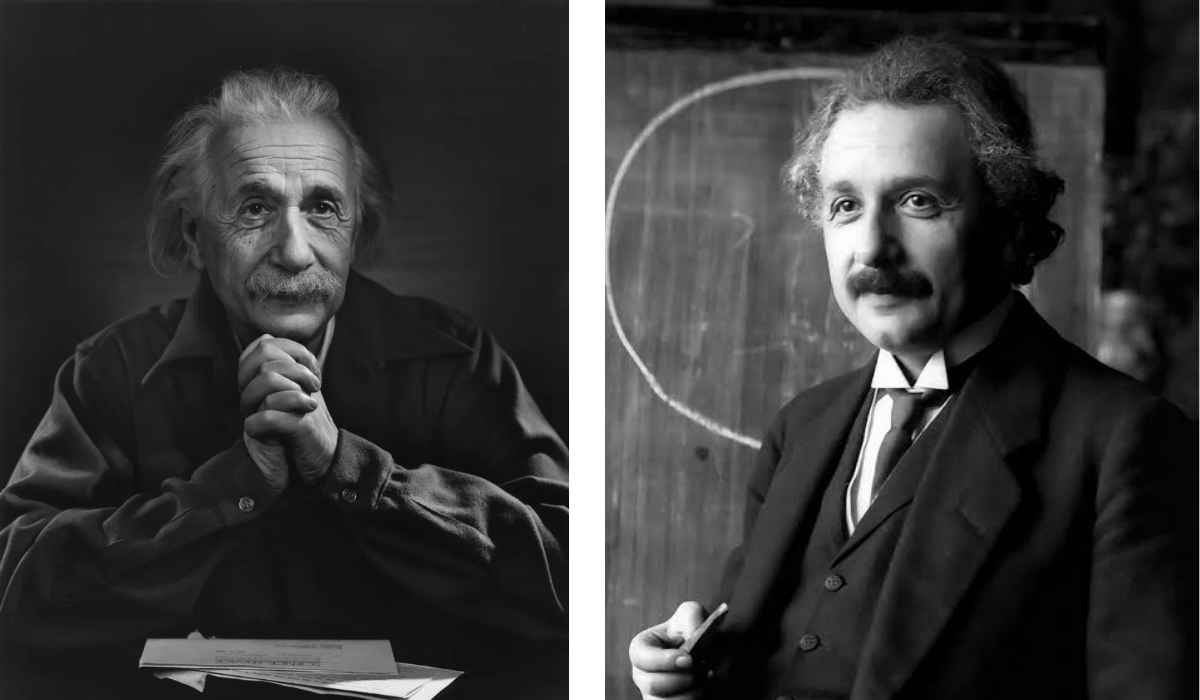
Born in Germany in 1879, Albert Einstein grew up to transform humanity’s understanding of space, time, and gravity through sheer intellectual brilliance. Despite early struggles with traditional education systems, his deep curiosity was sparked by a simple pocket compass and geometry books. He eventually secured a job at the Swiss Patent Office, where his quiet hours allowed him to conceptualize groundbreaking physics. His monumental theories redefined modern science, turning him into an iconic cultural figure whose legacy persists globally. Beyond equations, he remained a passionate humanist, pacifist, and advocate for civil rights throughout his remarkable lifetime.
Quick Bio
| Feature | Detail |
| Born | March 14, 1879, Ulm, Germany |
| Died | April 18, 1955, Princeton, New Jersey |
| Nationality | German, Swiss, American |
| Field | Theoretical Physics |
| Known For | Theory of Relativity, Photoelectric Effect |
| Nobel Prize | Physics, 1921 |
Early Life and Childhood Inspirations in Germany
Growing up in Munich, young Albert Einstein experienced a rigid educational environment that heavily stifled his creative imagination and independent thinking. Fascinated by invisible forces from an early age, he spent countless hours questioning the fundamental mechanics of the natural universe around him. Mathematics became his sanctuary, allowing him to escape the monotony of rote learning enforced by his strict nineteenth-century European teachers. These formative years laid the psychological groundwork for a lifetime of relentless questioning and profound scientific skepticism toward accepted doctrines. Ultimately, his early dissatisfaction with authoritarian schooling catalyzed a unique self-taught approach that shaped the mature Albert Einstein.
Education at the Swiss Federal Polytechnic in Zurich
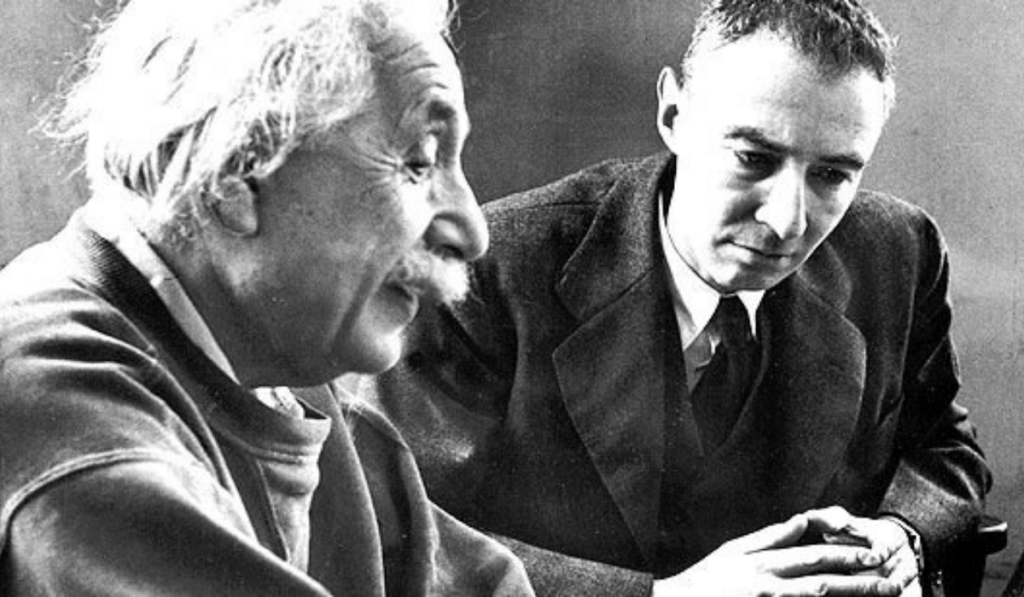
Moving to Switzerland marked a major turning point, providing Albert Einstein with the academic freedom he desperately craved for intellectual growth. He successfully enrolled at the prestigious Zurich polytechnic institution, where he immersed himself deeply in advanced mathematics and theoretical physics coursework. Although he frequently skipped lectures to study independently, his brilliant peer network helped him master complex concepts with relative ease. Graduating with a teaching diploma proved challenging due to strained faculty relationships, yet his student days cemented lifelong professional collaborations. This vibrant Swiss environment nurtured the nascent genius of Albert Einstein, preparing him for the intellectual breakthroughs waiting just ahead.
The Swiss Patent Office Years and Patent Examiner Work
Finding stable academic employment proved exceedingly difficult initially, forcing Albert Einstein to accept a humble position as a patent office technical assistant. Evaluating patent applications for various mechanical devices required immense analytical clarity, a skill he eagerly applied to his own theoretical pursuits. Working at the Bern office granted him financial independence alongside ample free time to ponder the deep mysteries of electrodynamics. Far from being a professional setback, these quiet office years offered Albert Einstein the perfect psychological laboratory for revolutionary thoughts. Surrounded by blueprints and practical inventions, the visionary mind of Albert Einstein quietly birthed modern theoretical physics.
The Miraculous Year of Scientific Output in 1905
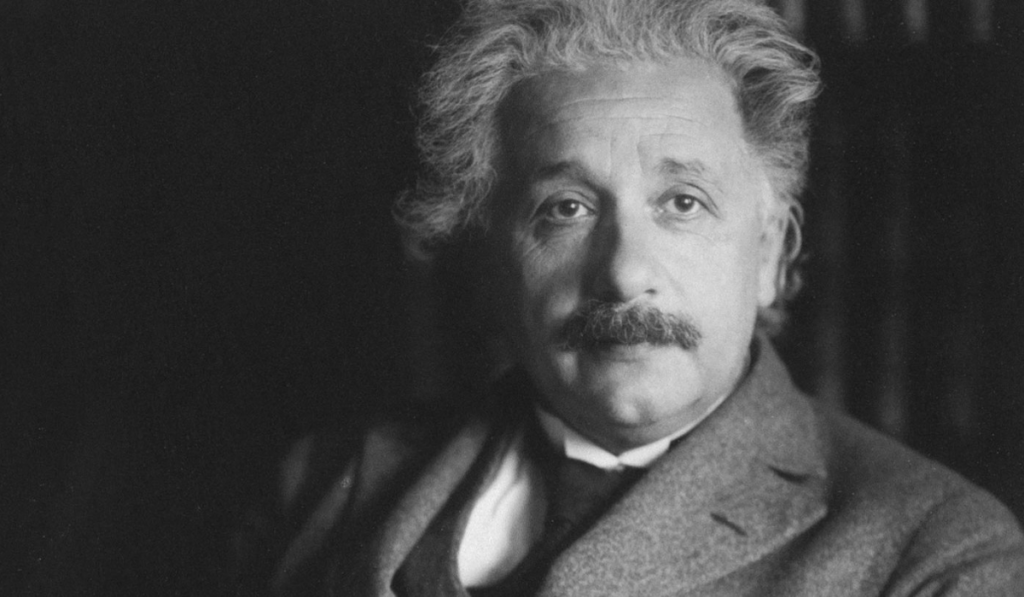
The year 1905 remains legendary in scientific history because Albert Einstein published four groundbreaking papers within a span of just a few months. These revolutionary publications addressed the photoelectric effect, Brownian motion, and the foundational framework of his special theory of relativity. Each paper challenged centuries-old Newtonian assumptions, offering radically fresh perspectives on how energy, matter, space, and time truly interact. Physicists worldwide slowly began to realize that young Albert Einstein had fundamentally altered the trajectory of modern scientific investigation. This unmatched burst of creative productivity firmly established Albert Einstein as a titan among twentieth-century thinkers.
Formulating the Special Theory of Relativity Concepts
Challenging absolute notions of time, the special theory of relativity proposed by Albert Einstein declared that the speed of light remains constant. He demonstrated that time and space are not distinct entities, but rather a flexible, interconnected four-dimensional fabric known as spacetime. Motion was shown to affect measurements of clocks and meter sticks, proving that simultaneity is entirely relative to the observer’s frame. Physicists initially met these bizarre-sounding propositions with intense skepticism until empirical evidence consistently validated the mathematical predictions of Albert Einstein. Today, these counterintuitive concepts form the absolute bedrock of modern astrophysics and high-speed particle navigation systems utilized globally.
Discovering the Mass-Energy Equivalence Equation
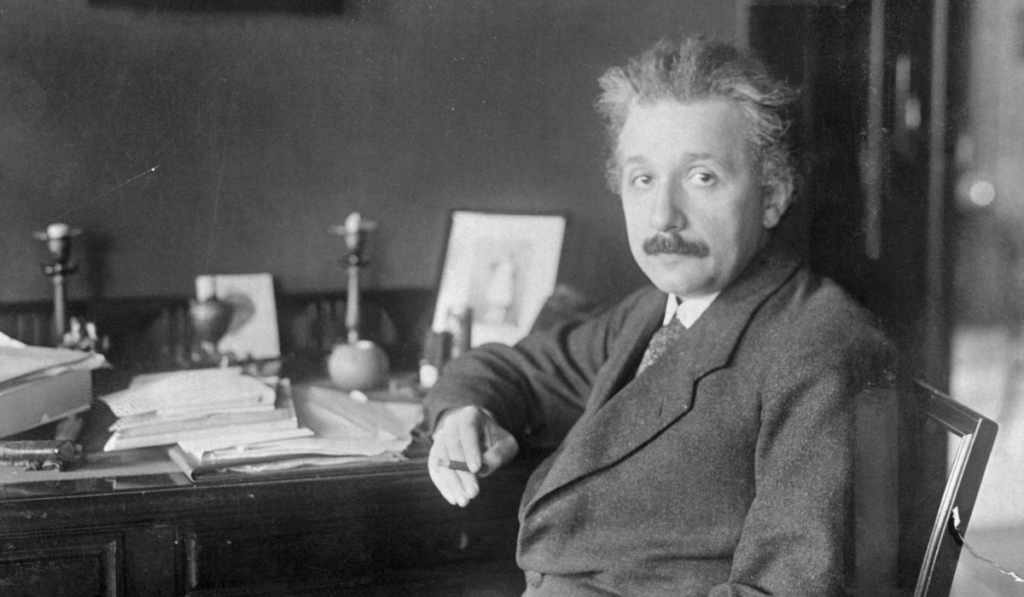
Perhaps the most famous formula in human history, $E=mc^2$, emerged directly from the brilliant mind of Albert Einstein in 1905. This concise equation revealed that mass and energy are interchangeable manifestations of the exact same underlying physical reality in nature. It implied that even a tiny amount of physical matter contains an unimaginably vast reserve of latent internal thermal and atomic energy. While initially theoretical, this profound realization eventually paved the way for nuclear power generation and unfortunate wartime atomic developments. The enduring cultural ubiquity of this formula ensures that the name Albert Einstein remains universally synonymous with pure genius.
Explaining the Photoelectric Effect for the Nobel Prize
Although relativity made him famous, Albert Einstein earned his 1921 Nobel Prize in Physics for explaining the puzzling photoelectric effect. He boldly proposed that light travels in discrete packets of energy later named photons, validating early quantum mechanical principles. This breakthrough proved that light exhibits both wave-like and particle-like behaviors depending on experimental setups, shocking traditional classical physicists. His theoretical work directly enabled modern solar panel technologies and electronic light sensors used across contemporary consumer electronics. Securing this prestigious international accolade cemented the status of Albert Einstein as a premier scientific pioneer of his era.
Transitioning to Academic Professorships Across Europe
Following his explosive 1905 publications, academic institutions across Europe competed fiercely to offer prestigious professorships to Albert Einstein. He held academic posts in Zurich, Prague, and eventually Berlin, where he directed the esteemed Kaiser Wilhelm Physical Institute. These positions allowed him to collaborate closely with other mathematical masterminds and refine his evolving physical models continuously. Teaching graduate students also provided a platform to mentor the next generation of inquisitive scientific minds in Central Europe. Despite administrative duties, Albert Einstein remained relentlessly focused on expanding his conceptual frameworks regarding gravity and universal geometry.
Developing the General Theory of Relativity Framework
Expanding beyond special relativity, Albert Einstein spent a grueling decade formulating his masterpiece, the general theory of relativity. Published in 1915, this theory redefined gravity not as an invisible pull, but as the geometric warping of spacetime by mass. Planets orbit stars simply because they follow natural curves within a distorted cosmic landscape shaped by heavy celestial objects. Testing these ideas required immense mathematical abstraction, pushing Albert Einstein to his absolute psychological and physical limits during World War I. This geometric description of gravity remains our premier tool for understanding black holes, gravitational waves, and the large-scale universe.
International Fame Following the 1919 Solar Eclipse
Global celebrity status struck Albert Einstein overnight when British astronomers empirically verified his gravitational light-deflection predictions during a solar eclipse. Newspaper headlines worldwide declared a revolution in science, turning equations into front-page news and making him an international superstar. Crowds mobbed his public lectures wherever he traveled, fascinated by both his complex cosmic theories and his charismatic, eccentric personality. Navigating this sudden whirlwind of fame proved exhausting for a man who primarily valued quiet contemplation and violin practice. Yet, Albert Einstein used this unique platform to advocate passionately for international peace, intercultural dialogue, and humanitarian causes.
Escaping Nazi Germany and Relocating to America
Rising antisemitism and the terrifying ascent of the Nazi regime forced Albert Einstein to permanently flee his homeland during the early 1930s. He accepted a prestigious research position at the Institute for Advanced Study in Princeton, New Jersey, finding safe harbor. This American relocation shielded him from targeted persecution, allowing him to live and work peacefully away from European political turmoil. He eventually became a United States citizen in 1940 while passionately retaining a deep affection for his Swiss heritage. Princeton provided Albert Einstein with a tranquil academic sanctuary for his final decades of advanced theoretical research.
The Infamous Letter to President Franklin D. Roosevelt
Prompted by fellow refugee physicists fearing Nazi atomic weapons development, Albert Einstein signed a historic warning letter to President Roosevelt. This correspondence directly catalyzed American exploratory funding into nuclear fission, ultimately spawning the secretive wartime Manhattan Project. Although Albert Einstein did not work on the bomb itself, he later deeply regretted the devastating destructive consequences of his warning. Spent with remorse after Hiroshima and Nagasaki, he dedicated his remaining years to nuclear disarmament and global anti-war activism. This complex historical episode highlights how deeply theoretical physics could intersect with turbulent twentieth-century geopolitics for Albert Einstein.
Pursuing the Elusive Unified Field Theory Quest
During his later years at Princeton, Albert Einstein grew increasingly isolated from mainstream physics by chasing a grand unified field theory. He stubbornly sought to merge electromagnetism and gravity into a single elegant mathematical framework that could explain all natural forces. Meanwhile, younger researchers rapidly shifted their attention toward quantum mechanics, a probabilistic field he famously distrusted with his God-does-not-play-dice stance. Despite failing to achieve this ultimate unification before his death, the relentless dedication of Albert Einstein inspired modern string theorists. His unwavering quest for cosmic simplicity remains a powerful testament to the romantic idealism driving Albert Einstein.
Personality Quirks, Violin Playing, and Cultural Persona
Beyond his scientific genius, Albert Einstein cultivated a charmingly eccentric persona characterized by uncombed hair, absentmindedness, and casual clothing preferences. He found immense emotional solace in playing his beloved violin, often describing classical music as a vital emotional outlet for thinking. A fierce pacifist and non-conformist, he despised nationalism and maintained a dry, self-deprecating sense of humor regarding his massive global fame. Photographs of him sticking out his tongue became iconic representations of a brilliant mind unbound by stuffy institutional conventions. This unique blend of profound intellect and whimsical humility made Albert Einstein a beloved global folk hero.
Humanitarian Work, Civil Rights, and Political Views
Deeply committed to social justice, Albert Einstein actively supported civil rights movements in America and fiercely denounced institutionalized racial segregation. He championed zionist causes while simultaneously advocating for peaceful coexistence and mutual respect between Jewish communities and Arab populations. His outspoken political stances frequently attracted suspicion from government surveillance agencies during the McCarthy era, yet he never backed down. Believing strongly in global cooperation, he even declined an offer to become the second President of the State of Israel. Through every public endeavor, Albert Einstein demonstrated that true intelligence carries a profound moral obligation to defend humanity.
Final Days, Death, and Posthumous Brain Preservation
Passing away peacefully from an aortic aneurysm in April 1955, Albert Einstein left behind instructions for a simple, unpretentious cremation without a formal monument. Contrary to his explicit wishes, however, his brain was removed during the autopsy by pathologist Thomas Stoltz Harvey for neurological research purposes. Subsequent scientific studies identified minor structural peculiarities in his parietal lobes, though researchers debate their exact contribution to his genius. His ashes were scattered secretly at an undisclosed location along the Delaware River, fulfilling his desire for absolute privacy. Thus, the physical body of Albert Einstein returned quietly to nature while his scientific immortality endured.
Lasting Scientific Legacy in Modern Physics and Astronomy
Decades after his passing, the scientific forecasts made by Albert Einstein continue to be validated by cutting-edge astronomical instruments and particle accelerators. The direct detection of gravitational waves and the imaging of distant black hole event horizons stand as supreme triumphs of his equations. GPS satellite navigation systems rely daily on both his special and general relativity adjustments to maintain precise location accuracy worldwide. Modern cosmology remains heavily indebted to the theoretical frameworks he constructed during the early decades of the twentieth century. The profound intellectual legacy of Albert Einstein illuminates our ongoing exploration of the deep cosmos.
Cultural Impact and Global Symbol of Pure Intelligence
Today, the face and name of Albert Einstein serve as the universal archetype for a mad scientist or supreme intellectual powerhouse. Pop culture references, advertisements, and educational programs continually invoke his distinctive likeness to communicate innovation, cleverness, and academic excellence. He taught humanity that relentless curiosity and imagination are far more valuable for discovery than rote memorization of established facts. Statues, museums, and research institutes bearing his name dot major metropolitan landscapes across every continent on Earth. The enduring cultural imprint of Albert Einstein transcends the history of science, capturing the absolute best of human potential.
Reflections on a Extraordinary Life Dedicated to Truth
Looking back, the extraordinary journey of Albert Einstein illustrates how a single imaginative thinker can permanently reshape how civilization views reality. From humble patent office clerk to legendary global icon, his commitment to truth never wavered despite personal and political hardships. He reminded generations of students to never stop questioning the world or accepting dogma simply because authority figures proclaim it. His brilliant mind bridged the gap between classical Newtonian mechanics and the strange subatomic quantum realm with unmatched elegance. Ultimately, the inspiring life story of Albert Einstein remains an eternal beacon for free thought, creativity, and scientific inquiry.
FAQS
- What was the primary focus of the 1921 Nobel Prize awarded to Albert Einstein?
- The Nobel Prize was awarded to him for his theoretical explanation of the photoelectric effect.
- When and where was Albert Einstein born?
- He was born on March 14, 1879, in Ulm, Württemberg, Germany.
- Which famous equation established the equivalence between mass and energy?
- The equation $E=mc^2$ established this fundamental mass-energy equivalence.
- Where did Albert Einstein work when he published his breakthrough 1905 papers?
- He was employed as a technical assistant at the Swiss Patent Office in Bern.
- In what year did Albert Einstein pass away?
- He passed away on April 18, 1955, in Princeton, New Jersey.