The magnificent journey of Michelangelo began during the Italian Renaissance, shaping the very core of Western art history forever. Born in Caprese, Tuscany, this legendary master demonstrated extraordinary creative talent from a remarkably tender age, eventually transforming European culture through breathtaking artistic achievements. Patronized by powerful figures like the Medici family and various Popes, his visionary projects redefined human potential. Every single masterpiece he produced reflected profound emotional depth, anatomical precision, and an unmatched technical capability that continues to mesmerize global audiences today. His lifelong dedication to perfection secured his enduring status as an immortal titan of creative expression.
Quick Bio
| Attribute | Detail |
| Full Name | Michelangelo di Lodovico Buonarroti Simoni |
| Birth Date | March 6, 1475 |
| Birthplace | Caprese, Republic of Florence |
| Death Date | February 18, 1564 |
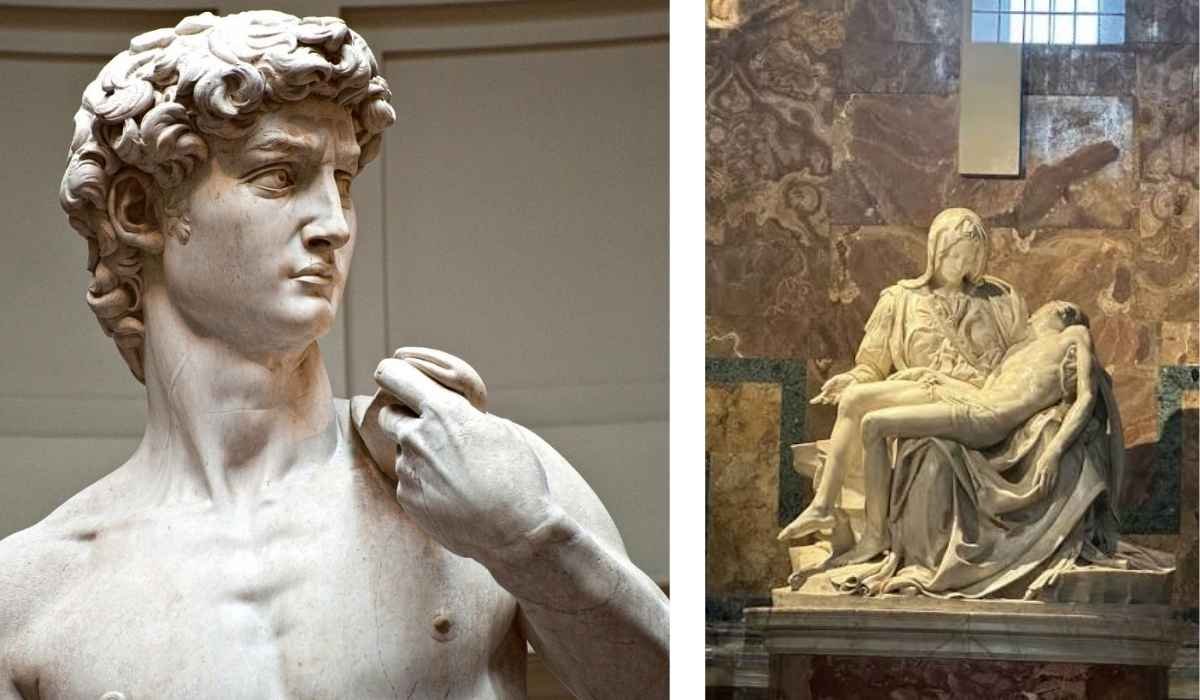
| Notable Works | David, Sistine Chapel Ceiling, The Last Judgment, Pietà |
| Primary Fields | Sculpture, Painting, Architecture, Poetry |
Early Life and Childhood Foundations in Tuscany
Young Michelangelo spent his formative years absorbing the serene landscapes of Settignano while living with a local stonecutter’s family. This unique environment instilled an early passion for handling marble blocks and understanding stone texture. Although his father intended traditional schooling for him, the aspiring creator preferred sketching church frescoes. These initial experiences laid the essential groundwork for a magnificent career built upon stone masonry and artistic exploration. Without these rural roots, the trajectory of classical sculpture might have evolved down an entirely different path.
Apprenticeship Under Domenico Ghirlandaio in Florence
Entering the bustling workshop of Domenico Ghirlandaio exposed the teenage apprentice to professional fresco techniques and diverse studio practices. Here, Michelangelo mastered the fundamentals of composition, color blending, and panel painting under strict guidance. His rapid advancement soon surpassed ordinary expectations, astonishing established painters within the Florentine community. This crucial phase bridged raw childhood talent with rigorous technical discipline, preparing him for monumental artistic commissions. Collaborative studio environments further expanded his creative horizons across multiple media types.
Patronage of the Medici Family and Humanist Influence
Joining the vibrant household of Lorenzo de Medici introduced the budding sculptor to classical philosophy and intellectual humanism. Surrounded by leading thinkers, poets, and philosophers, Michelangelo refined his intellectual approach toward classical antiquity. Sculptural reliefs created during this period demonstrated an advanced grasp of movement, form, and psychological narrative. Patronage from the ruling elite provided financial security and creative freedom, allowing his distinctive style to flourish rapidly. Such formative associations cemented his lifelong appreciation for ancient Greek and Roman aesthetic ideals.
Creation of the Pietà in Rome
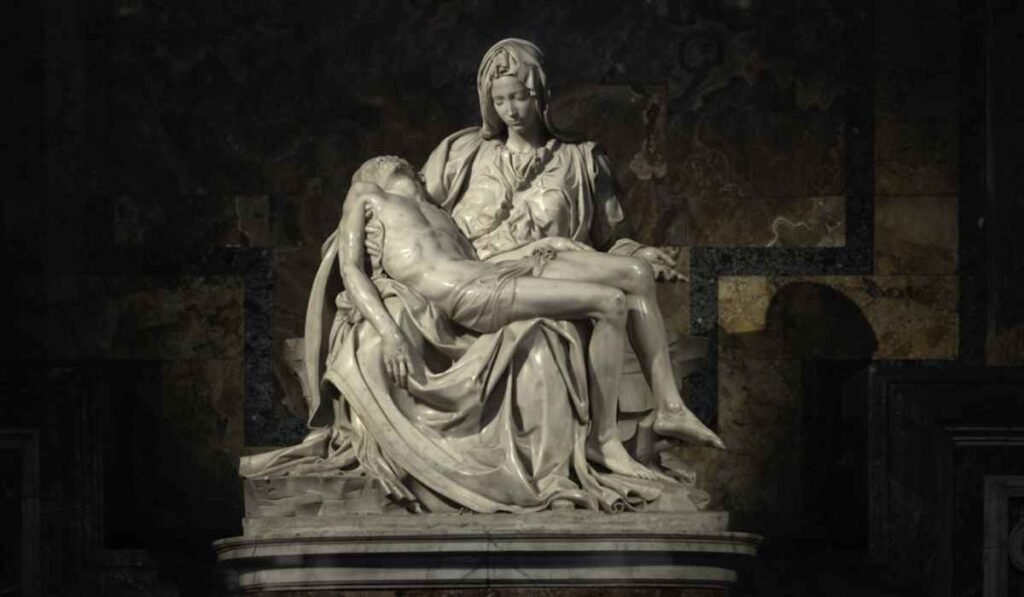
Relocating to the eternal city of Rome resulted in the creation of the breathtaking marble sculpture known as the Pietà. Carved from a single slab of Carrara marble, this tender depiction of Mary holding Jesus stunned contemporary observers. Every fold of fabric and anatomical contour revealed an unprecedented level of mastery over rigid stone. Displayed inside Saint Peter’s Basilica, this masterpiece immediately established Michelangelo as the premier sculptor of his generation. Public acclaim for the monument solidified his reputation throughout the Italian peninsula.
Sculpting the Monumental David in Florence
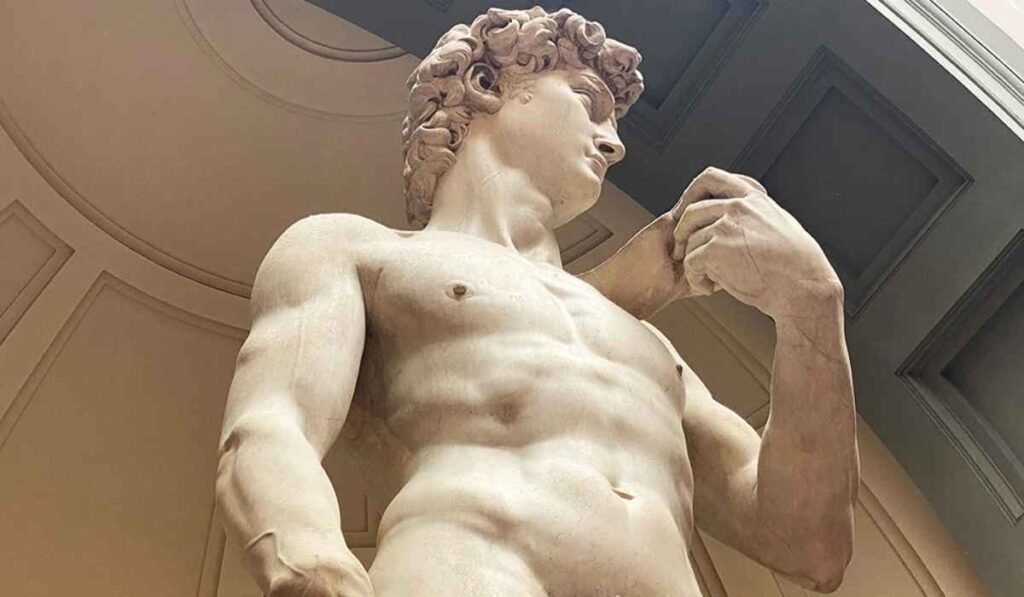
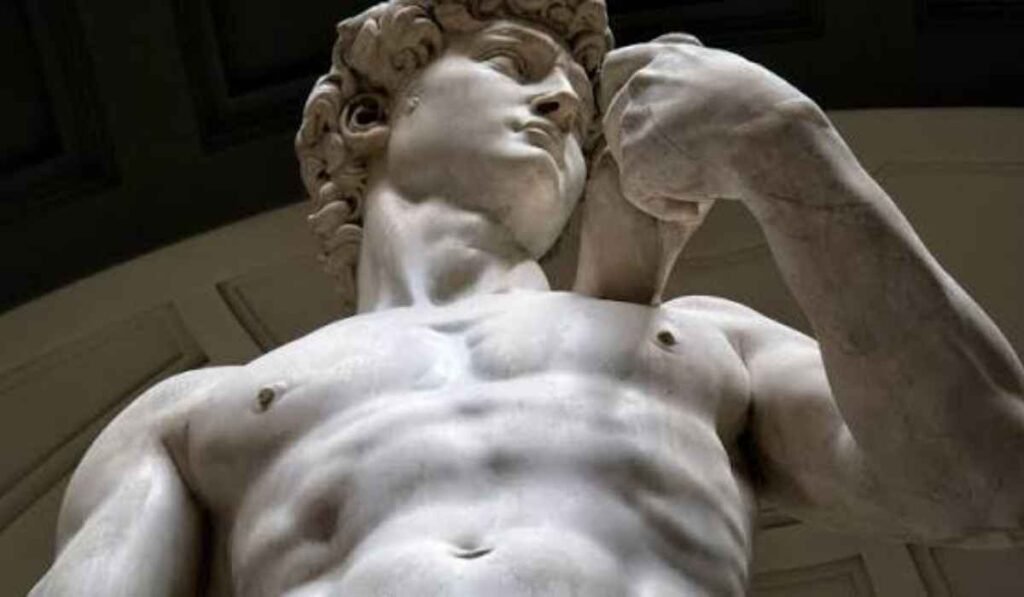
Returning to Florence, Michelangelo accepted a massive block of flawed marble that other artists had previously abandoned. Out of this difficult material emerged the iconic statue of David, symbolizing civic liberty and strength. Standing over seventeen feet tall, the magnificent figure showcases intense focus and anatomical perfection. Citizens of Florence celebrated the unveiling as a triumph of human ingenuity and artistic dominance. Today, this legendary sculpture remains one of the most recognized cultural icons in global art history.
Painting the Sistine Chapel Ceiling
Commissioned by Pope Julius II, Michelangelo reluctantly undertook the massive task of frescoing the vast Sistine Chapel ceiling. Over four grueling years, he invented innovative scaffolding systems while painting hundreds of biblical figures single-handedly. Scenes like the Creation of Adam revolutionized narrative composition through dynamic postures and vibrant chromatic choices. Despite severe physical strain and personal frustration, the finished ceiling transformed Western visual culture entirely. This monumental achievement proved his unmatched versatility across both painting and sculpture.
Architectural Genius at the Basilica of San Lorenzo
Later in life, Michelangelo turned his brilliant analytical mind toward architectural design and large-scale structural engineering. His work on the Basilica of San Lorenzo complex introduced inventive spatial arrangements and Mannerist elements. Designing the New Sacristy and the adjacent Laurentian Library showcased his ability to manipulate classical orders. These structures displayed a profound understanding of light, shadow, and interior rhythm that influenced generations of builders. Architecture became another arena where his creative vision pushed boundaries forward.
Designing the Magnificent Dome of St Peters Basilica
Taking over as the chief architect of St. Peter’s Basilica late in his career marked a crowning structural triumph. Although he did not live to see its completion, his finalized geometric designs formed the basis for the iconic dome. By simplifying previous complex blueprints, he created a unified, harmonious structure that dominates the skyline of Rome. Engineering calculations for the massive cupola demonstrated advanced mathematical and spatial intuition. This monumental project stands as a testament to his enduring capability in structural mastery.
Exploration of Poetic Expression and Sonnets
Beyond visual arts, Michelangelo dedicated considerable energy to composing intricate poetry, producing over three hundred surviving sonnets. His verses frequently explored themes of spiritual yearning, unrequited love, and the burdens of aging artistic genius. Written primarily for close friends like Vittoria Colonna, these literary works reflected deep emotional introspection. Poetry served as an intimate outlet for thoughts that could not be easily expressed through stone or paint. Scholars continue to study these lyrical compositions for insights into his complex personality.
The Last Judgment and Mannerist Evolution
Decades after finishing the ceiling, the aging master returned to the Sistine Chapel to paint The Last Judgment on the altar wall. This massive fresco discarded high Renaissance harmony in favor of agitated forms, deep anguish, and twisting bodies. Such stylistic shifts reflected the turbulent political and religious climate of sixteenth-century Europe. Contemporaries reacted with a mixture of awe and fierce controversy over the unconventional depiction of sacred themes. The mural remains a powerful milestone in the historical transition toward Mannerist expression.
Late Sculptural Works and the Florentine Pietà
During his final decades, Michelangelo focused intensely on deeply personal, deeply spiritual sculptural projects intended for his own tomb. The Florentine Pietà and various unfinished slave figures reveal a poignant struggle against physical mortality. Working late into the night with a candle strapped to his cap, he chipped away at stone with restless energy. These late pieces emphasize raw emotion and spiritual transcendence over polished surface perfection. They provide an intimate glimpse into the soul of an aging creative titan.
Rivalry with Contemporary Masters in Florence
Fierce professional competition characterized the Italian art scene, particularly regarding the intense rivalry between Michelangelo and Leonardo da Vinci. Their contrasting techniques and philosophies sparked endless debates among patrons and critics throughout the cultural capitals. While Leonardo favored subtle sfumato and scientific observation, Michelangelo championed muscular vitality and sculptural form. This legendary artistic friction pushed both men to achieve unprecedented heights in their respective masterworks. History views their simultaneous presence as the golden peak of Renaissance culture.
Influence of Classical Antiquity on His Style
Ancient Greek and Roman ruins profoundly shaped how Michelangelo perceived human anatomy, drapery, and emotional drama in sculpture. Studying excavated artifacts in Roman gardens allowed him to internalize the muscular dynamism of classical masterpieces. Rather than merely copying ancient models, he reinterpreted their core principles through a fiercely individualistic lens. This synthesis of antique grandeur and modern Christian theology defined the unique visual vocabulary of his career. Antiquity provided the grammar, but his genius provided the poetic voice.
Technical Mastery of Marble Carving and Materials
Selecting raw materials directly from the quarries of Carrara became an essential ritual for ensuring flawless sculptural outcomes. He possessed an uncanny ability to visualize figures trapped inside solid stone blocks before striking the first blow. Using specialized chisels and mallets, he worked directly without making full-scale preparatory models for many pieces. This direct carving method demanded absolute precision, as a single mistake could ruin months of laborious effort. His exceptional material literacy remains a benchmark for stone sculptors worldwide.
Psychological Intensity and Terribilità in Art
Contemporaries frequently described Michelangelo using the term terribilità, denoting an awe-inspiring aura of emotional intensity and formidable power. Figures like his statue of Moses project an overwhelming psychological presence that commands absolute attention from viewers. This unique capacity to instill majesty and tension separated his work from standard Renaissance conventions. Every carved muscle and turned head was engineered to evoke deep emotional resonance and solemn contemplation. Such psychological depth ensures his creations continue to captivate modern psychology and art critique.
Documentation, Biographies, and Historical Legacy
As the first Western artist to have multiple biographies published during his lifetime, his career was meticulously documented. Giorgio Vasari and Ascanio Condivi captured extensive details regarding his daily habits, working methods, and personal relationships. Surviving letters, sketches, and financial ledgers offer researchers a remarkably clear picture of sixteenth-century creative life. This wealth of historical documentation preserves his towering stature across centuries of cultural evolution. His legacy stands untouchable as a universal symbol of artistic excellence.
Impact on Subsequent Generations and Mannerism
The monumental achievements of Michelangelo established new standards that intimidated and inspired generations of subsequent European painters. Younger artists sought to imitate his muscular forms and complex torsional postures, often leading to exaggerated Mannerist styles. Breaking free from rigid formulas became possible because he demonstrated how emotional truth supersedes strict naturalism. Academies across the continent adopted his drawings as foundational teaching tools for aspiring draftsmen. His pedagogical footprint influenced Western creative education for over three hundred years.
Personal Life, Wealth, and Spartan Living Habits
Despite earning substantial wealth through major papal and civic commissions, Michelangelo maintained notoriously Spartan personal living habits. He often slept in his clothes, ate sparingly, and showed little interest in worldly luxuries or domestic comfort. Financial resources were primarily directed toward supporting his extended family members back in Florence. Dedication to his craft consumed his entire existence, leaving little room for conventional leisure or relaxation. This ascetic lifestyle underscored his total devotion to spiritual and artistic pursuits.
Final Years and Eternal Cultural Impact in Rome
Spending his final decades in Rome, Michelangelo directed major engineering works while continuing to carve experimental devotional sculptures. He passed away in February 1564 at the age of eighty-eight, leaving a profound vacuum in the European art world. His body was returned to Florence for a magnificent burial inside the Basilica of Santa Croce. Today, millions of visitors travel globally to experience the enduring power of his immortal creations. The cultural footprint of Michelangelo remains an eternal pillar of human civilization.
FAQs
- Where was Michelangelo born?
- Michelangelo was born in the town of Caprese in Tuscany, Italy.
- What are his most famous sculptures?
- His most famous sculptural masterpieces include David and the Pietà.
- Did Michelangelo paint the Sistine Chapel alone?
- Yes, he painted the vast Sistine Chapel ceiling largely by himself over a grueling four-year period.
- What architectural project did he design late in life?
- He served as the chief architect for the magnificent dome of St. Peter’s Basilica in Rome.
- When did Michelangelo pass away?
- He died on February 18, 1564, at the age of eighty-eight in Rome.