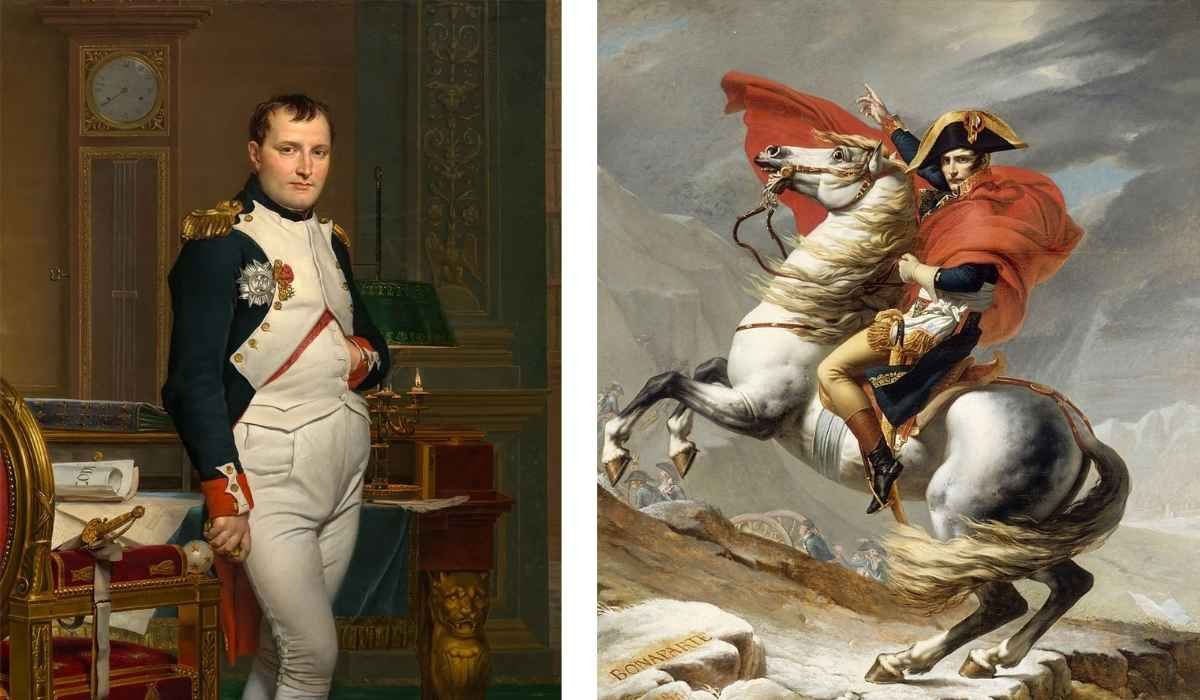
The historical impact of Napoleon remains an endless subject of fascination for scholars, historians, and military enthusiasts worldwide today. Born on the rugged island of Corsica, he rose through turbulent military ranks to Napoleon reshape the entire political landscape of Europe. His brilliant tactical mind allowed him to secure improbable victories against Napoleon coalition forces, transforming France into a dominant continental superpower. Beyond the battlefield, his administrative vision Napoleon established foundational legal frameworks that continue to influence modern civil code systems globally. Understanding Napoleon his complex journey requires looking closely at how ambition, warfare, and reform intertwined during a volatile Napoleon revolutionary era.
Quick Bio Table
| Attribute | Details |
| Full Name | Napoleone di Buonaparte (Napoleon Bonaparte) |
| Birth Date | August 15, 1769 |
| Birthplace | Ajaccio, Corsica, France |
| Death Date | May 5, 1821 (Aged 51) |
| Resting Place | Les Invalides, Paris, France |
| Spouses | Joséphine de Beauharnais, Marie Louise of Austria |
| Notable Title | Emperor of the French (Napoleon I) |
Early Life And Corsican Roots In Ajaccio
Growing up on the Napoleon Mediterranean island of Corsica instilled a fierce sense of independence and resilience within young Napoleon. His family Napoleon belonged to minor Italian nobility, providing just enough social standing to secure him a spot at a French military school. Napoleon Adjusting to mainland culture proved difficult for the young boy, who faced relentless teasing for his distinct accent and Napoleon foreign origins. However, he channeled his isolation into rigorous academic studies, developing a profound Napoleon obsession with history, geography, and classical military strategy. These formative years laid the intellectual groundwork Napoleon necessary for his eventual meteoric rise through the ranks of the military.
Moving To Mainland France For Military Education
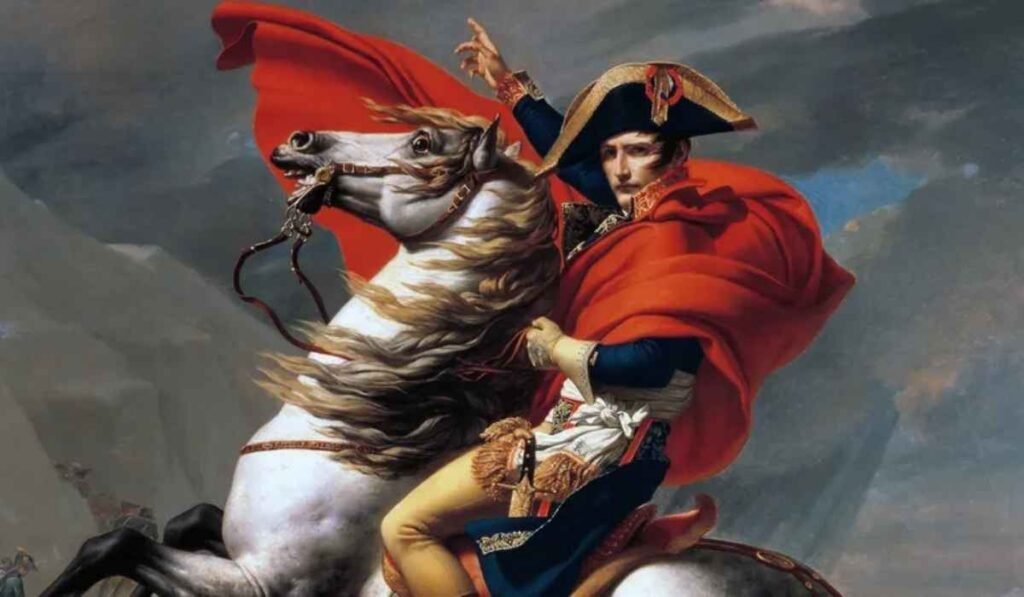
Transitioning from provincial Corsica to the mainland exposed Napoleon to the rigid structures of the French royal education system. He attended the military college at Brienne-le-Château, where he excelled rapidly in mathematics and struggled somewhat with humanities due to his linguistic background. His exceptional aptitude for calculations caught the attention of instructors, who recommended him for the prestigious École Militaire in Paris. There, he specialized in artillery, recognizing early on that mobility and firepower would completely redefine future warfare. This specialized training provided him with the technical expertise that would later shock veteran commanders across Europe during key combat engagements.
Commissioning As An Officer And Early Career Struggles
Securing a commission as a second lieutenant in the artillery marked an important milestone for the ambitious young officer. Life as a garrison officer was characterized by financial hardship, loneliness, and long hours spent reading political philosophy and military tracts. When the French Revolution erupted, he found himself torn between his loyalties to his Corsican homeland and his career within the French military apparatus. He spent considerable time navigating local Corsican politics, often aligning with factions that promoted revolutionary ideals. These early career struggles forged a pragmatic, opportunistic mindset that allowed him to adapt swiftly to the chaotic political shifts of revolutionary France.
The Siege Of Toulon And Breakthrough To General
The turning point in his early military career arrived during the dramatic Siege of Toulon in the year 1793. Royalist rebels had handed the strategic naval port over to British forces, threatening the stability of the fledgling republic. Assuming command of the republican artillery, he devised a brilliant plan to capture high ground overlooking the harbor, making enemy anchorage untenable. His successful execution of this maneuver forced the British fleet to evacuate, effectively crushing the local rebellion. For this decisive contribution, he was promoted to brigadier general at the remarkably young age of twenty-four, capturing national attention.
Defending The National Convention In Paris
Political instability in Paris soon provided another opportunity for the rising artillery commander to demonstrate absolute loyalty to the state. In October 1795, a massive royalist insurrection threatened to overthrow the National Convention, posing an existential threat to the government. Tasked with defending the halls of power, he famously ordered his men to fire a lethal “whiff of grapeshot” into the advancing crowds. This decisive and ruthless action dispersed the rioters instantly, saving the government from collapse. Rewarded with command of the Army of the Interior, he cemented his status as an indispensable protector of the French political establishment.
Commanding The Army Of Italy And Spectacular Victories
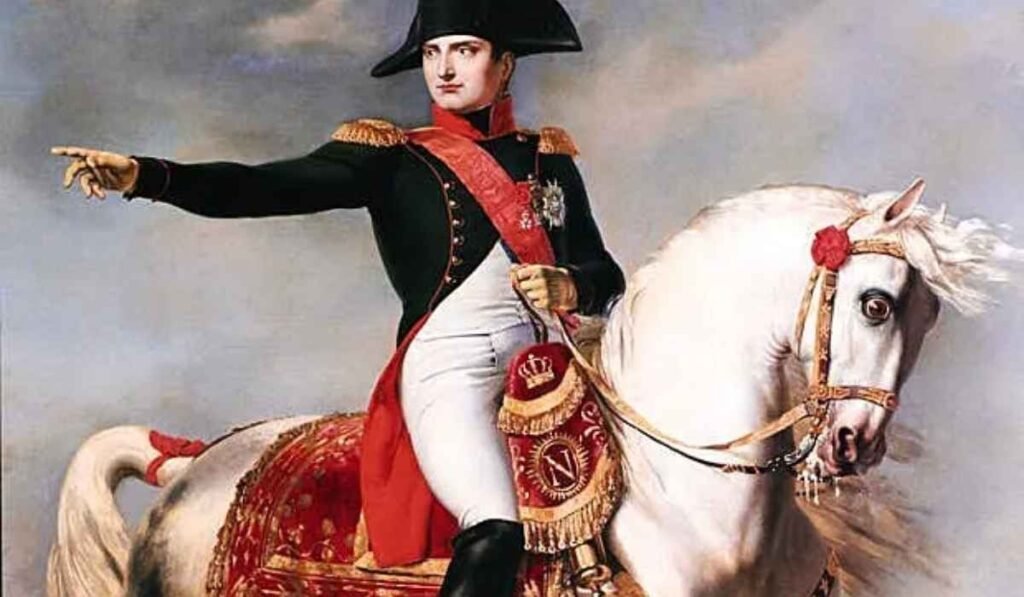
Taking command of the ill-equipped Army of Italy marked the beginning of his legendary status as an operational genius. Despite facing superior enemy forces, he used lightning-fast marches and psychological warfare to divide and conquer opposing Sardinian and Austrian armies. His ability to inspire exhausted troops transformed a demoralized rabble into an unstoppable fighting force that won battle after battle. The resulting Treaty of Campo Formio expanded French influence dramatically and established him as a national hero whose fame rivaled civilian politicians. Europe suddenly realized a new military titan had emerged from the chaos of the revolution.
The Egyptian Campaign And Strategic Ambitions
Seeking to disrupt British trade routes to India, he proposed an ambitious and daring military expedition to Egypt in 1798. Although his land forces achieved notable tactical victories against the Mameluks, the campaign suffered a catastrophic setback when the British navy destroyed the French fleet. Stranded strategically, he nevertheless led scientific and archaeological teams that uncovered priceless treasures like the Rosetta Stone, sparking modern Egyptology. Recognizing the deteriorating political situation back in France, he abandoned the army quietly and returned to Paris, spinning the Middle Eastern expedition as a grand triumph to the eager public.
The Coup Of Brumaire And Seizure Of Political Power
Capitalizing on widespread dissatisfaction with the corrupt and inefficient French Directory, he engineered a political coup in November 1799. Working alongside key conspirators, he overthrew the existing government and established the Consulate, positioning himself as the First Consul. This bold move effectively concentrated executive power in his hands, ending a decade of revolutionary experimentation with a de facto dictatorship. He immediately set out to restore domestic order, pacify internal rebellions, and centralize state administration. Through sheer political willpower, he transformed himself from a successful general into the undisputed master of the French state.
Establishing Domestic Reforms And The Civil Code
Internal stability allowed him to implement sweeping administrative, educational, and legal reforms that permanently modernized French society. His crowning achievement was the creation of the Civil Code, which guaranteed equality before the law, religious tolerance, and property rights. He centralized the banking system by founding the Bank of France and established a rigorous secondary education network to train competent state officials. By reconciling with the Catholic Church through the Concordat of 1801, he healed deep societal wounds left by the revolution. These structural transformations ensured that his legacy extended far beyond mere battlefield conquests into the daily lives of citizens.
Coronation As Emperor Of The French In Notre Dame
Cementing his absolute authority, he decided to transform the republic into a hereditary empire in the historic year of 1804. In a lavish ceremony at Notre Dame Cathedral, he famously took the crown from the Pope and placed it on his own head. This symbolic gesture signaled that his power derived from his own military achievements and the will of the people rather than divine clerical sanction. Creating a new imperial nobility, he surrounded himself with loyal marshals and courtiers designed to rival traditional European monarchies. This dramatic political pivot alienated some former revolutionaries but consolidated his regime against lingering royalist threats.
The Masterpiece Of Austerlitz And Continental Dominance
The formation of the Third Coalition brought renewed warfare, culminating in his greatest tactical masterpiece at the Battle of Austerlitz in 1805. Feigning weakness, he deliberately lured the combined Austro-Russian armies into attacking his reinforced right flank before delivering a shattering counter-punch. The decisive victory shattered the coalition, forced Austria out of the war, and dissolved the ancient Holy Roman Empire. He reorganized central Europe under his direct protection, establishing satellite kingdoms ruled by his relatives. At this peak of his power, virtually no continental nation could successfully challenge his formidable military dominance.
The Economic Warfare Of The Continental System
Unable to invade Great Britain directly due to naval inferiority established at Trafalgar, he resorted to economic strangulation. He instituted the Continental System, a sweeping embargo designed to prohibit European nations from trading with British merchants. However, this commercial blockade proved difficult to enforce strictly, leading to widespread smuggling and severe economic strain across European ports. To seal loopholes along the coastline, he launched costly military interventions in Portugal and Spain. The resulting Peninsular War bogged down hundreds of thousands of French troops in a brutal, exhausting guerrilla conflict that steadily bled imperial resources.
The Disastrous Invasion Of Russia And Beginning Of The End
Driven by geopolitical friction over trade and security, he launched a massive invasion of Russia with his multinational Grande Armée in 1812. The Russian forces executed a scorched-earth retreat, drawing the invaders deep into the vast interior before fighting a bloody engagement at Borodino. Although he captured an eerily deserted Moscow, fires and bitter winter weather forced a catastrophic retreat across frozen terrain. Starvation, disease, and relentless Cossack attacks decimated the once-mighty army, reducing hundreds of thousands of veteran soldiers to a freezing remnant. This historic military disaster shattered the aura of invincibility surrounding his imperial regime forever.
The War Of Liberation And First Abdication At Fontainebleau
Emboldened by the Russian catastrophe, a renewed coalition of European powers united to drive French forces back across the Rhine River. Despite brilliant defensive maneuvers during the Campaign of France, numerical inferiority and economic exhaustion ultimately doomed his desperate defense of the homeland. Allied armies captured Paris in the spring of 1814, forcing his unconditional abdication at the Palace of Fontainebleau. The victorious coalition exiled him to the Mediterranean island of Elba, granting him nominal sovereignty over the tiny territory. Meanwhile, the Bourbon monarchy was restored to the French throne under Louis XVIII, attempting to erase decades of revolutionary change.
The Dramatic Return During The Hundred Days
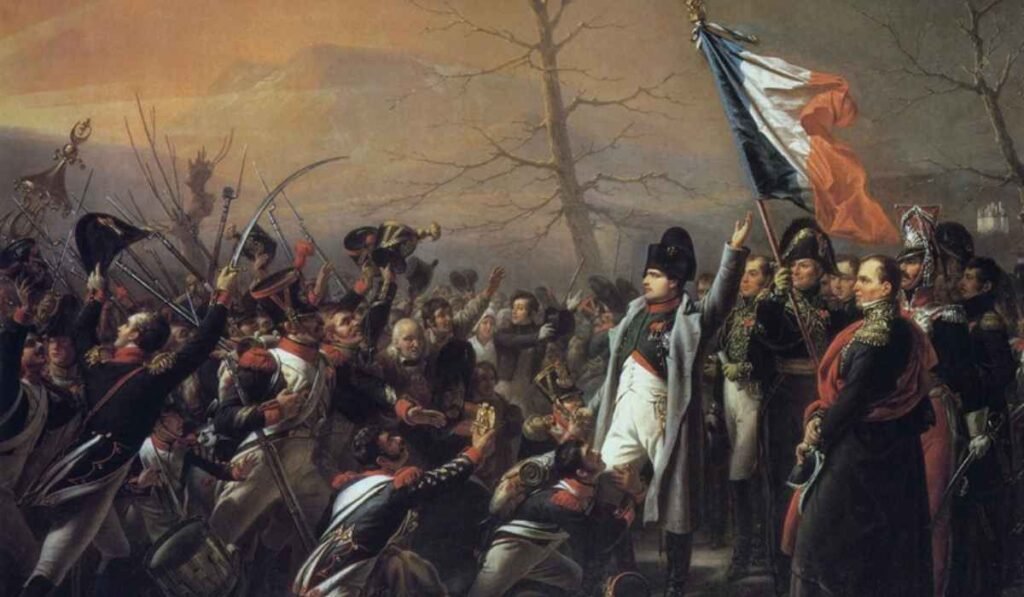
Refusing to accept permanent retirement, he executed a daring escape from Elba in early 1815 and landed on the southern coast of France. Troops sent to arrest him instead rallied enthusiastically to his side, allowing him to march triumphantly back into Paris without firing a shot. This astonishing comeback initiated a brief period known as the Hundred Days, forcing European powers to rapidly mobilize yet another coalition against him. He moved swiftly to strike allied forces in Belgium before Prussian and Austrian reinforcements could fully combine their operational strengths. The stakes were higher than ever as the old commander prepared for one final, decisive confrontation.
The Final Defeat At Waterloo And Exile To Saint Helena
The climax of his legendary military career occurred on the muddy fields of Waterloo in June 1815 against the Duke of Wellington. Facing stubborn British defense, his last-minute assault by the elite Imperial Guard was broken by timely Prussian arrivals under General Blücher. Defeated decisively, he abdicated a second time and placed himself under British protection, hoping for safe asylum. Instead, the British government exiled him permanently to the remote, highly secure South Atlantic island of Saint Helena. Under strict guard, he spent his remaining years dictating his memoirs, reflecting on his glorious triumphs, and nursing grievances against his captors.
Death In Exile And The Enigma Of Autopsy Controversies
Isolated on the damp and windswept island of Saint Helena, his physical health deteriorated rapidly over several years of captivity. He passed away on May 5, 1821, at the age of fifty-one, with initial autopsies attributing his demise to stomach cancer. Subsequent generations debated alternative theories, including intentional arsenic poisoning or chronic gastric ulcers, though modern medical consensus leans toward natural malignancies. His remains stayed on the island until they were famously repatriated to Paris in 1840, where they were entombed beneath the dome of Les Invalides. This final journey completed his transition from historical actor into an immortal cultural icon.
The Napoleonic Legend And Romantic Mythmaking In Culture
Following his death, a powerful romantic mythos known as the Napoleonic Legend swept across literature, art, and European public memory. Writers like Victor Hugo and Stendhal popularized an image of him as a tragic, Promethean figure who challenged corrupt aristocratic establishments. This cultural myth overshadowed his authoritarian domestic policies and the immense human toll exacted by his aggressive territorial expansions. Portraits, poems, and plays cemented his status as a complex symbol of individual genius and boundless ambition. Even critics acknowledged that his magnetic personality fundamentally altered how modern society perceived leadership and historical agency.
Lasting Historiographical Impact On The Modern World
Modern historiography views him as a profoundly contradictory figure who both advanced revolutionary principles and suppressed democratic liberties. His administrative centralization, educational structures, and legal codes served as institutional templates for numerous emerging nation-states across Europe and beyond. Military academies worldwide continue to study his operational campaigns, strategic mobility, and corps systems as benchmarks of tactical excellence. Ultimately, his ability to reshape the map of civilization ensures he remains one of the most influential individuals in recorded history. His complex legacy continues to provoke intense debate among scholars seeking to understand the mechanics of power.
FAQs
- When was Napoleon born?
- He was born on August 15, 1769, in Ajaccio, Corsica.
- What was Napoleon’s greatest military victory?
- His tactical masterpiece is widely considered to be the Battle of Austerlitz in 1805.
- Where was Napoleon exiled after Waterloo?
- He was exiled to the remote South Atlantic island of Saint Helena.
- What major legal reform did Napoleon introduce?
- He established the Napoleonic Code, which ensured legal equality and property rights.
- When did Napoleon die?
- He died in exile on May 5, 1821, at the age of 51.