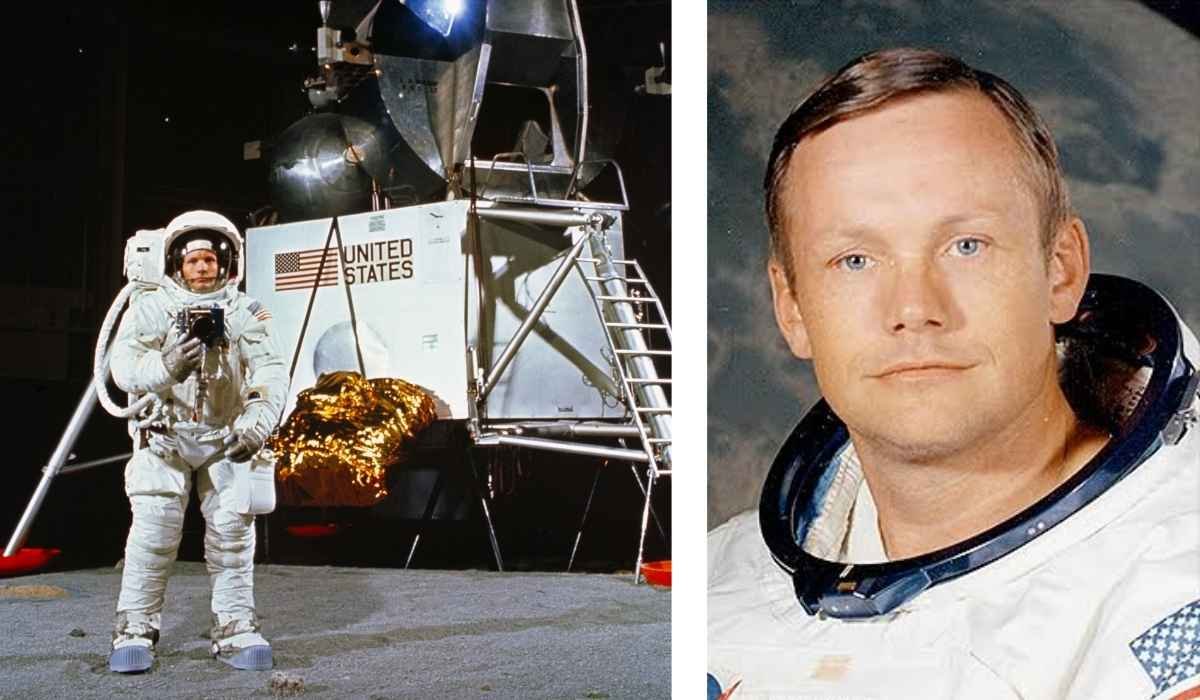
The history of space exploration changed forever when Neil Armstrong stepped onto the lunar surface, capturing the imagination of millions around the globe. Born in Wapakoneta, Ohio, in 1930, he developed an early fascination with aviation that shaped his entire professional trajectory. From earning his student pilot license before his driver license to serving as a naval aviator during the Korean War, his journey was defined by remarkable resilience. As a civilian test pilot for NACA and later NASA, he pushed the boundaries of supersonic flight, paving the way for his ultimate selection into the elite astronaut corps.
Quick Bio
| Attribute | Detail |
|---|---|
| Full Name | Neil Alden Armstrong |
| Birth Date | August 5, 1930 |
| Birthplace | Wapakoneta, Ohio, USA |
| Profession | Astronaut, Aeronautical Engineer, Test Pilot, Professor |
| Famous For | Commander of Apollo 11, first person to walk on the Moon |
| Death Date | August 25, 2012 |
Early Beginnings in Ohio
Growing up in mid-century America, young Neil Armstrong spent his formative years moving across various towns in Ohio due to his father’s auditing job. These frequent relocations fostered adaptability, yet his heart remained fixed on the skies above after experiencing his first airplane ride at a very tender age. He spent countless hours building model airplanes and reading about aviation pioneers, cementing a lifelong passion that would eventually propel him far beyond Earth’s atmosphere. Wapakoneta eventually became synonymous with his childhood roots, serving as the quiet backdrop where a future global icon first dreamed of touching the distant stars.
Passion for Flight and Scouting
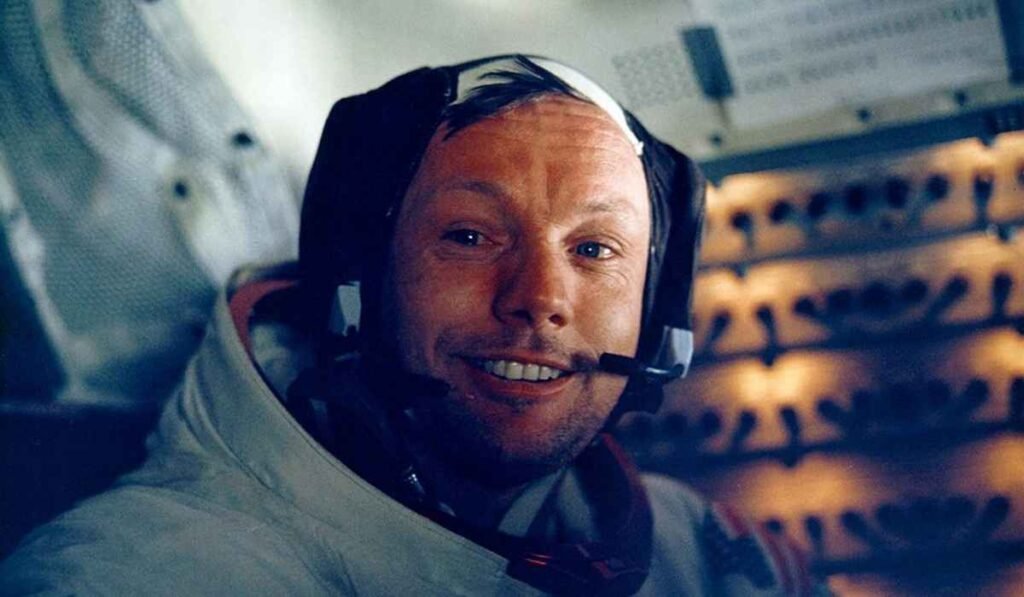
Active engagement in community organizations helped shape the character of Neil Armstrong during his adolescence, notably through his dedication to the Boy Scouts of America. He achieved the prestigious rank of Eagle Scout, instilling core values of leadership, preparedness, and reliability that served him well in high-stress environments. Concurrently, he worked tirelessly at local businesses to pay for flying lessons at the local airfield. On his sixteenth birthday, he proudly earned his pilot certificate, achieving this milestone well before he was legally permitted to drive an automobile on public roads.
College Years at Purdue University
Higher education beckoned when Neil Armstrong enrolled at Purdue University to study aeronautical engineering, funded partially through the rigorous U.S. Navy Holloway Plan. His collegiate pursuits demanded intense intellectual dedication, balancing advanced mathematical theories with practical engineering concepts essential for modern flight. Although his studies faced a temporary interruption due to military deployment, he ultimately returned to complete his bachelor’s degree, later earning advanced academic credentials that solidified his technical expertise in aerospace dynamics and vehicle design principles.
Naval Service and Combat Missions
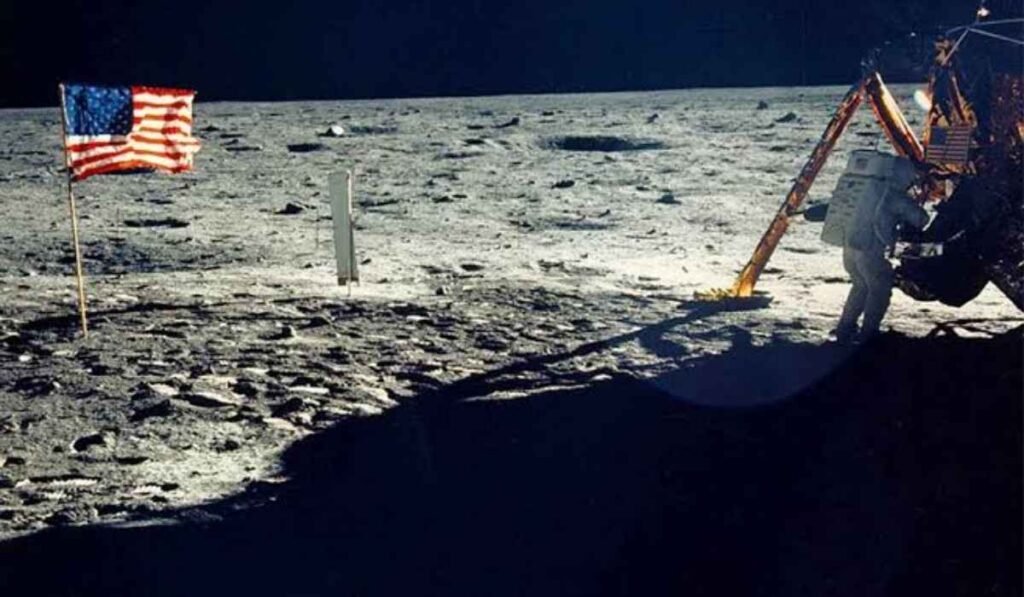
Military duty called when Neil Armstrong reported for flight training with the United States Navy, earning his naval aviator wings shortly after turning twenty. When the Korean War erupted, he deployed to active combat zones, flying seventy-eight missions in Grumman F9F Panther jets from the aircraft carrier USS Essex. His aircraft sustained direct hits from enemy anti-aircraft fire on one harrowing mission, forcing him to execute a daring escape before crashing. These combat experiences forged an unshakeable calmness under extreme pressure, a vital psychological trait for future space missions.
Transition to Test Pilot Roles
Following his honorable discharge from military service, Neil Armstrong transitioned into civilian research aviation with the National Advisory Committee for Aeronautics. Operating out of Edwards Air Force Base, he evaluated cutting-edge experimental aircraft designed to test the absolute limits of atmospheric velocity and structural integrity. He routinely flew legendary rocket-powered planes like the Bell X-1 and the North American X-15, gathering crucial empirical data on hypersonic aerodynamics. His analytical approach to engineering anomalies earned him immense respect among fellow researchers and top aerospace directors alike.
Selection into the Astronaut Corps
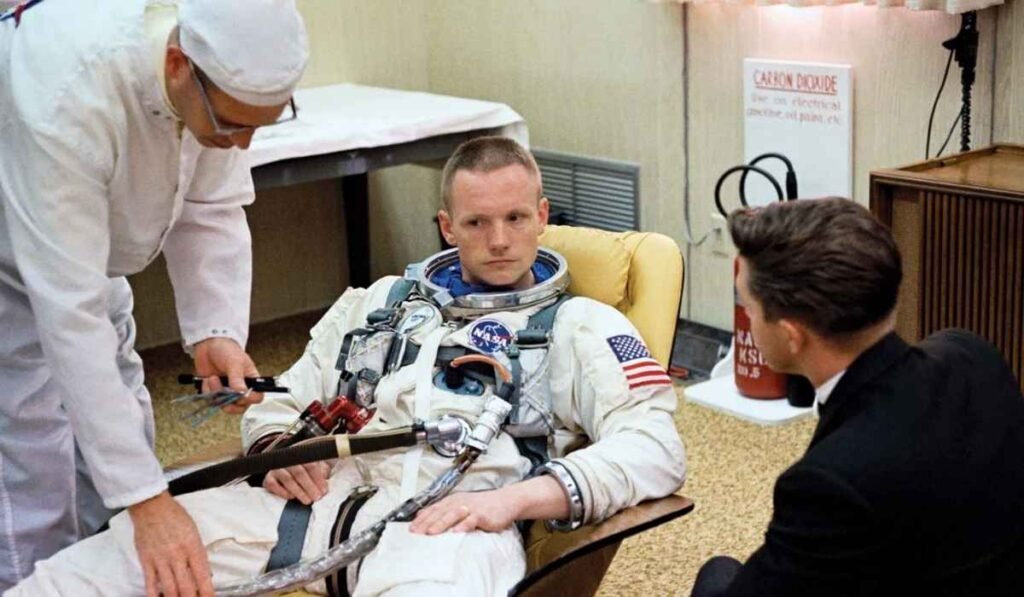
Space exploration entered a new phase when Neil Armstrong was selected in 1962 as part of NASA’s second group of astronauts, colloquially known as the “New Nine.” Moving his family to Texas, he immersed himself in intensive classroom instruction covering orbital mechanics, astronomy, guidance systems, and complex spacecraft telemetry. Peers and instructors frequently noted his quiet demeanor, sharp intellect, and exceptional situational awareness during simulated flight emergencies. This rigorous preparation ensured he remained ready to tackle the unprecedented technical hurdles associated with America’s burgeoning crewed space program.
Commanding the Gemini 8 Mission
Orbital mechanics history was rewritten when Neil Armstrong served as command pilot for the Gemini 8 mission alongside pilot David Scott in March 1966. During this flight, he successfully executed the world’s first manual spacecraft docking maneuver with an uncrewed Agena target vehicle. However, a stuck thruster suddenly caused the combined spacecraft to enter a violent, uncontrolled roll. Displaying extraordinary coolness, Neil Armstrong used re-entry control thrusters to stabilize the vehicle, executing an emergency splashdown that saved both lives through sheer operational mastery.
Preparing for the Lunar Voyage
Training for humanity’s first lunar landing pushed Neil Armstrong and his backup crew through grueling physical and mental simulations across various specialized facilities. He spent countless hours practicing lunar module descents inside complex simulators and piloting the temperamental Lunar Landing Training Vehicle. During one training run, a sudden mechanical failure forced him to eject seconds before the vehicle crashed and burst into flames, escaping physical harm by mere fractions of a second. Such harrowing rehearsals underscored the immense risks inherent in reaching out toward Earth’s nearest celestial neighbor.
The Launch of Apollo 11
Global attention converged on Cape Kennedy when the massive Saturn V rocket carrying Neil Armstrong, Michael Collins, and Buzz Aldrin roared into the sky on July 16, 1969. Millions watched from Earth as the spacecraft broke free of terrestrial gravity, embarking on a historic three-day cruise toward the Moon. Inside the command module, Neil Armstrong managed navigation systems and coordinated complex trajectory checks with mission control in Houston. Every system functioned with remarkable precision, setting the stage for the most anticipated landing attempt in human history.
Descending to the Lunar Surface
As the lunar module Eagle separated and descended toward the Sea of Tranquility, Neil Armstrong noticed automated guidance computers steering them toward a boulder-strewn crater. Taking manual control of the descent engine, he expertly guided the fragile craft past hazardous terrain while fuel reserves dwindled dangerously low. Ground controllers held their collective breath as warning lights flickered inside the cabin. With only seconds of descent fuel remaining, Neil Armstrong successfully announced touchdown, confirming that the Eagle had finally landed safely on the alien soil.
Walking on Another World
Humanity crossed an eternal threshold when Neil Armstrong slowly descended the ladder of the lunar module and placed his left boot onto the dusty surface. Broadcast live to an estimated television audience of over six hundred million people, he uttered the immortal words: “That’s one small step for [a] man, one giant leap for mankind.” Moments later, Buzz Aldrin joined him to plant the American flag, collect geological samples, and deploy scientific instruments. This monumental achievement fulfilled President John F. Kennedy’s visionary national goal ahead of schedule.
Legacy of the Moon Landing
Enduring cultural resonance followed the success of Apollo 11, cementing the permanent legacy of Neil Armstrong as a universal symbol of human exploration and technological triumph. The mission proved that complex engineering challenges could be surmounted through collective dedication, scientific rigor, and bold individual courage. Across generations, students, scientists, and dreamers continue looking back at those grainy television broadcasts with awe. The footprints left behind in the lunar dust remain undisturbed by wind or rain, serving as an eternal testament to what civilization can achieve when working together toward a common goal.
Life After NASA and Academia
Stepping away from direct space operations, Neil Armstrong resigned from NASA in 1971 to embrace a quieter academic career as a professor of aerospace engineering at the University of Cincinnati. For nearly a decade, he taught university students, sharing practical insights gleaned from decades of high-speed flight research and lunar exploration. He consistently shunned unwarranted celebrity status, preferring academic halls and quiet research over public adulation. By focusing on education, Neil Armstrong nurtured the next generation of engineers who would carry forward the torch of scientific discovery.
Corporate Directorships and Public Service
Beyond the university classroom, Neil Armstrong lent his formidable analytical expertise to various corporate boards and high-level national commissions over the ensuing decades. He served as chairman and director for several technology and aviation firms, helping guide corporate strategies in avionics and aerospace manufacturing. Additionally, following the tragic space shuttle Challenger disaster, President Ronald Reagan appointed Neil Armstrong as vice-chairman of the presidential commission tasked with investigating systemic safety failures. His thorough investigative work ensured enhanced safety protocols for future space shuttle flights.
Honors, Awards, and Global Acclaim
Countless international honors, medals, and honorary doctorates were bestowed upon Neil Armstrong throughout his lifetime by governments and scientific societies worldwide. He received the Presidential Medal of Freedom, the Congressional Space Medal of Honor, and numerous prestigious accolades from international aviation federations. Despite receiving such high-ranking global tributes, Neil Armstrong remained remarkably humble, rarely capitalizing on his historic fame for personal financial gain. He viewed his achievements as the collective product of thousands of dedicated engineers, technicians, and scientists who made space travel possible.
Personal Life and Later Years
Quiet dignity defined the personal life of Neil Armstrong away from public scrutiny, cherishing time spent with his family, friends, and trusted colleagues. He enjoyed flying vintage aircraft recreationally, reading historical literature, and engaging in quiet outdoor activities on his farm in Ohio. Following health complications late in life, he passed away peacefully on August 25, 2012, in Cincinnati, Ohio. Tributes poured in from world leaders, fellow astronauts, and grateful citizens globally, celebrating a man who forever changed humanity’s perspective of its place in the universe.
Enduring Inspiration for Future Generations
Future generations continue finding profound inspiration in the extraordinary journey of Neil Armstrong, whose life demonstrated the heights achievable through discipline, curiosity, and courage. Schools, planetariums, and research institutions bear his name worldwide, ensuring his contributions to science remain eternally visible. Whenever humanity looks up at the Moon on a clear night, people are reminded of the quiet Ohio farm boy who dared to cross the cosmic abyss. The enduring narrative of Neil Armstrong will forever inspire humanity to explore deeper into the unknown reaches of space.
Conclusion and Final Reflections
Reflecting upon the monumental career of Neil Armstrong reveals a rare combination of technical brilliance, professional discipline, and profound personal humility. He never sought the blinding spotlight, choosing instead to let his monumental achievements speak volumes for human potential. From humble Midwestern roots to the dusty gray plains of the lunar highlands, his life remains an inspiring blueprint for what dedication can achieve. As humanity continues reaching toward distant worlds, the spirit of Neil Armstrong endures as an everlasting beacon guiding future voyagers across the starry expanse of space.
Frequently Asked Questions
- When was Neil Armstrong born?
- Neil Armstrong was born on August 5, 1930.
- What spacecraft did Neil Armstrong command during Apollo 11?
- Neil Armstrong commanded the Apollo 11 lunar module named Eagle.
- What famous words did Neil Armstrong say on the Moon?
- Neil Armstrong stated, “That’s one small step for [a] man, one giant leap for mankind.”
- Did Neil Armstrong serve in the military?
- Neil Armstrong served as a U.S. Navy aviator and flew combat missions during the Korean War.
- When did Neil Armstrong pass away?
- Neil Armstrong passed away on August 25, 2012.