
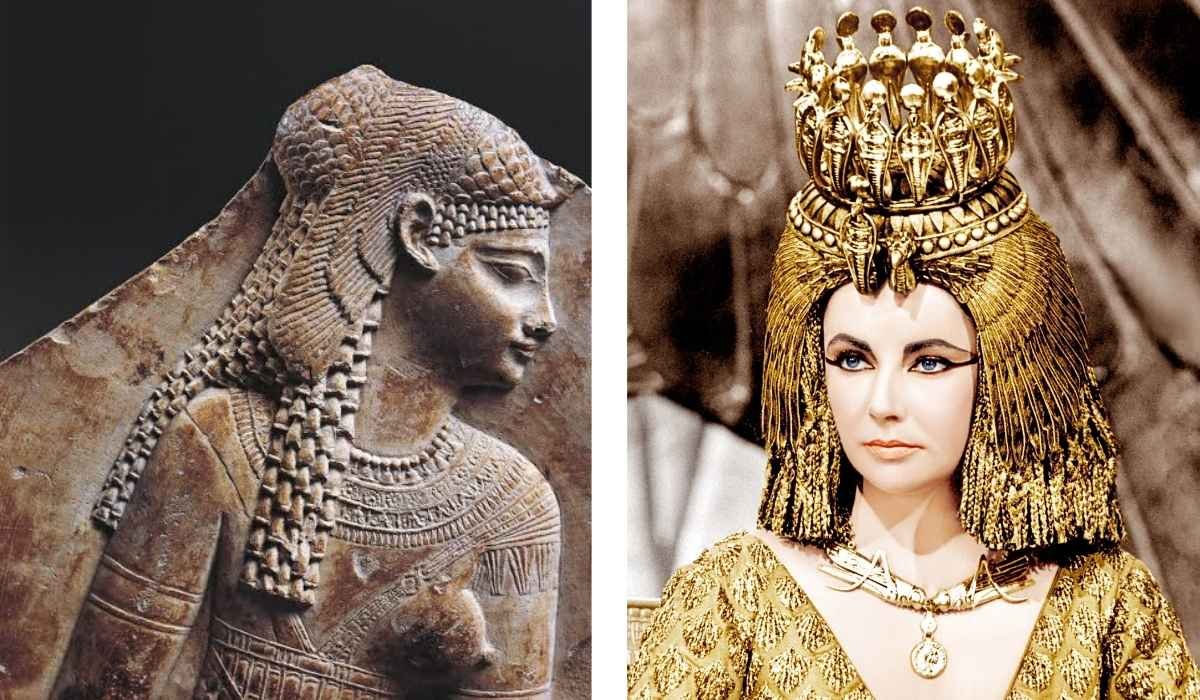
The legendary queen Cleopatra remains one of the most fascinating figures in ancient history, captivating modern imaginations across the globe. Born in sixty-nine BC, she ascended to the throne of the Ptolemaic Kingdom during a time of immense political turmoil and shifting global powers. Unlike many of her royal predecessors, this brilliant monarch made a concerted effort to learn the native tongue of her subjects, cementing a deep connection with the Egyptian populace. Her reign marked the final chapter of the Hellenistic period, blending Greek heritage with traditional Egyptian culture to project unmatched imperial majesty, power, and enduring historical significance.
Quick Bio
| Attribute | Details |
| Full Name | Cleopatra VII Philopator |
| Born | 69/69 BC in Alexandria, Egypt |
| Died | August 30 BC in Alexandria, Egypt |
| Dynasty | Ptolemaic |
| Consorts | Julius Caesar, Mark Antony |
Early Life and Royal Heritage
Growing up within the opulent royal palace of Alexandria, young Cleopatra received an elite Hellenistic education that shaped her intellect. She studied philosophy, rhetoric, and governance under prominent tutors, preparing her for the complex responsibilities of ruling a vast empire. As a daughter of Ptolemy Twelfth Auletes, she inherited a crown surrounded by familial rivalries and constant threats from external Mediterranean forces. Her early upbringing instilled a sharp political acumen that allowed to navigate treacherous court intrigues and secure her ultimate claim to the throne.
Accession to the Throne
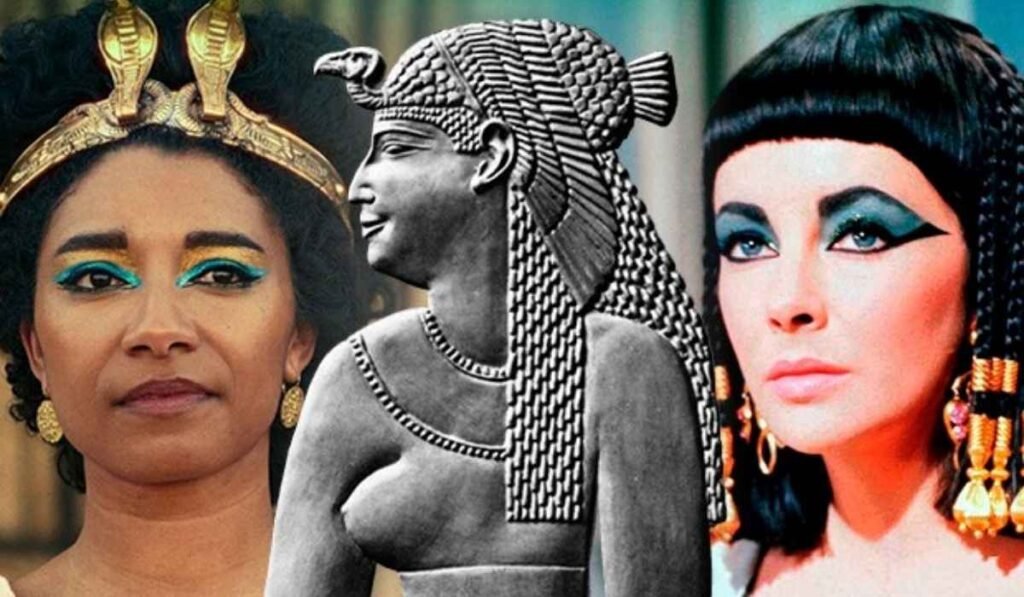
Following the death of her father in fifty-one BC, Cleopatra assumed joint control of the kingdom alongside her younger brother. This initial power-sharing arrangement quickly deteriorated due to intense political ambitions and corrupt advisers seeking to manipulate the young royal court. Forced into a brief exile, did not surrender her birthright easily and began gathering domestic and foreign support for her restoration. Her strategic resilience during these formative years demonstrated that Cleopatra possessed the ruthless determination required to survive within the cutthroat landscape of the ancient Mediterranean world.
Meeting Julius Caesar
The arrival of the Roman general Julius Caesar in Alexandria fundamentally altered the geopolitical trajectory of queen Cleopatra. Seeking to capitalize on the civil war dividing Egypt, she orchestrated a legendary entrance into the palace to meet Caesar directly. This high-stakes alliance quickly transformed into a powerful romantic and political partnership that solidified her grip on the Egyptian crown. With Roman military backing, Cleopatra successfully crushed her internal opponents, ensuring that maintained absolute supremacy over her ancestral lands while aligning her future directly with Rome.
Birth of Caesarion
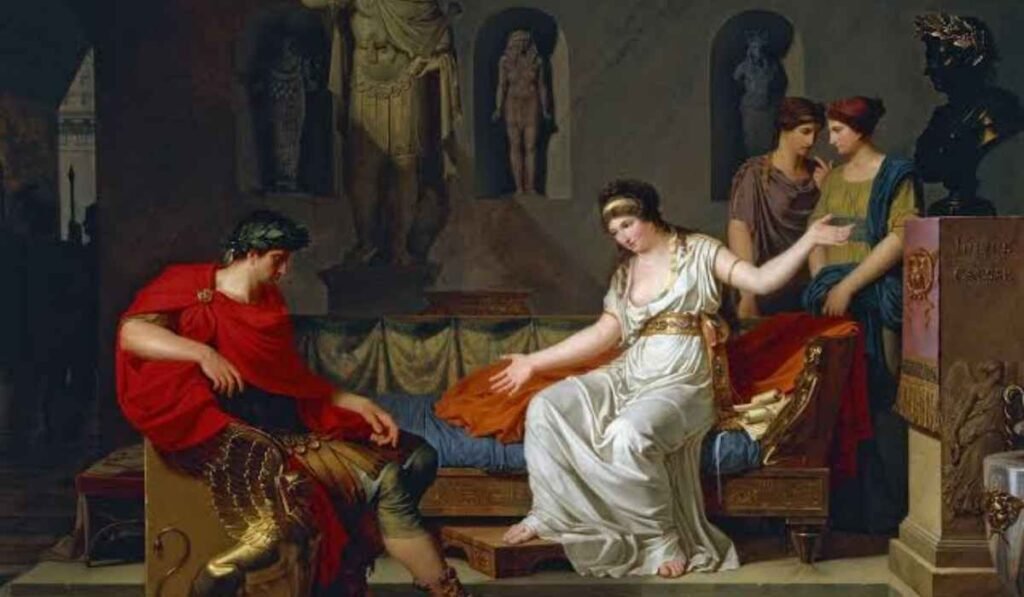
The relationship between the Egyptian queen and the Roman dictator eventually produced a son named Caesarion, who was heralded as a royal heir. This child represented a dynastic bridge between the fading Hellenistic kingdoms and the rising power of the Roman Republic. Cleopatra ensured that Caesarion received a royal upbringing fitting his dual heritage, though his existence also heightened political tensions back in Rome. Despite the dangers, remained fiercely dedicated to safeguarding her son’s lineage, ensuring that Cleopatra would have a strong male successor to secure the future of the Ptolemaic dynasty.
Journey to Rome
Traveling to the heart of the Roman Republic as a client monarch, Cleopatra created a massive cultural and political sensation. Residing in one of Caesar’s suburban villas, she hosted prominent Roman senators and diplomats, showcasing her immense wealth and intellectual sophistication. Her presence in the capital challenged traditional Roman values and generated considerable anxiety among conservative politicians who feared eastern monarchical influences. Nevertheless, used this diplomatic mission to project strength, ensuring that Cleopatra remained at the center of Mediterranean politics during a period of sweeping historical transformation.
Assassination of Julius Caesar
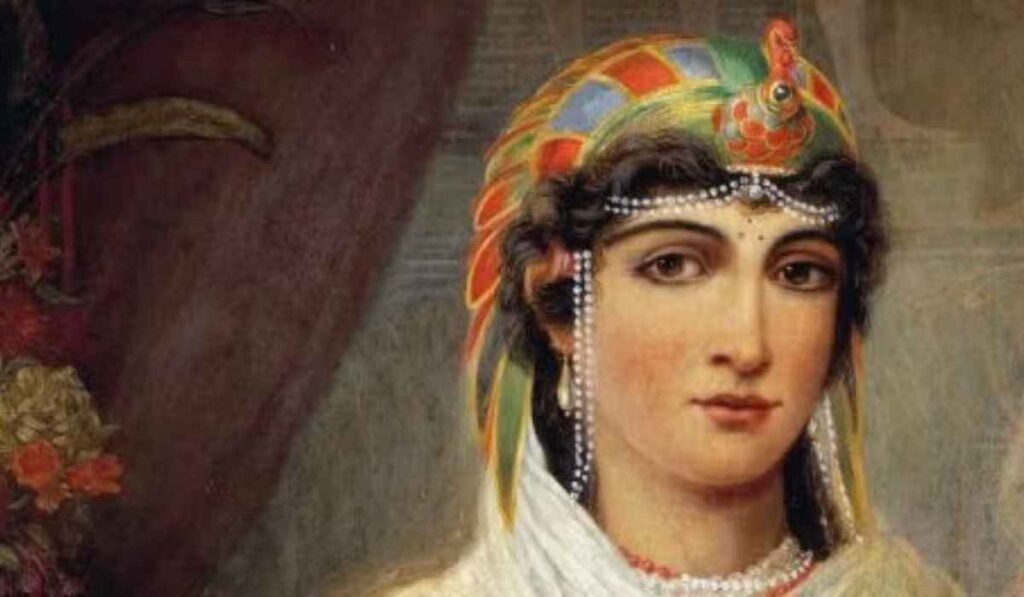
The shocking assassination of Julius Caesar on the Ides of March in forty-four BC plunged Rome into chaos and threatened Cleopatra directly. Realizing her vulnerable position in a hostile foreign capital, she quickly fled back to the safety of her capital in Alexandria. Back home, she navigated the crisis by eliminating her remaining domestic rivals and elevating young Caesarion as her official co-ruler. Even amidst the sudden collapse of her primary Roman patron, proved that Cleopatra could adapt swiftly to danger and secure her kingdom against external instability.
Alliance with Mark Antony
Following the power struggles that fractured Rome, Cleopatra formed a legendary political and romantic alliance with the Roman triumvir Mark Antony. Together, they formed a formidable power bloc in the eastern Mediterranean, combining Roman military might with Egyptian financial resources. This partnership was not merely passionate but deeply strategic, aimed at restoring the historic borders of the old Ptolemaic Empire. Through this union, and Antony shared children and ambitions, proving that Cleopatra remained a dominant force capable of shifting the balance of global power.
The Donations of Alexandria
In a stunning public ceremony known as the Donations of Alexandria, Cleopatra and Antony distributed vast territories to their children. This theatrical spectacle redefined the political map of the East, granting royal titles and lands to Caesarion and their shared offspring. While intended to project imperial dominance, the event severely alienated public opinion in Rome, where Octavian weaponized the ceremony as propaganda. Consequently, inadvertently handed her enemies the perfect pretext to declare war, ensuring that Cleopatra would face an ultimate showdown against the Roman state.
The Conflict with Octavian
As tensions boiled over into open warfare, Octavian mobilized the Roman senate against the combined forces of Antony and the Egyptian queen. The decisive military confrontation culminated in the naval disaster at the Battle of Actium, where their fleet was outmaneuvered. Forced to retreat back to Egypt, Cleopatra attempted to salvage her kingdom through last-minute diplomatic maneuvers against the advancing Roman legions. Despite her best efforts, military defeat became inevitable, signaling that Cleopatra could no longer outmaneuver the relentless military machine of rising imperial Rome.
The Fall of Alexandria
Octavian’s invasion of Egypt marked the final, tragic chapter for the ancient kingdom and its legendary ruling house. As enemy troops breached the capital, hope vanished for military resistance or political negotiation. Antony fell upon his sword after receiving false news of the queen’s death, leaving Cleopatra isolated within her fortified mausoleum. Facing the absolute humiliation of being paraded through the streets of Rome as a captive, chose a sovereign exit, ensuring that Cleopatra maintained her royal dignity until her final breath.
The Mysterious Death
The manner of Cleopatra’s death has inspired centuries of artistic debate, theatrical dramatization, and historical inquiry. Ancient chroniclers recorded that she died from the venomous bite of an asp or through toxic ointments applied with a sharp implement. By ending her own life in August of thirty BC, she cheated Octavian of his ultimate trophy prisoner. This dramatic act closed the curtain on the Hellenistic age, transforming the mortal woman into an immortal icon, as Cleopatra entered global folklore as history’s most famous tragic queen.
Linguistic and Cultural Brilliance
Beyond her romantic entanglements, Cleopatra was a remarkably educated scholar and a uniquely multilingual stateswoman. Historical accounts note that she was the only member of her dynasty to master the native Egyptian language alongside several regional dialects. This linguistic versatility allowed her to communicate directly with foreign ambassadors without requiring translators or intermediaries. Such cultural intelligence ensured that Cleopatra bridged the gap between native subjects and foreign rulers, proving that Cleopatra possessed administrative capabilities far surpassing her royal predecessors.
Economic Powerhouse of Egypt
During her reign, the agricultural output and bustling trade networks of Egypt made her kingdom immensely wealthy. Cleopatra carefully managed state granaries, stabilized currency values, and taxed lucrative Mediterranean trade routes to fund her political ambitions. This economic stability enabled her to finance military campaigns and lavish public projects that projected imperial wealth across the ancient world. By maintaining strict financial discipline, Cleopatra ensured that Cleopatra remained an indispensable financial player in the volatile politics of the late Roman Republic.
Propaganda and Public Image
The historical legacy of the Egyptian queen has been heavily shaped by the political propaganda of her bitter Roman adversaries. Writers working under Augustus painted her as a seductive, dangerous foreign menace who sought to subvert traditional Roman institutions. In reality, she was a pragmatic sovereign defending her crown, her children, and her country against imperial expansionism. Through careful management of her public image and coinage, Cleopatra projected divine authority, ensuring that Cleopatra would be remembered as a true goddess-queen by her loyal subjects.
Architectural and Cultural Patronage
Throughout her time on the throne, Cleopatra sponsored extensive building projects and supported Alexandria’s legendary scholarly institutions. She invested heavily in the expansion of cultural landmarks, patronizing philosophers, poets, and scientists who frequented the royal capital. Her court served as a vibrant nexus where Greek science and Egyptian tradition flourished side by side. Through these grand architectural efforts, Cleopatra sought to immortalize her reign, ensuring that Cleopatra left behind a physical testament to the glorious height of Ptolemaic civilization.
The End of the Ptolemaic Dynasty
The death of the queen and the execution of her son Caesarion marked the definitive extinction of the royal Ptolemaic line. Octavian officially annexed Egypt as a personal province of Rome, transforming its rich agricultural lands into the personal granary of the emperor. This transition extinguished three centuries of Greek-Macedonian rule that began following the death of Alexander the Great. Consequently, the tragic downfall of Cleopatra signaled not merely a personal loss, but the permanent geopolitical restructuring of the entire Mediterranean world into a unified empire.
Representations in Art and Literature
Over the centuries, the life of the Egyptian monarch has inspired countless plays, poems, paintings, and Hollywood cinematic masterpieces. From William Shakespeare’s timeless tragedy to modern blockbusters, artists have continually reinterpreted her dramatic romance and fatal end. These creative depictions often oscillate between portraying her as a cunning politician or a tragic romantic heroine. Regardless of the artistic angle chosen, the cultural footprint of Cleopatra remains unmatched, proving that Cleopatra continues to cast a long, alluring shadow over modern popular culture.
Historical Realities Versus Myth
Sorting historical facts from centuries of Roman propaganda and romantic mythology remains a central challenge for modern classical scholars. While popular culture emphasizes her legendary beauty and romantic affairs, historical evidence reveals an astute, highly educated politician. She governed through severe economic crises, civil wars, and immense geopolitical pressure with calculated precision. By examining primary sources and archaeological discoveries, modern historians recognize that Cleopatra was an exceptional leader whose administrative brilliance far outweighed the dramatic myths surrounding Cleopatra.
Lasting Historical Legacy
The enduring resonance of the final pharaoh of Egypt demonstrates the timeless appeal of a leader who fought bravely against overwhelming imperial odds. Her ability to command the loyalty of armies and captivate the greatest military minds of Rome cemented her place in human memory. Though her empire ultimately fell to Roman conquest, her personal story transcends the boundaries of ancient history. Ultimately, the unmatched historical footprint ensures that Cleopatra will forever be remembered as a symbol of supreme intellect, political fearlessness, and royal majesty.
FAQs
- When was Cleopatra born?
- Cleopatra was born in 69 BC in Alexandria, Egypt.
- Who were Cleopatra’s most famous Roman partners?
- She was famously involved with Julius Caesar and Mark Antony.
- How did Cleopatra die?
- She died on August 30 BC, traditionally believed to be from an asp snakebite or toxic poison.
- What languages could Cleopatra speak?
- She was multi-lingual, speaking Egyptian, Greek, Latin, and several other eastern languages.
- What was the name of her dynasty?
- She belonged to the Macedonian Greek Ptolemaic dynasty.