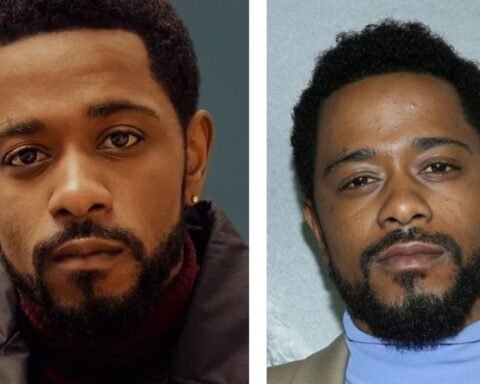
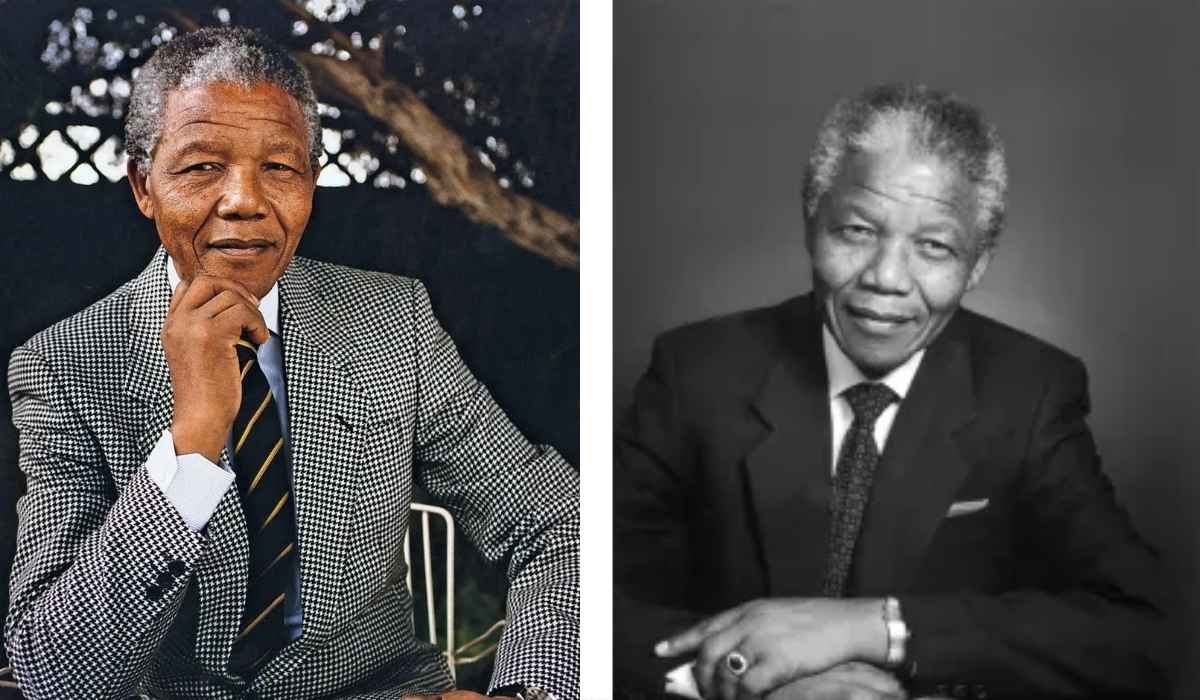
The history of modern liberation and peace is deeply intertwined with the remarkable journey of Nelson Mandela, a visionary leader who reshaped a nation. Born in a small South African village, he grew up with a profound sense of justice that ultimately guided his entire life’s mission. Facing extreme systemic oppression, he chose a path of resistance to secure fundamental human rights for all citizens. His unwavering dedication transformed the sociopolitical landscape of an entire continent and inspired millions globally. Today, his enduring principles continue to resonate strongly with individuals striving for equity, freedom, and lasting global harmony everywhere.
Quick Bio
| Attribute | Detail |
| Full Name | Nelson Rolihlahla Mandela |
| Born | 18 July 1918 |
| Birthplace | Mvezo, South Africa |
| Died | 5 December 2013 |
| Presidency | 1994–1999 |
| Key Award | Nobel Peace Prize (1993) |
Early Life and Childhood Roots in Mvezo
Growing up in the traditional rural environment of Mvezo shaped the foundational values and character of Nelson Mandela. Raised within the Thembu royal family, he learned the importance of community leadership, listening to elders, and collective decision-making. These early cultural lessons deeply influenced his later political philosophy, emphasizing unity above division. Even as a young boy tending cattle, he observed the traditional councils where local leaders debated community issues with remarkable respect and patience. This upbringing provided him with a unique perspective on governance, cultural heritage, and the vital importance of maintaining dignity under challenging circumstances throughout his remarkable life.
Education and Journey Into Legal Studies
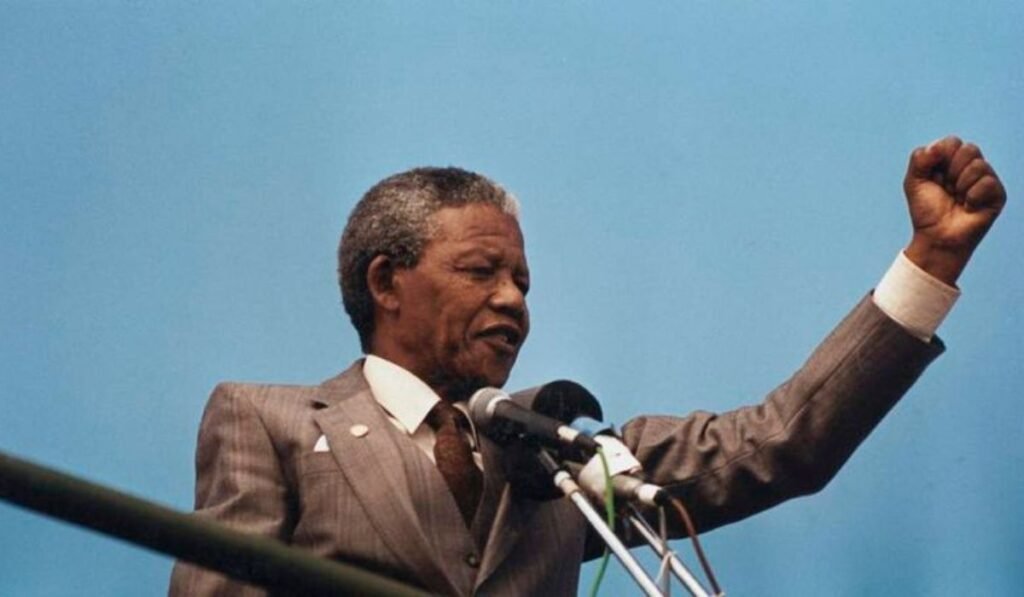
Pursuing higher education proved to be a pivotal turning point that broadened the intellectual horizons of Nelson Mandela. He attended the University of Fort Hare before moving forward with his legal studies at the prestigious University of the Witwatersrand. In these academic spaces, he encountered diverse intellectual viewpoints and interacted with fellow activists who shared a common vision for national liberation. Studying law gave him a structured framework to understand the institutional injustices of his homeland. Equipped with sharp legal knowledge, he recognized how oppressive legal systems were manipulated to disenfranchise the majority population, fueling his determination to fight back through systemic reform and organized political action.
Entering Political Activism in Johannesburg
Transitioning to life in bustling Johannesburg exposed Nelson Mandela to the harsh realities of urban segregation and institutionalized discrimination. Living in the sprawling townships, he witnessed firsthand the daily indignities forced upon working-class citizens by an unjust minority government. Driven by moral duty, he officially joined the African National Congress in 1943 to actively participate in the liberation struggle. Alongside passionate peers, he helped establish a vibrant youth wing designed to inject fresh energy and militant determination into the organization. This crucial step marked his permanent evolution from a private professional into a dedicated public servant committed entirely to total national emancipation.
Founding the African National Congress Youth League
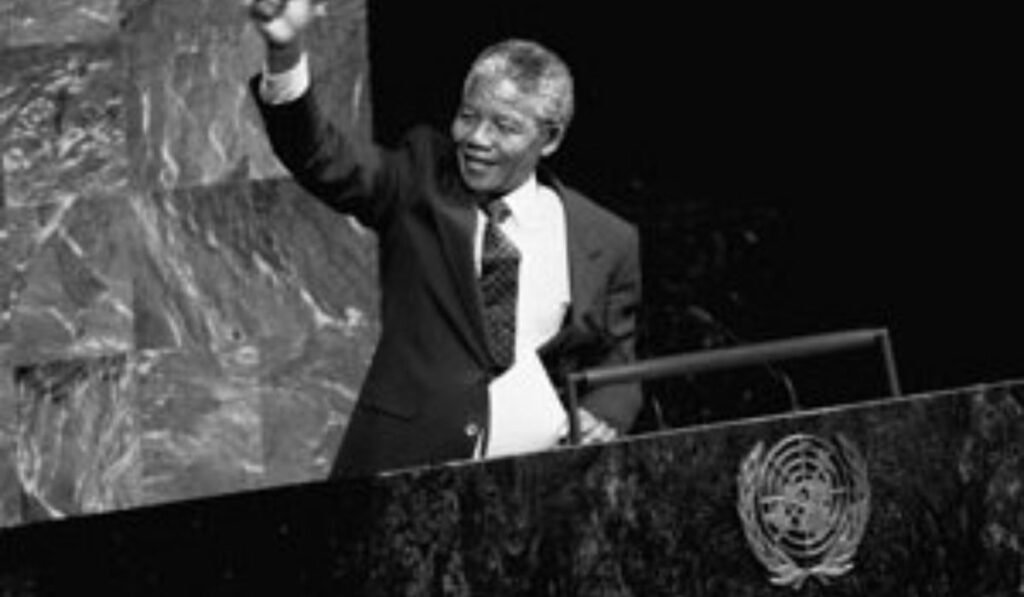
Establishing the African National Congress Youth League in 1944 represented a bold new tactical direction for Nelson Mandela and his radical contemporaries. They believed the older leadership required a more dynamic, aggressive approach to challenge the entrenched power structures of racial supremacy effectively. Under this new banner, members advocated for mass mobilization, strikes, boycotts, and civil disobedience rather than passive petitions. This organizational platform allowed him to cultivate strong leadership skills and build essential alliances across various anti-colonial factions. The youth movement quickly became the beating heart of the broader resistance, grooming a new generation of fearless freedom fighters ready to sacrifice everything.
The Defiance Campaign and Rising Prominence
Stepping into national leadership, Nelson Mandela played a central operational role in coordinating the historic 1952 Defiance Campaign. This coordinated mass protest targeted unjust pass laws and discriminatory regulations through peaceful civil disobedience on an unprecedented national scale. As a volunteer-in-chief, he traveled extensively across the country, organizing rallies, mobilizing crowds, and inspiring ordinary people to confront fear. Despite facing constant state surveillance, police harassment, and numerous arrests, his resolve remained entirely unshaken. The campaign successfully elevated his status as a brilliant strategist and a trusted national figure capable of uniting diverse communities against a common oppressive adversary.
Legal Persecution and the Treason Trial
Enduring relentless state persecution became a daily reality when Nelson Mandela was swept into the infamous 1956 Treason Trial. Alongside 155 other prominent anti-apartheid activists, he faced spurious charges of high treason designed to cripple the liberation movement permanently. The grueling legal proceedings dragged on for nearly five years, consuming enormous resources and energy from the organization. However, the courtroom transformed into an unexpected platform to denounce systemic injustices before national and international media. Although the court eventually acquitted all defendants due to a lack of evidence, the grueling ordeal starkly demonstrated the desperate lengths to which the authoritarian regime would go.
Transition Toward Militant Resistance Strategies
Recognizing the limits of purely peaceful protest, Nelson Mandela helped pivot the movement toward armed struggle in 1961. Decades of state violence, massacres, and systemic crackdowns made it clear that the ruling regime refused to engage in democratic dialogue or reform. As a co-founder of the militant underground network known as Umkhonto we Sizwe, he supported targeted sabotage against infrastructure to pressure the government. This difficult tactical shift was undertaken with profound reluctance, driven entirely by the conviction that all peaceful avenues for justice had been systematically blocked. The underground phase demanded absolute secrecy, immense personal sacrifice, and strict operational discipline.
Capture, Rivonia Trial, and Life Imprisonment
Facing a dramatic manhunt, Nelson Mandela was eventually captured in 1962 and subsequently sentenced during the historic Rivonia Trial. Standing before the hostile court, he delivered a legendary three-hour speech explaining his commitment to democracy, equality, and freedom for all people. Instead of receiving the expected death penalty, he was sentenced to life imprisonment, beginning a long dark chapter on notorious Robben Island. Stripped of his personal liberty, he endured harsh physical labor, damp conditions, and severe isolation from the outside world. Yet, his unbreakable spirit turned the prison into an intellectual academy where inmates educated one another on politics, philosophy, and strategy.
Decades of Resilience on Robben Island
Surviving twenty-seven grueling years behind bars tested the ultimate psychological endurance of Nelson Mandela and his incarcerated comrades. Despite relentless mistreatment by prison authorities, he maintained strict personal discipline, exercising daily and reading educational texts whenever permitted. He emerged as the undisputed moral authority and unifying anchor for political prisoners across multiple factions inside the maximum-security complex. Smuggled messages out of the prison kept the global anti-apartheid flame burning brightly, turning his imprisoned persona into an international symbol of resistance. His quiet dignity inside a tiny concrete cell posed a greater threat to the apartheid regime than any physical weapon ever could.
International Solidarity and the Free Campaign
Mobilizing the global community to demand freedom for Nelson Mandela became a massive international movement spanning multiple continents and decades. Human rights organizations, student unions, and ordinary citizens staged continuous protests, cultural boycotts, and economic sanctions against the South African regime. Musical concerts, rallies, and political resolutions echoed his name in major cities worldwide, keeping his legacy alive in the public eye. This unprecedented global solidarity isolated the apartheid government economically and politically, creating mounting pressure that eventually forced a major reassessment of state survival strategies. The worldwide cry for his release demonstrated the universal power of moral clarity and human solidarity.
Release From Prison and Historic Negotiations
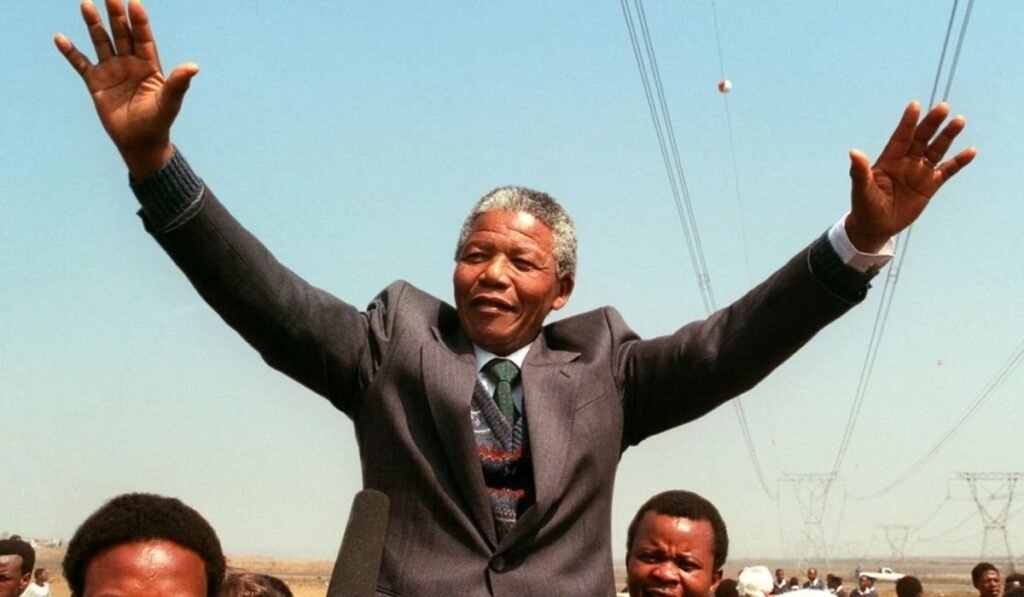
Walking out of Victor Verster Prison in February 1990 marked an explosive historical turning point for Nelson Mandela and South Africa. Holding the hand of his wife Winnie, he raised his fist to cheering throngs in Cape Town, delivering an iconic message of peace and reconciliation. Recognizing the impending collapse of the country, he immediately initiated delicate negotiations with the de Klerk government to dismantle minority rule. Navigating complex political transitions, high tensions, and sporadic violence required extraordinary diplomatic skill and patience. His ability to bridge deep racial divides during these tense talks averted a catastrophic civil war and paved the way for true democracy.
Achieving Democratic Transition and the 1994 Election
Steering the nation toward its first fully inclusive democratic election in 1994 crowned the lifelong struggle of Nelson Mandela. Millions of citizens lined up for hours in endless queues, casting their ballots in a peaceful and triumphant display of national renewal. The African National Congress secured a decisive electoral victory, clearing the path for a historic political transformation. On May 10, 1994, he took the oath of office, becoming the country’s first Black head of state. This monumental achievement closed centuries of colonial and racial oppression, ushering in an era of constitutional democracy anchored by universal human rights and equality.
Presidency and Nation-Building Initiatives
Transforming political victory into institutional stability defined the core agenda of the presidential administration led by Nelson Mandela. Rather than seeking retribution against former oppressors, he championed a powerful policy of national reconciliation and forgiveness. His government focused heavily on dismantling institutionalized poverty, expanding housing, delivering electricity, and improving healthcare access for marginalized populations. By embracing symbols of unity—such as supporting the national rugby team during the 1995 World Cup—he successfully bridged historical cultural divides. His visionary leadership turned potential ethnic hostility into a shared national identity built on mutual respect and collaborative progress.
Championing Post-Presidential Global Peace Work
Stepping down voluntarily after a single presidential term cemented the democratic commitment of Nelson Mandela to institutional longevity. True to his word, he handed over power in 1999, refusing to cling to authority as many other post-colonial leaders had done. In retirement, he did not fade into obscurity but instead launched numerous philanthropic foundations dedicated to children’s welfare, education, and HIV/AIDS awareness. He also joined “The Elders,” an independent group of global leaders working together to resolve international conflicts and promote human rights. His tireless humanitarian advocacy ensured that his influential voice continued to guide global peace efforts long after leaving formal office.
Legacy of Reconciliation and Forgiveness
Embodying the supreme spirit of forgiveness, the lifelong philosophy of Nelson Mandela remains a gold standard for conflict resolution worldwide. Choosing reconciliation over revenge enabled South Africa to avoid a bloody racial conflict that many international analysts had considered inevitable. He understood that true freedom meant not merely casting off one’s own chains, but living in a way that respected and enhanced the freedom of others. His legacy challenges contemporary leaders to prioritize dialogue, empathy, and institutional fairness over polarization. The profound grace he exhibited throughout his life continues to inspire peacebuilders, activists, and ordinary citizens across every corner of the modern globe.
Global Honors, Awards, and Cultural Impact
Receiving hundreds of prestigious international accolades—including the Nobel Peace Prize in 1993—highlighted the immense global impact of Nelson Mandela. Statues, bridges, squares, and public institutions named in his honor span across major cities from London to Washington, D.C. The United Nations officially established Nelson Mandela International Day on his birthday to encourage global community service and humanitarian action. His life story has been documented extensively in autobiographies, films, and academic curricula, ensuring his teachings endure for future generations. This vibrant cultural footprint guarantees that his visionary ideals will never be forgotten by humanity.
Passing, State Funeral, and Global Mourning
Experiencing a profound wave of global grief, the world mourned when Nelson Mandela passed away on December 5, 2013, at the age of ninety-five. World leaders, royalty, activists, and millions of ordinary citizens gathered in South Africa and across the globe to celebrate his extraordinary existence. His grand state funeral in Qunu combined traditional Thembu cultural rites with full military honors, reflecting his deep connection to both his heritage and his nation. Tributes poured in from every political spectrum, uniting ideological adversaries in shared admiration for his remarkable moral character. His departure marked the end of an era, leaving behind an unmatched blueprint for moral leadership.
The Eternal Flame of Hope and Human Rights
Sustaining the timeless fight for global justice, the legacy of Nelson Mandela serves as an eternal flame of hope for oppressed people everywhere. His journey teaches us that patience, resilience, and unwavering moral integrity can dismantle even the most formidable systems of tyranny. As societies face modern challenges of inequality and division, his timeless teachings offer clear guidance on how to build inclusive communities. By honoring his memory through concrete actions, humanity keeps his dream of a fairer, kinder world alive. The extraordinary footprints he left on the sands of time will forever guide future generations toward peace and dignity.
Continuing the Fight for Global Equality
Advancing the unfinished work of global equality requires active commitment from every individual inspired by the vision of Nelson Mandela. His life demonstrated that systemic injustices are created by humans and can therefore be dismantled by human action, courage, and solidarity. Whether fighting poverty, discrimination, or political corruption, his example reminds us never to surrender hope in the darkest hours. Embracing his spirit means standing up for the vulnerable and speaking truth to power with steadfast resolve. Through continuous collective effort, the timeless ideals he championed will keep transforming our world for the better, exactly as outlined on Nelson Mandela.
Frequently Asked Questions
- When was Nelson Mandela born?
- Nelson Mandela was born on 18 July 1918.
- How many years did he spend in prison?
- He spent a total of 27 years in prison for his anti-apartheid activism.
- Did Nelson Mandela win a Nobel Prize?
- Yes, he was awarded the Nobel Peace Prize in 1993 alongside F.W. de Klerk.
- When did he serve as President of South Africa?
- He served as the country’s first Black president from 1994 to 1999.
- What was his traditional Thembu clan name?
- He was widely and affectionately known by his clan name, Madiba.