Christopher Columbus remains one of history’s most debated maritime figures whose transatlantic voyages fundamentally altered global connections and reshaped the destiny of European exploration across the vast unknown oceans.
Quick Bio
| Attribute | Detail |
| Full Name | Cristoforo Colombo |
| Born | 1451, Genoa, Italy |
| Died | May 20, 1506, Valladolid, Spain |
| Spouse | Filipa Perestrelo |
| Children | Diego and Fernando |
| Key Role | Explorer and Navigator |
Early Life and Maritime Beginnings in Genoa
Growing up along the Ligurian coast, young Christopher Columbus developed an early fascination with the sea that would eventually define his entire existence. He took to maritime travel during his teenage years, participating in various commercial voyages across the Mediterranean and Aegean seas to gain essential navigational experience. These formative sailing excursions allowed him to build a strong foundation in practical seamanship, chart reading, and maritime trade dynamics. His ambition was deeply rooted in these early Mediterranean adventures, which pushed him to look beyond familiar shores toward more distant, uncharted oceanic horizons. Through continuous practical learning aboard merchant vessels, Christopher refined the vital skills that would later support his ambitious petitions for royal support.
Relocation to Portugal and Lisbon Years
Moving to Lisbon in his twenties provided Christopher Columbus with a critical base for expanding his geographical knowledge and maritime connections. In this bustling hub of maritime enterprise, he worked as a business agent and maritime trader while studying contemporary cartography and scholarly navigational texts. He married Filipa Perestrelo, cementing ties to the Portuguese nobility, which granted him access to influential nautical circles and maritime archives. During this period, he gathered accounts from other sailors regarding western currents and distant lands rumored to exist across the open Atlantic Ocean. These years in Portugal profoundly shaped the strategic thinking of Christopher as he began formulating his bold plan to reach Asia westward.
Developing the Bold Western Route Concept
Fascinated by the possibility of bypassing treacherous overland trade networks through the Middle East, Christopher Columbus conceptualized a daring voyage heading due west. He calculated that the earth’s circumference was small enough to make sailing across the Atlantic Ocean to Asia a feasible and profitable commercial endeavor. Despite relying on flawed geographical estimates and ancient texts, Christopher maintained absolute conviction in his theoretical calculations regarding global dimensions. He spent years pitching this unconventional maritime project to various European monarchs, determined to find a royal sponsor willing to back his grand oceanic vision. This unwavering persistence became a trademark of Christopher as he fought tirelessly against widespread skepticism from contemporary nautical experts.
Rejection and Perseverance in the Spanish Court
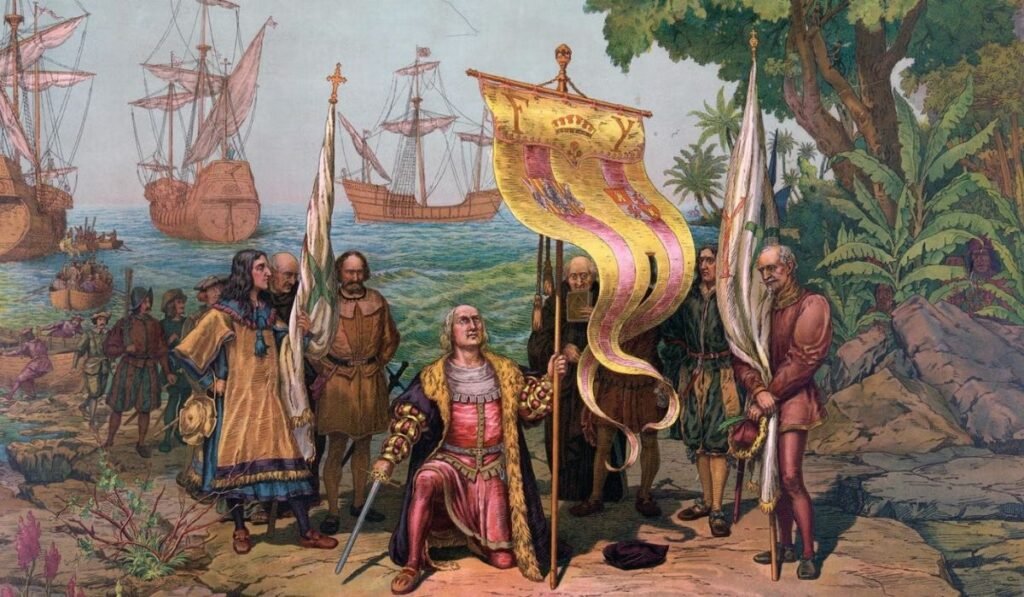
Facing initial rejection from Portuguese authorities, Christopher Columbus took his ambitious proposal to the Catholic Monarchs of Spain, Ferdinand and Isabella. The Spanish court initially dismissed his calculations as mathematically unsound, keeping Christopher waiting for years while they focused on domestic military campaigns. However, he refused to give up, continuously lobbying influential courtiers and religious figures who could sway the royal decision in his favor. His relentless determination finally paid off when the Spanish monarchs agreed to finance the expedition following the conclusion of the Granada War in 1492. This pivotal royal backing transformed Christopher from an impoverished petitioner into the appointed admiral of a historic royal fleet.
Preparations and the Port of Palos Departure
Securing royal decrees enabled Christopher Columbus to gather ships, supplies, and a diverse crew of sailors from the Andalusian port of Palos. He outfitted three vessels—the Niña, the Pinta, and the flagship Santa María—with provisions necessary for a lengthy and unpredictable voyage. Tensions ran high among the crew as Christopher prepared them for an unprecedented journey into the terrifying expanse of the open ocean. Local mariners were skeptical of his navigation plan, but royal authority compelled them to board the ships and trust the leadership of Christopher. On a fateful morning in August 1492, the small fleet finally weighed anchor, carrying the high hopes of Christopher into the unknown.
Crossing the Atlantic Ocean and Growing Unrest
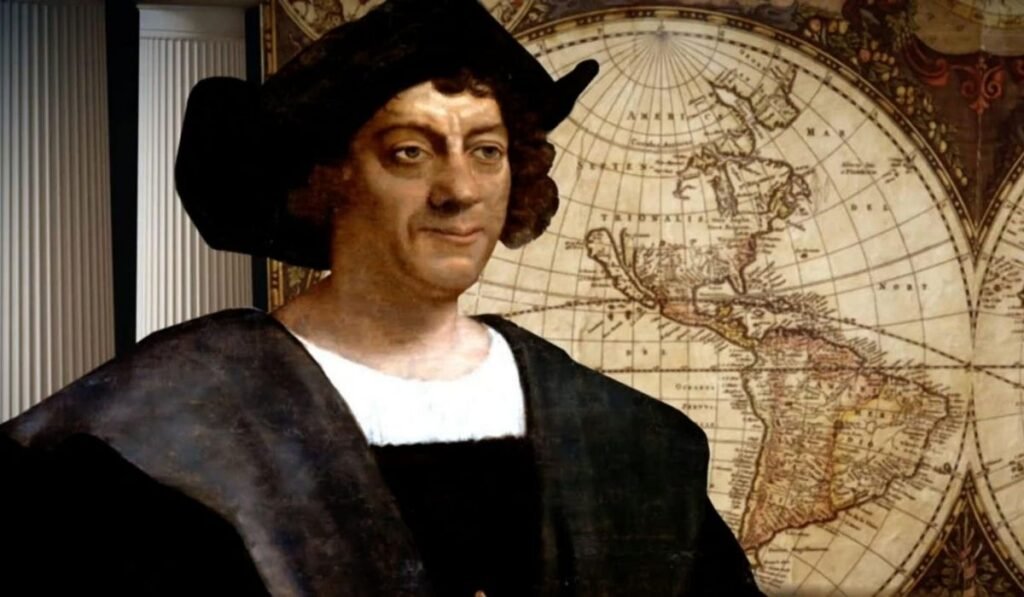
Weeks of continuous westward sailing tested the morale and loyalty of the crew as Christopher Columbus kept pushing further into uncharted waters. Sailors grew increasingly anxious about their dwindling supplies and the lack of any visible land, leading to murmurs of mutiny against Christopher. To manage potential panic, Christopher reportedly maintained dual ship logs to obscure the true distance traveled each day from an increasingly uneasy crew. Despite mounting pressure and fear of the endless horizon, Christopher urged his men to maintain faith and continue pressing onward. His steadfast confidence ultimately prevented a full-scale rebellion just days before their historic landfall changed the trajectory of Christopher forever.
Landfall in the Bahamas and First Contact
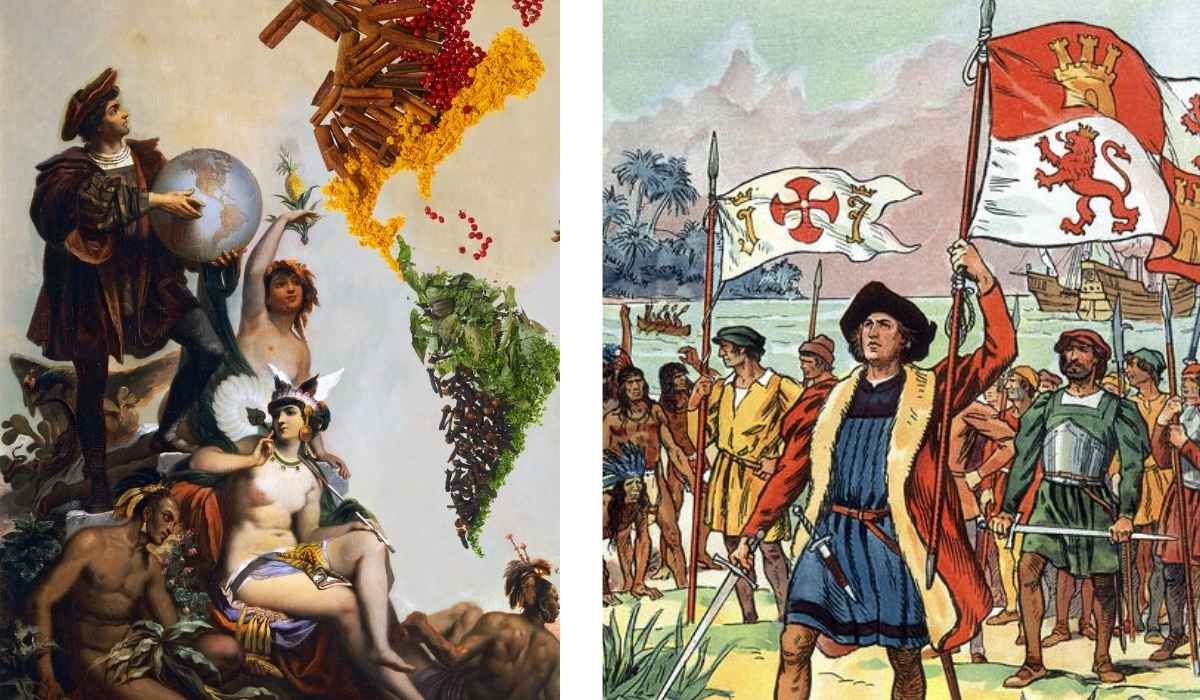
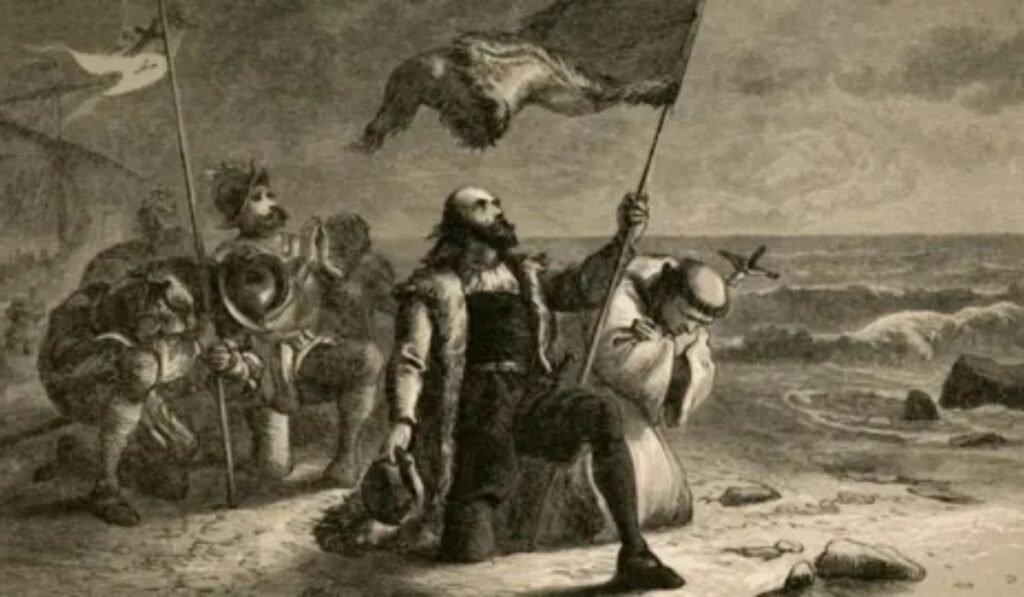
On October 12, 1492, lookout Rodrigo de Triana sighted land, marking the end of the harrowing transatlantic crossing for Christopher Columbus and his exhausted crew. They stepped ashore on an island in the present-day Bahamas, which Columbus promptly claimed in the name of the Spanish crown. During this momentous encounter, Christopher met the indigenous Lucayan people, whom he described in his journals as peaceful and remarkably generous. He traded simple European trinkets for local items while documenting the geography and wildlife of the newly reached territory. This initial interaction initiated a complex relationship between Europeans and native populations that would forever alter the history of Columbus.
Exploration of Cuba and Hispaniola
Following his initial landfall, Christopher Columbus continued exploring the Caribbean region, convinced he was navigating the outer islands of East Asia. He sailed southward and landed on the northern coast of Cuba, mistaking the massive island for the mainland of Cathay. Shortly thereafter, Christopher directed his ships toward Hispaniola, where the flagship Santa María unfortunately ran aground on a hidden coral reef. Utilizing timber salvaged from the wrecked vessel, the men under Christopher constructed Villa de la Navidad as their first settlement. This rudimentary outpost established a permanent European presence in the region, bringing further renown to Christopher across Spain.
Triumphant Return and Royal Reception in Spain
Returning to Europe in early 1493, Christopher Columbus presented exotic flora, fauna, and indigenous captives to Ferdinand and Isabella as proof of his success. The Spanish monarchs received Christopher with extraordinary honors, validating his grand claims and immediately funding a much larger follow-up expedition. Pamphlets detailing the discoveries of Christopher spread rapidly across Europe, sparking immense excitement and intense geopolitical rivalry among neighboring maritime powers. He was granted prestigious noble titles and promised a percentage of future wealth generated by the newly discovered western trade routes. This triumphant moment represented the absolute peak of fame and prestige for Christopher during his lifetime.
The Second Voyage and Colonization Efforts
In September 1493, Christopher Columbus set sail again with a massive fleet of seventeen ships and over a thousand eager colonists and missionaries. Upon returning to Hispaniola, Christopher discovered that the Navidad settlement had been completely destroyed and its occupants killed by local tribes. Determined to assert control, Christopher instituted a rigorous forced labor policy and brutal tribute system to extract gold for the Spanish crown. These harsh administrative measures sparked widespread resentment and violent resistance among the indigenous inhabitants of the island. The governance style of Christopher during this second expedition heavily tarnished his reputation as a capable and fair administrator.
Venturing to the South American Mainland
During his third voyage in 1498, Christopher Columbus finally reached the mainland of South America, exploring the coast of modern-day Venezuela. He observed the massive flow of the Orinoco River, correctly deducing that such a massive body of water must originate from a continental landmass. Despite this monumental geographical observation, Christopher stubbornly clung to the belief that he had merely touched the edge of a great Asian peninsula. His physical health began to deteriorate rapidly during this journey, compounded by mounting administrative chaos and political rebellions among colonists on Hispaniola. This turbulent period forced Christopher to confront the harsh reality of governing distant territories under severe economic pressure.
Administrative Crisis and Arrest in Hispaniola
Growing unrest and complaints regarding mismanagement eventually forced the Spanish crown to send a royal commissioner to investigate Christopher Columbus. Francisco de Bobadilla arrived in Hispaniola, arrested Christopher and his brothers, and ordered them chained and shipped back to Spain. The spectacle of Christopher arriving in chains shocked the Spanish public and prompted Queen Isabella to order his immediate release and restoration. Although he regained his freedom and a measure of royal favor, Christopher was permanently stripped of his governing authority over the Indies. This profound humiliation deeply affected Christopher for the remainder of his adventurous life.
The Final Voyage and Stranding in Jamaica
Undeterred by political disgrace, Christopher Columbus embarked on his fourth and final voyage in 1502, searching desperately for a strait to the Indian Ocean. His ships suffered from severe worm infestation and terrible weather, forcing Christopher Columbus to strand his crew on the island of Jamaica. Stranded for a full year, Christopher famously used a lunar eclipse prediction to compel local inhabitants to resume supplying his desperate men with food. Rescue ships eventually arrived from Hispaniola, allowing the battered and exhausted explorer to return to Spain in late 1504. This arduous final expedition broke the health and spirit of Christopher, ending his active seafaring career.
Final Years, Decline, and Death in Spain
The remaining years of Christopher Columbus were marked by persistent legal battles to recover financial privileges and titles promised by the royal contracts. Despite accumulating considerable wealth from his earlier ventures, Christopher felt deeply unappreciated by the court and neglected by royal authorities. He spent his final days drafting testaments and petitions while residing comfortably in Valladolid, Spain. On May 20, 1506, Christopher Columbus passed away quietly, largely unaware of the true global magnitude of the continents he had unlocked. Following his death, the remains of Christopher undertook several transatlantic relocations before resting permanently.
Historical Legacy and Complex Modern Re-evaluation
The historical legacy of Christopher Columbus remains intensely complex, balancing monumental maritime achievements against the devastating consequences of subsequent European colonization. For centuries, traditional historiography celebrated Christopher Columbus as a visionary pioneer who courageously bridged the Old World and the New World. Modern historical evaluations, however, focus heavily on the catastrophic impact that Christopher Columbus and subsequent colonizers had on indigenous populations. Discussions surrounding Christopher Columbus now encompass debates over disease transmission, forced labor, and the brutal realities of imperial conquest. Ultimately, Christopher Columbus stands as a transformative historical catalyst who permanently altered the course of human geography.
Controversies Surrounding Columbus Day
The cultural impact of Christopher Columbus is frequently reflected in modern debates regarding national holidays commemorating his initial 1492 arrival. Critics argue that honoring Christopher Columbus promotes the celebration of colonization, slavery, and the systemic mistreatment of indigenous Americans. Conversely, traditional supporters view Christopher Columbus Day as an important celebration of Italian-American heritage and maritime exploration milestones. Many regions and municipalities have transitioned toward recognizing Indigenous Peoples’ Day alongside or instead of traditional celebrations honoring Christopher Columbus. These ongoing cultural controversies ensure that Christopher Columbus remains a deeply polarizing figure in contemporary public memory.
Myth versus Reality in Popular Lore
Popular culture has generated numerous myths about Christopher Columbus, most notably the misconception that he proved the earth was flat. Educated Europeans of the fifteenth century already understood that the planet was spherical, though they fiercely debated its exact size. Another common misconception is that Christopher Columbus set out to prove global geometry, whereas his primary motivation was purely economic trade access. Separating the myth from the documented reality reveals a deeply ambitious, flawed human being rather than a flawless mythical hero. Historical records left by Christopher Columbus provide a fascinating window into the mindset of Renaissance-era European explorers.
Navigation Techniques of the Fifteenth Century
The maritime success achieved by Christopher Columbus relied heavily on traditional navigational instruments like the astrolabe, quadrant, and magnetic compass. Navigators of his era used dead reckoning and celestial observation to estimate ship positions across vast and unpredictable open waters. Christopher Columbus demonstrated exceptional skill in reading wind patterns and ocean currents, particularly utilizing the trade winds of the Atlantic. These empirical techniques enabled Christopher Columbus to successfully navigate back and forth across an ocean previously deemed uncrossable by most contemporary mariners. The navigational methods utilized by Christopher Columbus formed the backbone of maritime exploration during the Age of Discovery.
Lasting Impact on Global Exchange
The transatlantic journeys initiated by Christopher Columbus triggered the Columbian Exchange, permanently altering global ecosystems, agriculture, and human diets. Plants, animals, cultures, and populations began moving freely between the Eastern and Western Hemispheres for the very first time in history. Staple crops like potatoes, maize, and tomatoes transformed European agriculture, while European livestock reshaped American environments. This unprecedented ecological transfer is perhaps the most enduring legacy of Christopher Columbus, far exceeding his original goal of finding a trade route to Asia. Every facet of modern global interconnectedness can be traced back to the historic maritime pathways first opened by Christopher Columbus.
Frequently Asked Questions
- What was the primary goal of Christopher Columbus in 1492?
- Christopher Columbus sailed westward to find a direct and profitable trade route to Asia for spices and gold.
- Did Christopher Columbus discover the continent of North America?
- No, Christopher Columbus landed in the Bahamas, Cuba, and Hispaniola, never actually reaching the North American mainland.
- Why did Christopher Columbus call the native people Indians?
- Christopher Columbus mistakenly believed to his dying day that he had reached the East Indies near Asia.
- How many total transatlantic voyages did Christopher Columbus complete?
- Christopher Columbus completed four distinct voyages between 1492 and 1504 across the Atlantic Ocean.
- Where are the physical remains of Christopher Columbus located today?
- The remains of Christopher Columbus are housed in the Cathedral of Seville in Spain, following several historic moves.