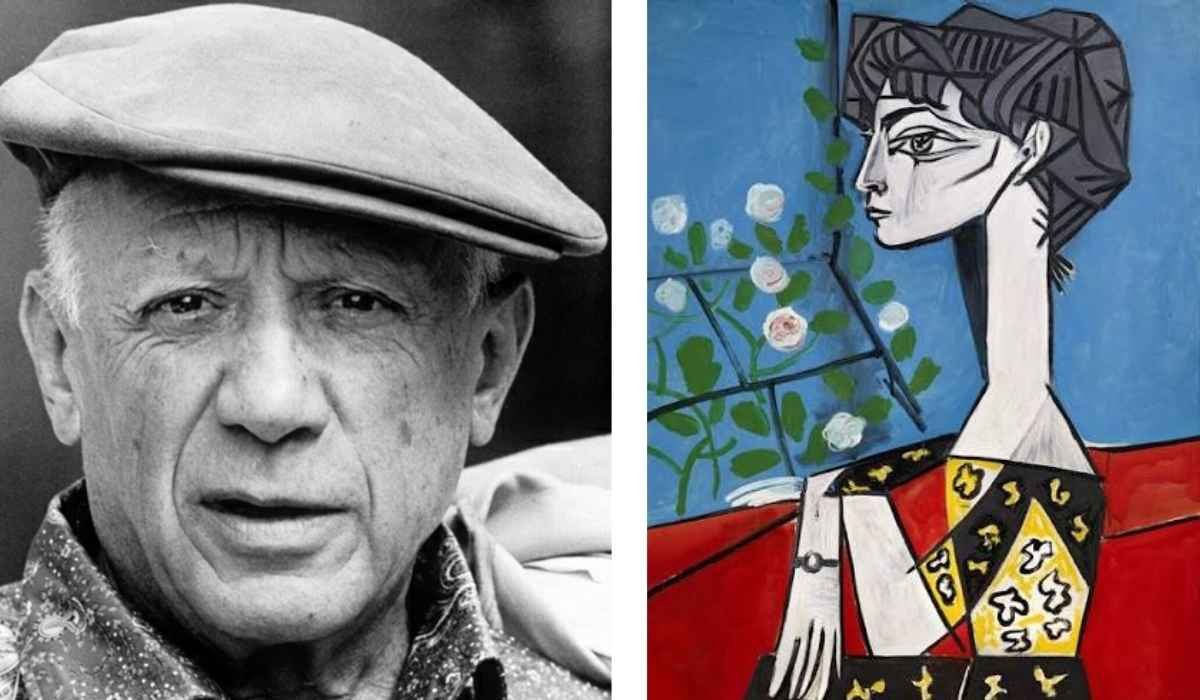
Art history remains fundamentally incomplete without examining the profound impact of Pablo Picasso, whose radical vision transformed global creative expression. Born in Spain, he spent his formative decades redefining the boundaries of visual culture through relentless experimentation and raw talent. From his early academic studies Pablo Picasso to pioneering avant-garde movements, his creative journey spans decades of intense output. Scholars continue to analyze Pablo Picasso his technical dexterity, emotional depth, and structural innovations across painting, sculpture, and ceramics. Pablo Picasso Understanding this legendary icon requires looking closely at the distinct phases that shaped his incredible career, his personal Pablo Picasso influences, and his enduring cultural footprint.
Quick Bio
| Attribute | Detail |
| Full Name | Pablo Diego José Francisco de Paula Juan Nepomuceno María de los Remedios Cipriano de la Santísima Trinidad Ruiz y Picasso |
| Birth Date | October 25, 1881 |
| Birthplace | Málaga, Spain |
| Death Date | April 8, 1973 |
| Key Movement | Cubism |
Early Beginnings in Málaga
Growing up in the sunny coastal Pablo Picasso environment of southern Spain provided young Pablo Picasso with immediate exposure to traditional Mediterranean Pablo Picasso landscapes and daily life. His father worked as an academic drawing instructor, recognizing early potential and Pablo Picasso encouraging disciplined technical practice. Sketching everyday objects became an obsession for the child, who preferred Pablo Picasso pencil and paper over conventional childhood toys. Family dynamics shifted frequently as financial pressures and Pablo Picasso academic appointments required relocation to different regional hubs. These formative years laid a rigorous technical Pablo Picasso foundation that later enabled him to break traditional rules with absolute confidence.
Moving to Barcelona
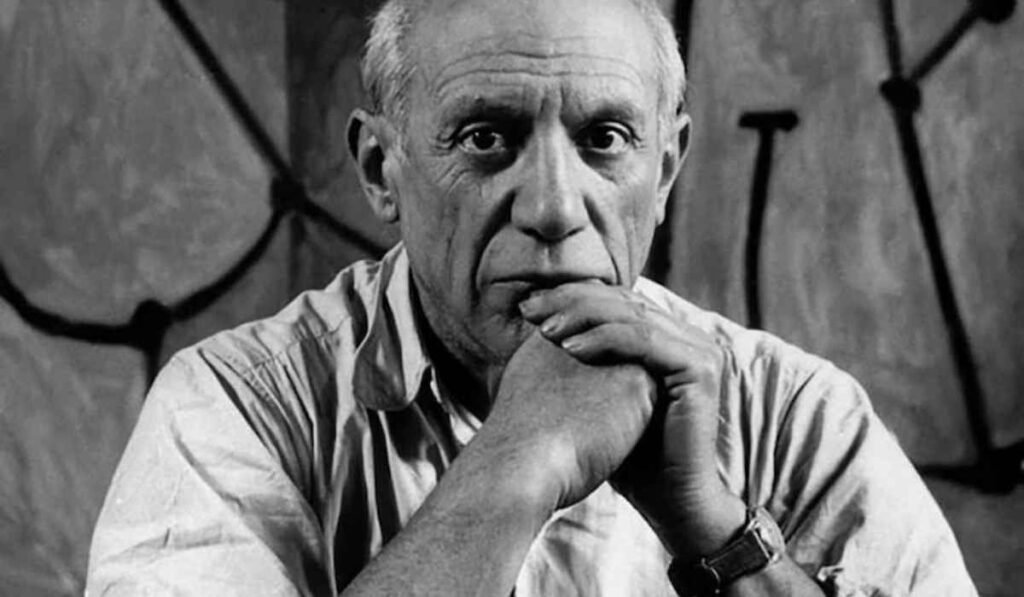
Relocating to Catalonia exposed the maturing artist to a vibrant cultural metropolis buzzing with modern ideas, political discourse, and artistic ambition. Enrolling in the prestigious local academy allowed him to test academic limits while connecting with fellow creative minds in local cafés. Barcelona offered a supportive sanctuary where traditional Spanish artistic values collided with progressive European concepts. During this bustling period, Pablo Picasso began signing his canvases with distinct variations of his family names to establish an independent identity. The energetic city streets and bohemian nightlife served as prime visual subjects for his burgeoning portfolio.
The Academic Training in Madrid
Seeking formal institutional validation, the young creator relocated to Spain’s capital to study at the premier national academy of fine arts. Strict classrooms demanded absolute adherence to classical antiquity, plaster casts, and historical master copies rather than individual expression. Bureaucratic teaching methods quickly frustrated his experimental spirit, leading him to abandon mandatory lectures in favor of independent museum studies. Exploring the Prado Museum allowed him to copy works by Velázquez and Goya directly, absorbing centuries of technique. This brief institutional exposure proved that conventional academic paths could not contain his expanding creative vision.
Discovering the Parisian Avant-Garde
Traveling to France during the turn of the century introduced the ambitious Spaniard to the pulsating epicenter of international modern art. Montmartre cafes buzzed with poets, dealers, and radical painters who welcomed outsiders willing to challenge established bourgeois aesthetics. Sharing cramped living quarters with local writers accelerated his grasp of the French language and contemporary literary theory. Paris provided an electric atmosphere of freedom, financial uncertainty, and intense competition that catalyzed his stylistic transformation. Immersing himself in this cosmopolitan hub permanently shifted his geographic and artistic loyalties toward French culture.
The Melancholy Blue Period
Personal tragedy struck deeply following the suicide of a close friend, plunging the young master into a profound emotional and financial crisis. This somber psychological state dictated a drastic palette shift dominated entirely by monochromatic shades of icy blue, indigo, and teal. Destitute outcasts, beggars, blind musicians, and melancholic figures populated his canvases, reflecting deep empathy for society’s marginalized populations. Critics initially struggled to market these gloomy compositions, yet collectors eventually recognized their haunting emotional power. The Blue Period established Pablo Picasso as a master of psychological portraiture capable of conveying intense human suffering through color restriction.
Transition to the Rose Period
Romantic warmth gradually replaced bitter sorrow as the artist settled permanently in Montmartre and found stable companionship among local bohemians. Lighter terracotta tones, soft pinks, and warm ochres entered his palette, signaling a cheerful evolution in his ongoing creative output. Circus performers, traveling acrobats, harlequins, and saltimbanques became central motifs, symbolizing the bittersweet lifestyle of wandering entertainers. These engaging paintings captured a delicate balance between public performance and private vulnerability, enchanting early Parisian collectors. The Rose Period demonstrated his remarkable ability to pivot emotionally while maintaining supreme control over draftsmanship and composition.
The African Influenced Breakthrough
Fascinated by non-Western artifacts displayed in ethnographic museums, the painter began exploring tribal masks, Iberian sculptures, and indigenous carvings. Striking geometric distortions and simplified facial planes began eroding traditional perspective rules that had dominated European painting for centuries. This radical departure stripped away sentimental narrative elements in favor of aggressive angularity and raw formal structure. Critics viewed these experimental creations with shock and confusion, recognizing a deliberate challenge to civilized artistic conventions. This pivotal phase acted as an indispensable stepping stone toward the complete dismantling of Renaissance pictorial space.
Inventing Cubism with Georges Braque
Collaborating closely with a fellow visionary French painter initiated one of the most radical partnerships in the history of modern visual culture. Both creators broke down unified subjects into fragmented geometric facets, viewing objects simultaneously from multiple vantage points. Canvases abandoned traditional single-point perspective, presenting flat, multi-angled planes that baffled contemporary audiences and art critics alike. This intellectual movement fundamentally altered how humanity perceived visual reality, inspiring generations of abstract designers and sculptors. Through this collaborative breakthrough, Pablo Picasso permanently redefined the structural grammar of 20th-century fine art.
Exploring Synthetic Cubism
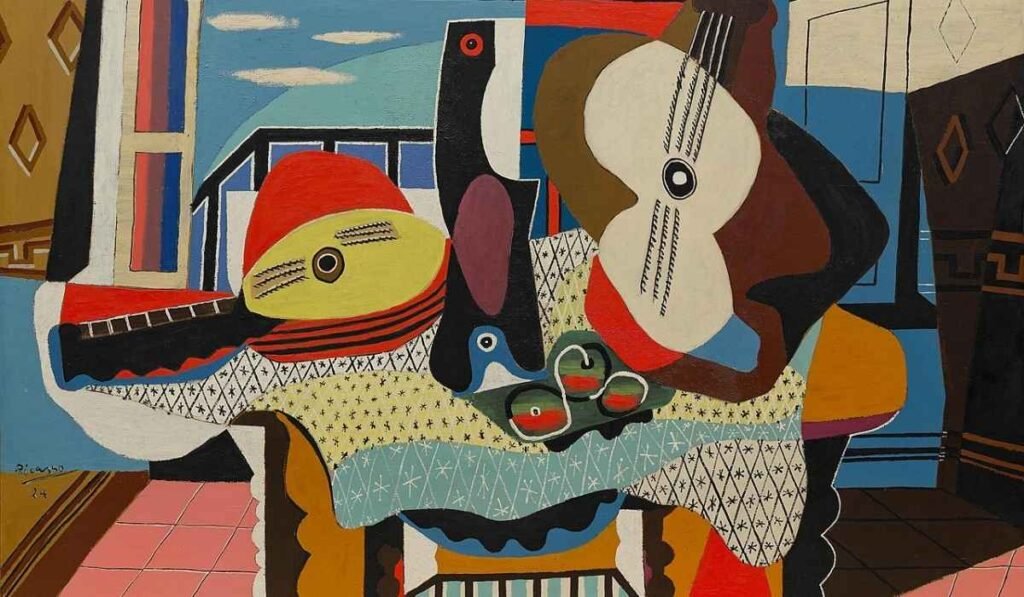
Collage techniques entered the studio as the pioneers began pasting real-world materials like oilcloth, newspaper clippings, and cardboard directly onto flat surfaces. This innovative method blurred the boundary between high fine art and low everyday consumer debris, questioning the nature of representation. Compositions became brighter, more colorful, and structurally decorative while retaining the multi-perspective breakdown of earlier analytical experiments. Pablo Picasso manipulated these mixed-media elements to challenge viewers to distinguish between actual textures and painted illusions. Synthetic Cubism proved that abstract structures could effectively communicate complex ideas about modern industrial society.
Neoclassical Return to Order
Global conflict during the First World War disrupted the Parisian avant-garde network, prompting a surprising return to monumental figuration and classical calm. Traveling to Italy to design theatrical ballet sets exposed him to classical sculpture, Renaissance frescoes, and monumental architecture. Heavy, sculptural bodies reminiscent of ancient Roman statues populated his canvases, displaying serene expressions and monumental physical presence. Audiences accustomed to jagged abstract facets were stunned by this deliberate turn toward traditional realism. This stylistic duality demonstrated that Pablo Picasso could effortlessly master classical discipline whenever experimental exhaustion set in.
Entering the Surrealist Orbit
Literary and artistic movements centered on dream analysis, subconscious desires, and psychological automatism deeply influenced his studio experiments during the mid-twenties. Distorted biomorphic shapes, melting limbs, and monstrous erotic figures emerged, reflecting the psychological anxieties of interwar Europe. These imaginative compositions bypassed rational thought, tapping directly into primal fears, nighttime fantasies, and complex interpersonal desires. While never officially joining the formal literary group, Pablo Picasso shared their fascination with irrational imagery and dream logic. His surrealist-inspired output revealed the darker, more unsettling dimensions of human anatomy and emotional relationships.
Mastering Ceramics in Vallauris
Relocating to the French Riviera opened a completely fresh chapter focused on tactile craftsmanship, pottery throwing, and baked clay sculpture. Local ceramic workshops provided an exciting medium where functional plates, pitchers, and tiles transformed into whimsical animal and human faces. Using glazes and incised lines with spontaneous energy, he revitalized an ancient craft through modern aesthetic principles. This prolific period produced thousands of unique ceramic pieces that democratized his art for a wider audience of collectors. Pablo Picasso proved that his creative genius could effortlessly conquer utilitarian materials with identical vigor and playfulness.
Political Awakening and Guernica
Totalitarian violence and the outbreak of the Spanish Civil War galvanized the artist into creating his most famous monumental anti-war masterpiece. Depicting the tragic aerial bombing of a Basque town, the massive monochrome canvas utilized stark black, gray, and white tones. Agonized human figures, screaming mothers, dismembered soldiers, and gored animals conveyed the universal horror of modern military destruction. Displayed internationally to raise awareness, the painting became an enduring global symbol of political resistance against fascism. Pablo Picasso utilized his immense cultural platform to denounce tyranny and champion innocent victims of conflict.
Prolific Printmaking and Etching
Endless fascination with graphic arts led to extensive experimentation across lithography, linocut, drypoint, and traditional copperplate etching techniques. Working alongside master printers in rural workshops, he pushed printing presses to their absolute limits through multi-plate color layering. Mythological themes featuring minotaurs, fauns, and studio models frequently animated these detailed paper editions. Printmaking allowed him to distribute his compositions widely, making ownership accessible beyond elite oil painting collectors. This vast graphic legacy remains a cornerstone of 20th-century print room collections across the globe.
Later Years and Restless Production
Old age did little to slow down the relentless daily studio routine of history’s most productive fine artist. Advanced decades brought intensified self-reflection, revisiting themes of aging artists, passionate muses, and historical master painters. Canvases from his final years featured hurried, expressive brushstrokes and vibrant colors executed with urgent vitality. Critics often misunderstood these late, rapid creations, though later generations praised their raw, uninhibited emotional honesty. Pablo Picasso painted continuously until his final days, maintaining an unshakeable devotion to visual creation.
Legacy and Cultural Impact
Global culture continues to feel the seismic repercussions of an artistic career that spanned nearly eight productive decades. Museums dedicated entirely to his vast portfolio attract millions of annual visitors across Barcelona, Paris, Antibes, and Málaga. Art market records consistently place his auctioned masterpieces among the most expensive cultural assets ever sold in human history. Beyond financial metrics, his willingness to reinvent visual grammar liberated subsequent generations of creators to pursue total freedom. Pablo Picasso remains the definitive archetype of modern artistic genius, innovation, and unstoppable cultural influence.
FAQs
- What was the primary art movement co-founded by Pablo Picasso?
- He co-founded the Cubist movement alongside Georges Braque.
- Which famous masterpiece depicts the bombing of a Basque town during the Spanish Civil War?
- The monumental anti-war painting Guernica immortalized that tragic event.
- What color dominated his famous melancholy period during the early 1900s?
- Monochromatic shades of blue defined his psychological Blue Period.
- Where was Pablo Picasso born?
- He was born in the coastal city of Málaga, Spain.
- Approximately how many total artworks did he produce during his lifetime?
- He created tens of thousands of paintings, sculptures, ceramics, and prints.