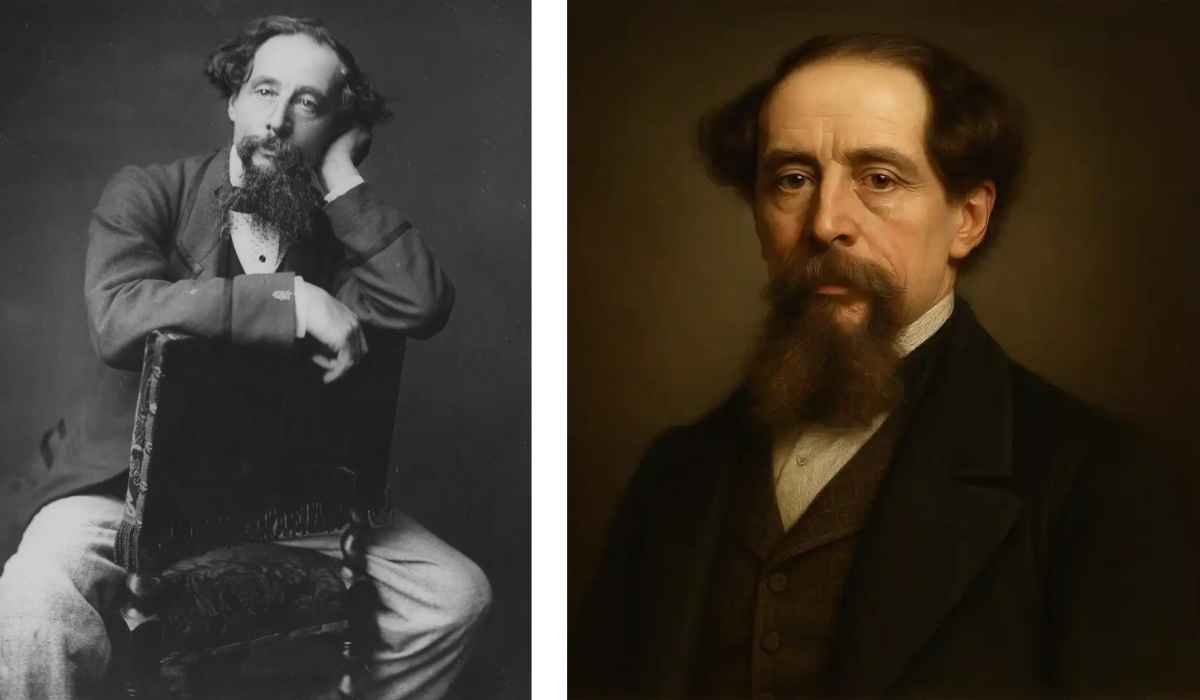
The literary world changed forever when Charles Dickens began publishing his iconic stories, capturing the hearts of millions across the globe through unforgettable characters, vivid descriptions of Victorian London, and powerful social commentary that exposed the harsh realities faced by impoverished classes, working tirelessly to champion human rights, reform unjust institutional systems, entertain diverse audiences, inspire generations of subsequent writers, establish serialized publishing norms, captivate readers with theatrical public readings, shape modern holiday traditions, document industrial era struggles, and secure an immortal place in history.
Quick Bio
| Attribute | Detail |
| Born | February 7, 1812 |
| Died | June 9, 1870 |
| Profession | Novelist, Journalist |
| Notable Works | Oliver Twist, Great Expectations |
Early Childhood and Family Background
Born in Portsmouth, England, during the early nineteenth century, Charles Dickens entered a relatively modest household where financial instability cast a persistent shadow over his formative years, shaped heavily by a father whose well-intentioned nature frequently clashed with a profound inability to manage money properly, leading to mounting debts that eventually disrupted family stability, forced young children to mature rapidly amidst economic chaos, created deep psychological impressions that later manifested vividly throughout numerous fictional masterpieces, and established an enduring empathy for society’s most vulnerable and neglected marginalized populations.
The Harsh Realities of Debt Prison
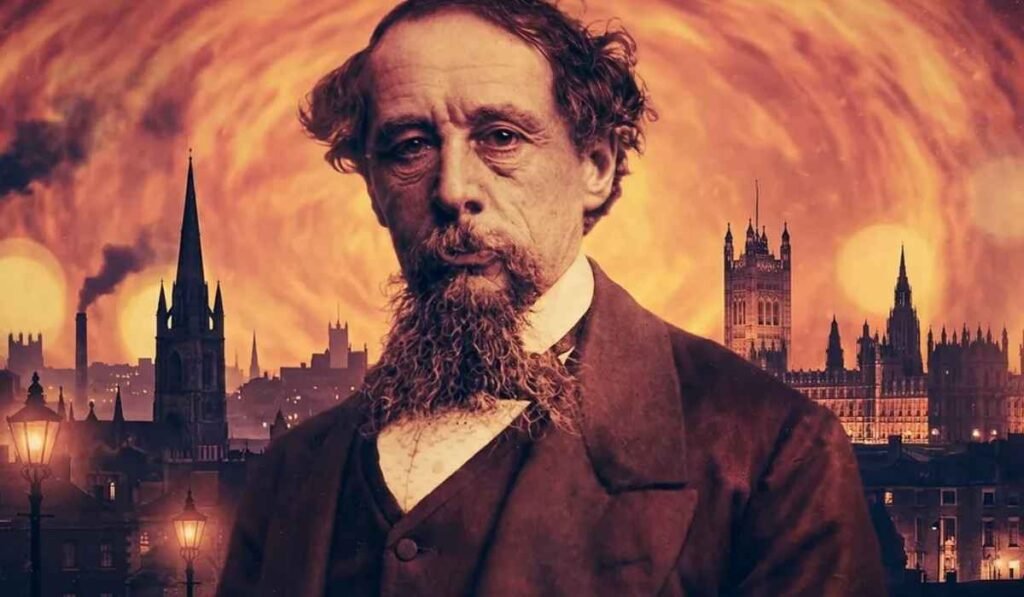
Financial ruin struck the family severely when mounting obligations forced his father into a notorious Marshalsea debtors’ institution, compelling young Charles Dickens to abandon formal education prematurely at a tender age and enter a grim boot-blacking warehouse where grueling manual labor involving pasting labels onto pots created deep emotional scars, intense feelings of abandonment, profound grief, and lasting trauma that he rarely discussed openly with friends, yet transformed secretly into creative fuel that powerfully informed his later critiques regarding institutional cruelty and widespread societal indifference.
Return to Education and Growth
Following a sudden small inheritance that cleared lingering debts, his release from confinement allowed Charles Dickens to re-enter a formal classroom setting at Wellington House Academy, where dedicated teachers helped cultivate his blossoming intellect, sharp observational skills, natural linguistic flair, energetic storytelling abilities, and keen academic curiosity, enabling him to transition smoothly from factory laborer to ambitious youth eager to explore the bustling streets of London, absorb urban eccentricities, and prepare himself for a demanding professional journey within the legal and literary spheres.
Entering the Legal and Journalistic World
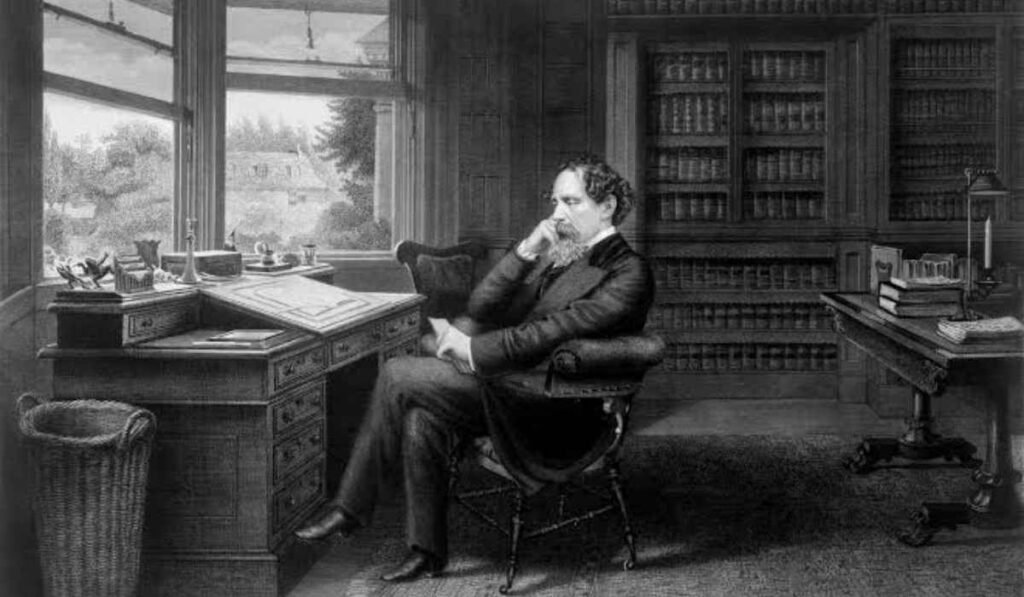
Seeking stable employment within the capital, Charles Dickens took a position as an office boy at a prominent law firm, mastering complex shorthand techniques through sheer determination to secure better career prospects as a freelance court reporter, navigating parliamentary debates, recording political speeches, observing corrupt judicial procedures firsthand, sharpening his journalistic eye, expanding his understanding of human behavior, and building a strong foundation for the satirical, observant, and critical prose style that would soon define his meteoric rise to fame.
The Rise of Boz and Early Sketches
Writing under the playful pseudonym Boz, Charles Dickens began contributing vivid, highly entertaining descriptive essays and sketches about everyday street life to various popular London periodicals and newspapers, capturing the unique rhythms, absurdities, and struggles of ordinary urban citizens with astonishing fidelity, humor, warmth, and artistic brilliance, which were eventually compiled into his very first successful book publication, establishing his growing reputation as a brilliant chronicler of contemporary English society and paving the way for unprecedented literary triumph.
The Phenomenon of The Pickwick Papers
Commissioned to write accompanying text for a series of comic sporting plates, Charles Dickens created The Pickwick Papers, a wildly hilarious episodic narrative that unexpectedly became a massive cultural phenomenon, transforming monthly publishing standards, captivating readers from all social strata, introducing eccentric characters like Samuel Pickwick, generating immense commercial revenue, cementing his status as a household name, proving the viability of serial fiction, and sparking an absolute revolution in Victorian reading habits and editorial commercial strategies.
Marriage and Family Life
Amidst his skyrocketing professional success, Charles Dickens married Catherine Hogarth in the spring of 1836, embarking upon a complex domestic chapter that eventually produced a large family of ten children, demanding intense writing schedules, frequent household relocations, continuous financial provisioning, editorial management, and public appearances, though the marriage ultimately deteriorated over time due to emotional incompatibilities, leading to a highly publicized separation that deeply affected his personal life during his later career years.
Exposing Institutional Cruelty in Oliver Twist
Publishing his groundbreaking second novel in monthly installments, Charles Dickens exposed the dark underworld of crime, workhouse abuse, and systemic hypocrisy through Oliver Twist, creating legendary archetypes like Fagin, the Artful Dodger, and Bill Sikes, shocking middle-class sensibilities, demanding immediate social reform, highlighting the plight of innocent orphans trapped in corrupt systems, and demonstrating the profound moral responsibility of literature to challenge injustice and evoke genuine compassion across a divided nation.
Exploring Identity in Nicholas Nickleby
Continuing his relentless crusade against institutional abuse, Charles Dickens turned his sharp satirical focus toward unscrupulous Yorkshire boarding schools in Nicholas Nickleby, blending melodrama, picaresque adventure, theatrical comedy, and social critique to expose cruelty toward defenseless children while celebrating loyalty, resilience, familial devotion, entrepreneurial spirit, and personal integrity, thereby reinforcing his dominant position as the premier voice of Victorian conscience and creative entertainment.
Historical Drama and Mob Psychology in Barnaby Rudge
Venturing into historical fiction for the first time, Charles Dickens meticulously researched the violent anti-Catholic Gordon Riots of 1780 to craft Barnaby Rudge, an intricate narrative exploring the destructive power of fanatical mob psychology, political manipulation, social unrest, and personal redemption against a backdrop of public chaos, showcasing his impressive versatility as an author capable of handling vast historical canvases alongside intimate domestic dramas with equal artistic mastery.
The Magic and Message of A Christmas Carol
Inventing the modern holiday spirit single-handedly, Charles Dickens wrote the timeless novella A Christmas Carol in an intense burst of creative inspiration, warning readers about the perils of greed, selfishness, and indifference toward the poor through the unforgettable redemption of Ebenezer Scrooge, proving that compassion, charity, community, and personal transformation remain accessible to everyone regardless of past mistakes or hardened hearts during festive seasons.
Unraveling Legal Corruption in Bleak House
Mastering a complex dual-narrative structure, Charles Dickens delivered a devastating critique of the British legal system through Bleak House, centering around an endless, soul-crushing inheritance lawsuit that destroys everyone involved, while simultaneously painting a sweeping portrait of urban fog, social stratification, institutional neglect, investigative mystery, and moral responsibility, widely regarded by literary critics as one of his absolute finest artistic achievements.
Industrial Critique in Hard Times
Focusing on the cold, utilitarian philosophy dominating industrial northern England, Charles Dickens explored the dehumanizing effects of unchecked industrialization, factory labor, rigid educational systems, and emotional suppression in Hard Times, contrasting the dry calculations of fact-obsessed characters with the vital necessity of imagination, empathy, art, human connection, and emotional freedom in maintaining a healthy, civilized, and balanced modern society.
Reflecting Personal History in David Copperfield
Drawing heavily upon his own deeply guarded childhood traumas, secret factory experiences, and early journalistic struggles, Charles Dickens crafted his most beloved and autobiographical masterpiece, David Copperfield, tracing the emotional and professional maturation of an aspiring writer through various trials, eccentric mentors, financial hardships, romantic disappointments, and ultimate triumph, a book that the author himself cherished above all his other voluminous literary creations.
Portraying Ambition and Guilt in Great Expectations
Examining the corrupting nature of social ambition, class snobbery, guilt, and genuine affection, Charles Dickens presented the poignant journey of Pip in Great Expectations, navigating rural poverty, mysterious benefactors, unrequited love, and moral awakening, demonstrating his mature psychological depth, subtle irony, haunting atmosphere, and peerless ability to capture the delicate complexities of human conscience and personal redemption.
International Tours and Public Readings
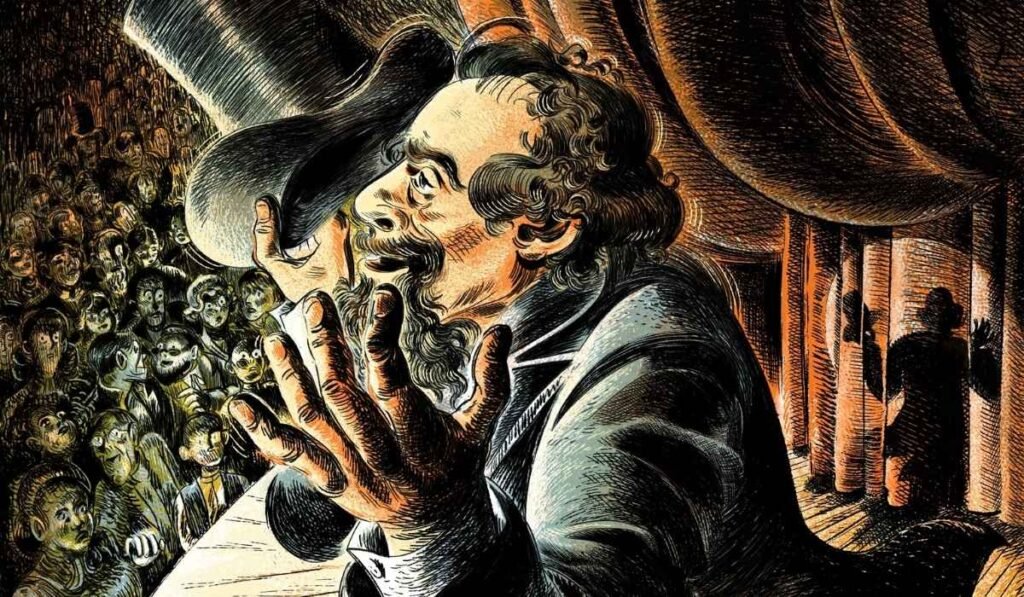
Embarking on exhausting international travel itineraries across Great Britain and North America, Charles Dickens performed dramatic public readings of his famous stories to massive, adoring crowds, bringing his beloved characters to vivid life on stage, generating immense financial success, satisfying his relentless restless energy, connecting directly with global fans, and unfortunately accelerating the physical decline that would eventually lead to his premature death.
The Tragic Staplehurst Rail Accident
Surviving a horrific railway disaster at Staplehurst where carriage cars plummeted off a broken bridge, Charles Dickens suffered severe psychological shock and physical trauma that permanently altered his remaining years, causing lingering anxiety and declining health, yet he continued writing, traveling, and performing with characteristic stubborn determination until his final days on earth were fully spent.
Unfinished Mysteries and Final Days
Working tirelessly on his final intricate mystery thriller, The Mystery of Edwin Drood, Charles Dickens suffered a severe stroke at his country home, Gad’s Hill Place, passing away on June 9, 1870, leaving the literary world in profound mourning, his ambitious final plot forever unsolved, and a legendary writing career abruptly terminated while still blazing with creative brilliance.
Westminster Abbey and Global Legacy
Laid to rest among monarchs and poets in the hallowed Poet’s Corner of Westminster Abbey, Charles Dickens left behind an immortal global legacy that continues to influence modern storytelling, cinematic adaptations, theatrical productions, cultural traditions, social reform movements, and academic studies across every continent, ensuring his name remains synonymous with the absolute pinnacle of English literature.
Eternal Cultural Impact and Memorialization
Celebrating his monumental contributions through museums, international festivals, scholarly societies, and continuous contemporary adaptations, society ensures that the visionary genius of Charles Dickens endures forever, reminding modern generations of the enduring power of empathy, the importance of social justice, the necessity of protecting society’s most vulnerable children, and the eternal magic of great storytelling.
Frequently Asked Questions
- When was Charles Dickens born?
- Charles Dickens was born on February 7, 1812.
- What was Charles Dickens’s first published novel?
- His first published novel was The Pickwick Papers.
- Why did Charles Dickens work in a factory as a child?
- He worked in a factory because his father was sent to debtors’ prison.
- Where is Charles Dickens buried?
- He is buried in Poet’s Corner at Westminster Abbey.
- Which unfinished novel did Charles Dickens leave behind?
- He left behind The Mystery of Edwin Drood.