The brilliant historical figure known globally as Leonardo Da Vinci changed the course of human civilization through his unparalleled artistic mastery and scientific curiosity. Born in the small Tuscan town of Vinci, this extraordinary polymath combined rigorous empirical observation with sublime artistic vision to create masterpieces that continue to captivate modern audiences worldwide. His relentless pursuit of knowledge transcended traditional boundaries, encompassing anatomy, engineering, botany, and painting with equal brilliance. Every single stroke of his brush and every recorded observation in his famous notebooks revealed a mind centuries ahead of its time, cementing his status as a legendary cultural icon. Throughout his remarkable lifetime, he demonstrated how relentless inquiry could unlock the deepest mysteries of nature and human expression.
Quick Bio Of Leonardo Da Vinci
| Attribute | Details |
| Full Name | Leonardo di ser Piero da Vinci |
| Birth Date | April 15, 1452 |
| Birth Place | Anchiano, Republic of Florence |
| Death Date | May 2, 1519 |
| Primary Fields | Painting, Science, Engineering, Anatomy |
| Masterpieces | Mona Lisa, The Last Supper |
Early Origins And Childhood In Tuscany
Growing up amidst the picturesque landscapes of rural Tuscany provided young Leonardo Da Vinci with an early appreciation for natural beauty and organic forms. His formative years were spent exploring local hillsides, observing wildlife, and sketching intricate details of flora and fauna that later influenced his mature compositions. Although his formal education was relatively basic, his innate intelligence and sharp observational skills quickly set him apart from his peers in the local community. Family support eventually allowed him to relocate to a major cultural hub where his latent artistic talents could be properly nurtured and developed. These rustic beginnings laid a robust foundation for an exceptional career defined by endless curiosity and groundbreaking creative output.
Apprenticeship Under Master Andrea Del Verrocchio
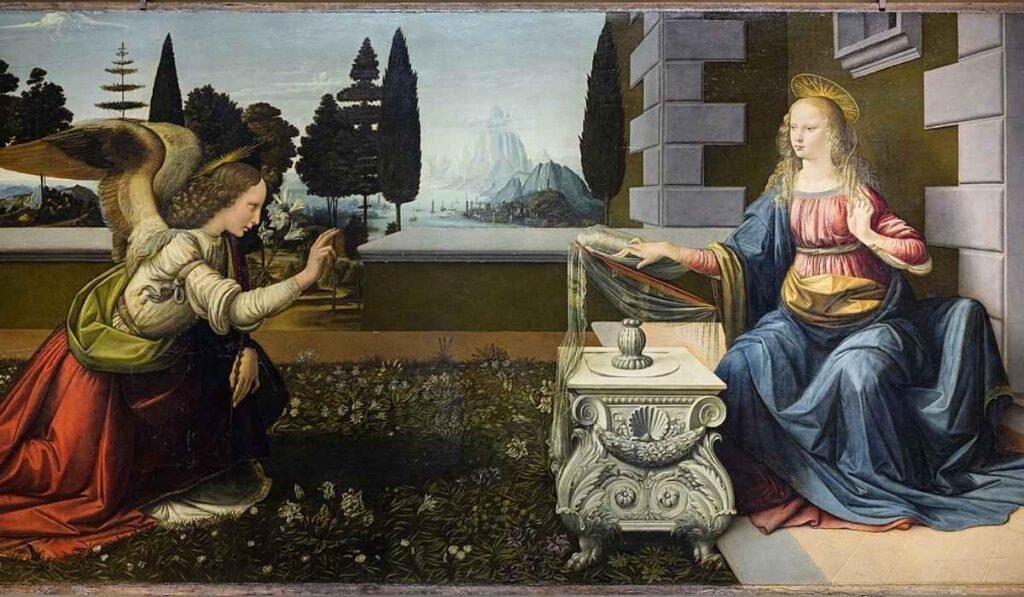
Entering the bustling Florentine workshop of Andrea del Verrocchio marked a crucial turning point in the artistic journey of Leonardo Da Vinci. During this intensive training period, he mastered various techniques spanning metalwork, chemistry, drafting, painting, and sculptural modeling under strict professional guidance. Collaborating with established masters allowed him to refine his brushwork and develop a sophisticated understanding of light, shadow, and three-dimensional perspective. His exceptional contributions to collaborative workshop projects frequently astonished older colleagues and highlighted his rapidly maturing talent. This rigorous environment transformed an ambitious provincial youth into a highly skilled practitioner ready to claim his own independent commissions.
Joining The Prestigious Guild Of Saint Luke
Achieving formal recognition as an independent master artist, Leonardo Da Vinci successfully joined the esteemed Guild of Saint Luke in Florence. This milestone granted him the legal status to accept major public and private commissions, operate his own dedicated studio space, and train junior apprentices. Membership within this professional collective placed him in close daily contact with other leading creatives, fostering a vibrant exchange of stylistic ideas and techniques. He began experimenting with complex narrative compositions that broke away from rigid medieval traditions in favor of greater emotional depth and realism. Establishing his own professional identity opened numerous doors to lucrative patronage opportunities across the Italian peninsula.
The Revolutionary Technique Of Sfumato
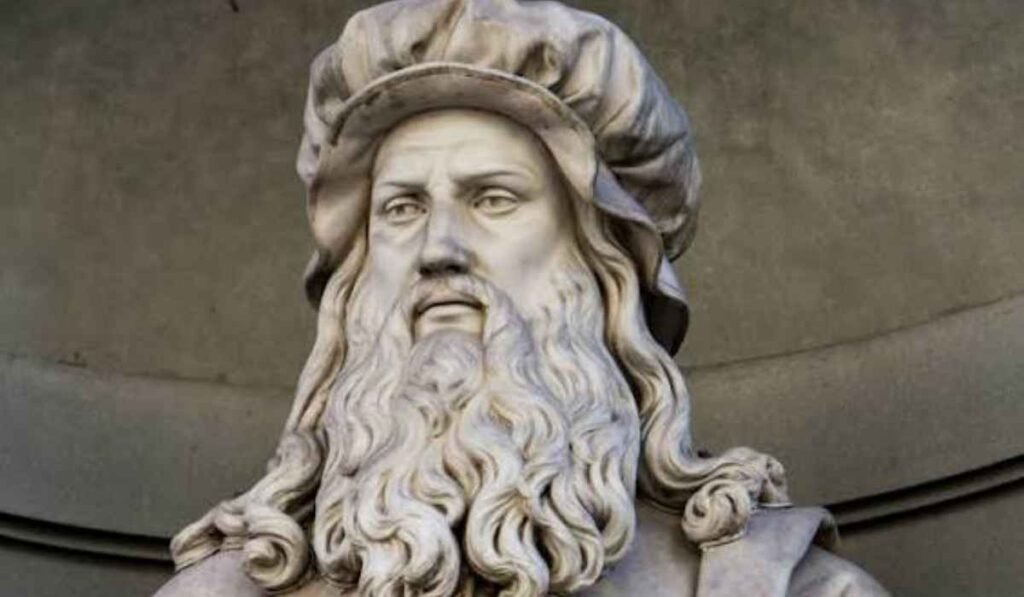
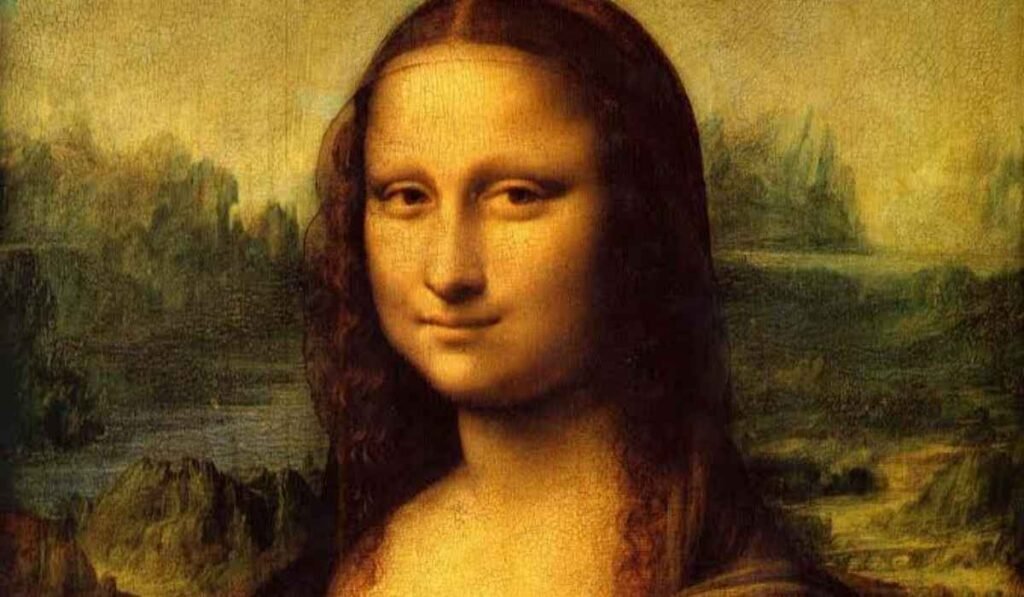
Mastering the subtle interplay of light and shadow led Leonardo Da Vinci to pioneer the revolutionary painting technique known widely as sfumato. This innovative method involved applying multiple translucent layers of oil glaze to eliminate harsh outlines, creating a hazy, realistic atmospheric effect. Faces painted using this technique appeared lifelike and dynamic, shifting subtly in expression depending on the viewing angle and lighting conditions. By softening facial contours around the eyes and mouth, he captured genuine human psychology rather than mere physical likeness. This signature stylistic advancement became a defining hallmark of High Renaissance painting and heavily influenced generations of subsequent European artists.
Creation Of The Iconic Mona Lisa
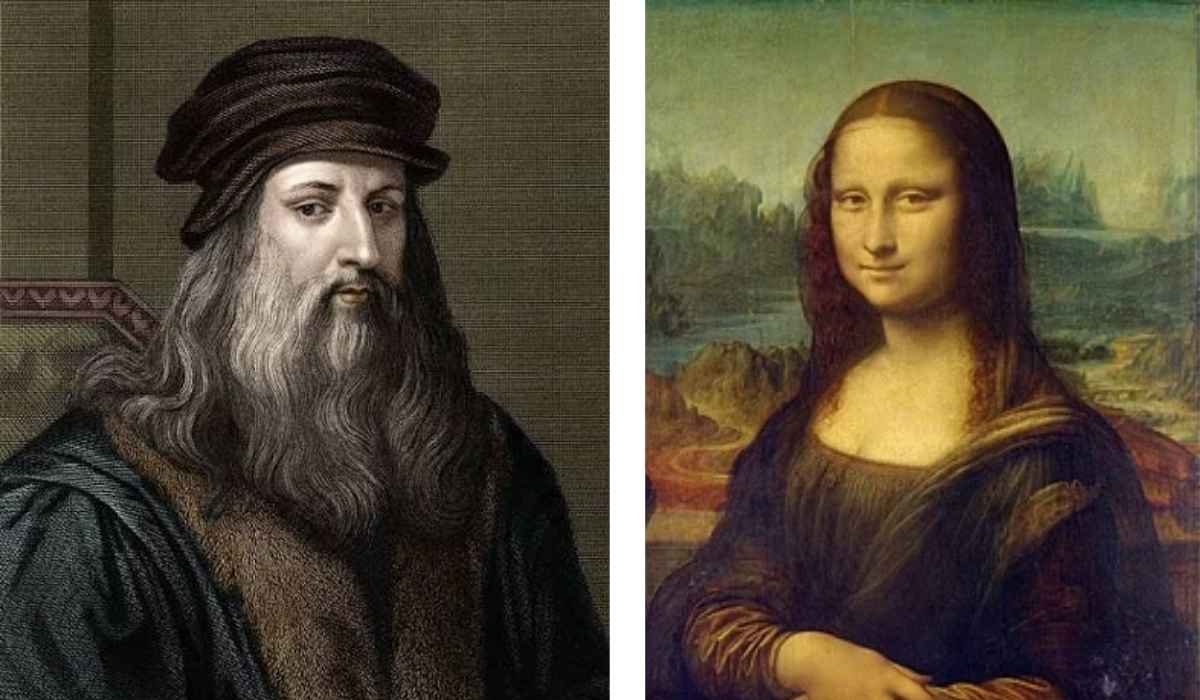
Widely celebrated as the most famous painting in global history, the Mona Lisa stands as a supreme triumph for Leonardo Da Vinci. This enigmatic portrait features a sitter with an ambiguous expression, set against an expansive, misty background rendered through expert atmospheric perspective. The meticulous attention to fabric textures, complex hand positioning, and soft facial modeling showcases his absolute command over oil painting mediums. Scholars and art lovers continue to debate the exact identity of the model and analyze the psychological depth conveyed through her subtle smile. This extraordinary cultural treasure remains a powerful magnet for millions of visitors at the Louvre Museum in Paris.
Painting The Monumental Last Supper
Executing the monumental mural known as The Last Supper secured permanent international acclaim for Leonardo Da Vinci within sacred art history. Located on the dining hall wall of the Convent of Santa Maria delle Grazie in Milan, this dramatic scene captures the exact moment Christ announces his impending betrayal. His brilliant compositional layout organizes the twelve disciples into distinct emotional groups, utilizing linear perspective to draw the viewer’s eye directly toward the central figure. Although experimental mixed media techniques led to premature flaking and conservation challenges over the centuries, the sheer dramatic power of the design remains entirely undiminished. Restorers have worked tirelessly across modern decades to preserve every possible detail of this fragile masterpiece.
Scientific Explorations And Anatomical Studies
Unlocking the inner workings of the human body became a consuming passion for Leonardo Da Vinci through meticulous dissection and observation. Working closely with medical professionals, he produced hundreds of detailed anatomical drawings documenting muscles, skeletal structures, and cardiovascular systems with unprecedented accuracy. These scientific investigations extended far beyond medicine into botany, hydrodynamics, geology, and optics, driven by an insatiable desire to understand universal physical laws. Because he rarely published these revolutionary findings during his lifetime, many of his profound scientific insights remained hidden inside personal notebooks for centuries after his passing. His empirical approach anticipated modern scientific methodology long before the formal Enlightenment era.
Innovative Engineering And Futuristic Inventions
Conceptualizing advanced technological devices far ahead of his era defined the inventive genius of Leonardo Da Vinci across multiple military and civil domains. His surviving codices contain detailed blueprints for armored vehicles, flying machines, hydraulic pumps, heavy artillery, and complex bridge designs. While many of these imaginative contraptions could not be built using fifteenth-century materials and power sources, they demonstrated a profound grasp of mechanical leverage and physics. He viewed engineering as a practical extension of his deep scientific study of natural forces, constantly seeking ways to improve human capability. Modern engineers have successfully reconstructed several of these visionary machine concepts, proving the fundamental accuracy of his theoretical sketches.
Life At The Sforza Court In Milan
Accepting a prestigious position at the ducal court in Milan allowed Leonardo Da Vinci to expand his creative output across diverse professional disciplines. Serving Duke Ludovico Sforza, he functioned simultaneously as a court painter, master pageantry designer, and military engineering advisor. This seventeen-year residency yielded some of his most ambitious artistic projects, including plans for a colossal bronze equestrian statue that unfortunately remained unfinished due to encroaching wartime conflicts. The sophisticated Milanese court provided him with access to extensive libraries and intellectual circles that significantly enriched his ongoing research. This productive period established his reputation as a true universal genius capable of solving complex practical problems for rulers.
Artistic Rivalry And The Battle Of Anghiari
Engaging in high-profile artistic competitions pushed Leonardo Da Vinci to explore dynamic motion and intense human emotion in large-scale wall compositions. Commissioned to decorate the grand council hall in Florence, he began designing the massive Battle of Anghiari mural directly opposite a competing work by his younger rival, Michelangelo. His design focused on the frenzied fury of cavalry combat, capturing twisted facial expressions and struggling horses with dramatic intensity. Unfortunately, experimental application methods caused the pigments to degrade rapidly while he worked, leaving the ambitious project ultimately incomplete. Despite the physical loss of the main wall painting, surviving preliminary sketches offer compelling proof of his mastery over complex kinetic action.
Contributions To Cartography And Town Planning
Applying his exceptional drafting skills to geography, Leonardo Da Vinci created remarkably accurate maps and innovative urban planning proposals. His aerial perspective map of the Imola region utilized advanced surveying techniques to provide a bird’s-eye view that astonished contemporary military strategists. During outbreaks of urban plague in Italy, he conceptualized multi-tiered sanitation cities featuring wide canals and separated pedestrian levels to improve public health and hygiene. These forward-thinking civic designs demonstrated his holistic approach to solving complex societal problems through systematic organization and environmental control. His cartographic works bridged the gap between artistic representation and precise scientific measurement.
Botanical Observations And Plant Morphology
Observing the intricate patterns of plant growth provided endless inspiration for the scientific notebooks compiled by Leonardo Da Vinci. He carefully studied phyllotaxy, investigating how leaves arrange themselves along stems to maximize sunlight exposure and rainwater collection. His botanical illustrations combined artistic grace with strict scientific accuracy, detailing root systems, seed pods, and floral anatomy with microscopic precision. These detailed studies frequently influenced the floral elements integrated into the backgrounds of his major portrait paintings. By treating botany as a structured science governed by mathematical geometry, he deepened humanity’s understanding of organic natural growth.
Studies In Optics And The Nature Of Light
Investigating the behavior of illumination and shadow occupied a central place within the visual theories of Leonardo Da Vinci. He conducted systematic experiments regarding how light reflects off curved surfaces, passes through transparent mediums, and creates distinct visual perspectives at varying distances. These optical principles directly informed his unique ability to render three-dimensional volume on flat two-dimensional panels without relying on harsh borders. His notes outline early theories regarding the structure of the human eye and the mechanics of vision itself, anticipating later discoveries in physics. Through rigorous observation of light, he transformed painting into an exact visual science.
The Influence Of Humanism On His Philosophy
Embracing the intellectual currents of Renaissance humanism deeply shaped the worldview and creative philosophy of Leonardo Da Vinci. He believed that direct experience and empirical observation were the ultimate sources of truth, moving away from strict medieval reliance on dogmatic authority. This humanistic perspective placed supreme value on human potential, rational inquiry, and the harmonious balance between art and science. His notebooks reveal a thinker who viewed the universe as a grand, interconnected mechanism waiting to be understood through dedicated study. This philosophy empowered him to explore diverse fields fearlessly and establish a new standard for intellectual achievement.
Musical Talents And Performance At Court
Beyond his immense visual and scientific achievements, Leonardo Da Vinci possessed notable skill as a musician and improvisational performer. Historical accounts describe him playing a silver lyre shaped like a horse’s skull with extraordinary grace, captivating audiences within aristocratic Italian court circles. He even designed innovative musical instruments, experimenting with new acoustic properties and mechanical playing mechanisms to produce unique auditory experiences. This deep appreciation for music complemented his broader understanding of harmonic proportions in mathematics and visual arts. His multifaceted talents reinforced his status as a complete Renaissance gentleman.
Final Years In France Under Royal Patronage
Spending his final active years under the generous protection of King Francis I provided Leonardo Da Vinci with a peaceful sanctuary in France. Relocating to the Château du Clos Lucé near Amboise, he enjoyed royal status as premier painter, engineer, and architect to the French monarch. During this serene twilight period, he organized his vast collection of personal notebooks, continued scientific reflections, and advised on royal architectural projects. The King deeply valued his brilliant conversation and intellect, visiting him frequently to discuss philosophy, art, and science. This royal patronage ensured comfort and security during his declining health.
Passing And Enduring Legacy In Amboise
Concluding a remarkably productive existence, Leonardo Da Vinci passed away peacefully on May 2, 1519, at his residence in France. His death marked the close of an extraordinary era, yet his immense cultural footprint continued to expand across subsequent centuries. He left behind a collection of revolutionary masterworks and cryptic notebooks that redefined human capability in both art and science. Museums and research institutions worldwide continue studying his surviving folios to unlock new insights into his brilliant methodology. His enduring legacy remains an eternal symbol of human curiosity and creative excellence.
Modern Appreciation Of His Surviving Works
Preserving the scarce corpus of authenticated paintings by Leonardo Da Vinci remains a supreme priority for international conservation experts today. With fewer than twenty-five major paintings definitively attributed to his hand, each surviving masterpiece receives rigorous scientific monitoring and protection. Advanced digital imaging technologies allow modern researchers to peer beneath paint layers, revealing preliminary sketches and compositional changes hidden for centuries. Exhibitions dedicated to his genius consistently draw record-breaking crowds of admirers eager to witness his legendary brushwork firsthand. Public fascination with his unique mind shows no signs of diminishing in contemporary culture.
The Eternal Epitome Of The Renaissance Man
Representing the absolute peak of human intellectual ambition, Leonardo Da Vinci remains history’s most celebrated universal genius. His seamless integration of artistic beauty with empirical scientific inquiry established a timeless standard for interdisciplinary excellence. Whether examining his iconic portraits, structural engineering concepts, or anatomical studies, his work continues to inspire modern innovators across every conceivable field. He proved that boundless curiosity combined with disciplined observation can transcend the limitations of any single era. His extraordinary spirit lives on through the permanent cultural treasures he gifted to humanity.
- When was Leonardo Da Vinci born?
- He was born on April 15, 1452, in the Tuscan town of Vinci.
- What are his most famous paintings?
- His most famous paintings include the Mona Lisa and The Last Supper.
- Who was his primary master during apprenticeship?
- He trained under the renowned Florentine artist Andrea del Verrocchio.
- What painting technique did he pioneer?
- He pioneered sfumato, a method of softening transitions between colors and tones.
- Where did he spend his final years?
- He spent his final years in France under the patronage of King Francis I.