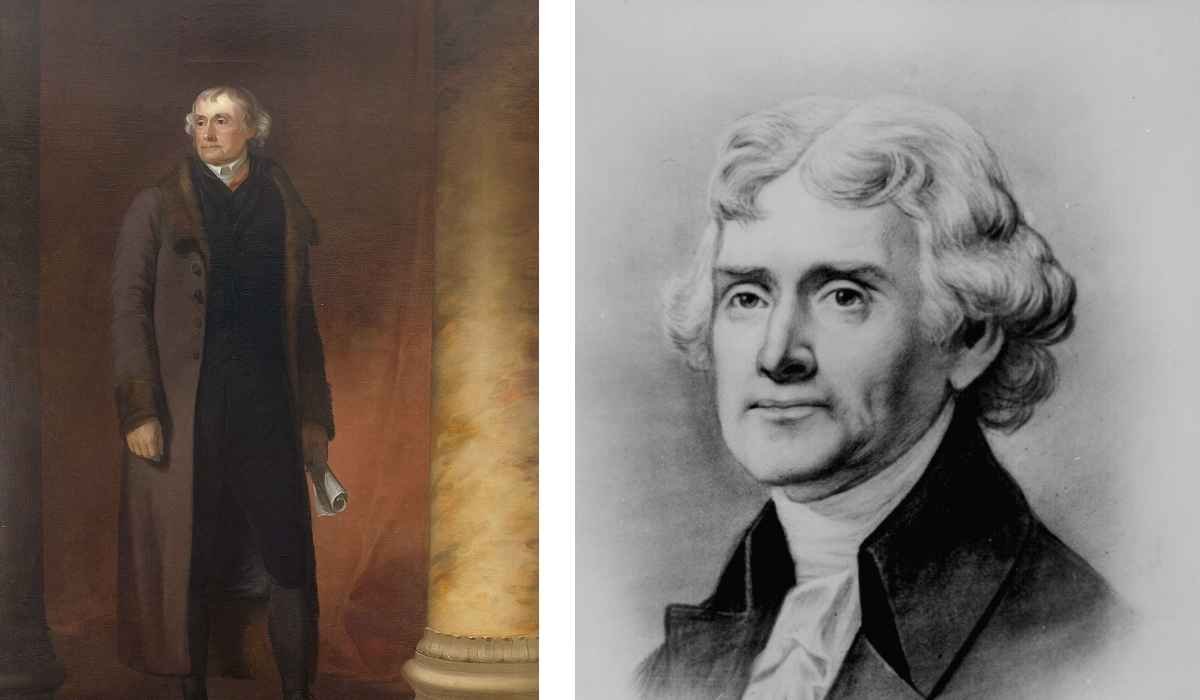
Thomas Jefferson stands as one of the most remarkable and influential Founding Fathers in the history of the United States, shaping the early republic through his brilliant intellect, political philosophy, and visionary leadership. Born in Virginia in 1743, he grew up in a colonial society on the verge of profound transformation, absorbing Enlightenment ideals that would eventually guide his pen when drafting the Declaration of Independence.
As a diplomat, governor, secretary of state, vice president, and ultimately the third president of the United States, his fingerprints remain permanently stamped upon the foundational architecture of American democracy. Beyond his immense political contributions, he was a polymath deeply interested in architecture, agriculture, education, and science, leaving behind a complex legacy that continues to be studied, debated, and admired worldwide across generations.
Quick Bio Overview
| Attribute | Detail |
| Born | April 13, 1743, Shadwell, Virginia |
| Died | July 4, 1826, Monticello, Virginia |
| Profession | Statesman, Lawyer, Planter, Architect |
| Political Party | Democratic-Republican |
| Spouse | Martha Wayles Skelton Jefferson |
| Key Role | Principal Author of the Declaration of Independence |
Early Life and Childhood Foundations in Virginia
Growing up in the rugged foothills of the Blue Ridge Mountains, Thomas Jefferson spent his formative years exploring the natural world and developing an insatiable appetite for reading. His father, a successful surveyor and planter, ensured that young Thomas received a rigorous classical education, studying ancient languages like Greek and Latin alongside mathematics. These early educational disciplines instilled a lifelong commitment to learning and inquiry that defined his entire public career. Tragically losing his father at a young age left him responsible for managing large tracts of land, forcing him to mature quickly while cementing his deep emotional ties to the agrarian landscape of his home state.
Higher Education at the College of William and Mary
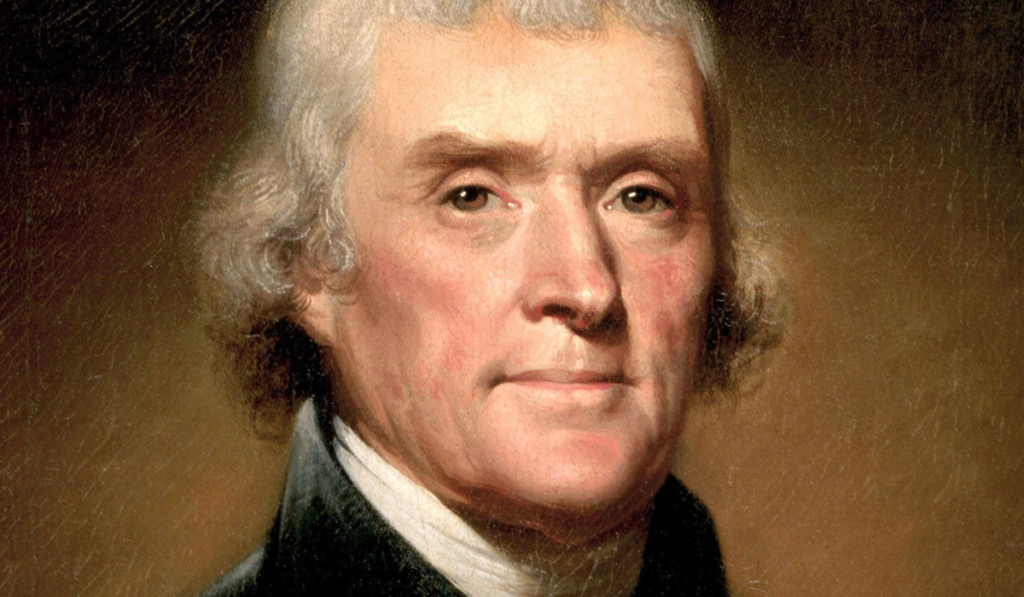
Entering the College of William and Mary at age seventeen exposed Thomas Jefferson to brilliant mentors who completely transformed his intellectual trajectory. Under the guidance of professors like William Small and legal scholar George Wythe, he immersed himself in the writings of European Enlightenment thinkers, absorbing concepts of natural rights and empiricism. He famously committed himself to studying up to fifteen hours a day, balancing his rigorous academic pursuits with a growing fascination for philosophy, science, and jurisprudence. This vibrant academic environment in Williamsburg provided the intellectual foundation he later utilized when crafting revolutionary political documents and shaping public policy for the nascent American nation.
Legal Career and Admission to the Virginia Bar
Transitioning from formal studies to professional practice, Thomas Jefferson read law under George Wythe for five years before gaining admission to the Virginia bar in 1767. Quickly establishing a reputable legal practice, he represented numerous clients in colonial courts, gaining profound insights into British common law and property rights. Although he possessed a quiet demeanor and disliked public speaking in courtroom settings, his precise legal writing and meticulous preparation earned him widespread professional respect. This extensive courtroom experience sharpened his analytical capabilities, enabling him to articulate complex constitutional arguments that challenged arbitrary royal authority during the mounting tensions leading up to the American Revolution.
Marriage to Martha Wayles Skelton and Monticello
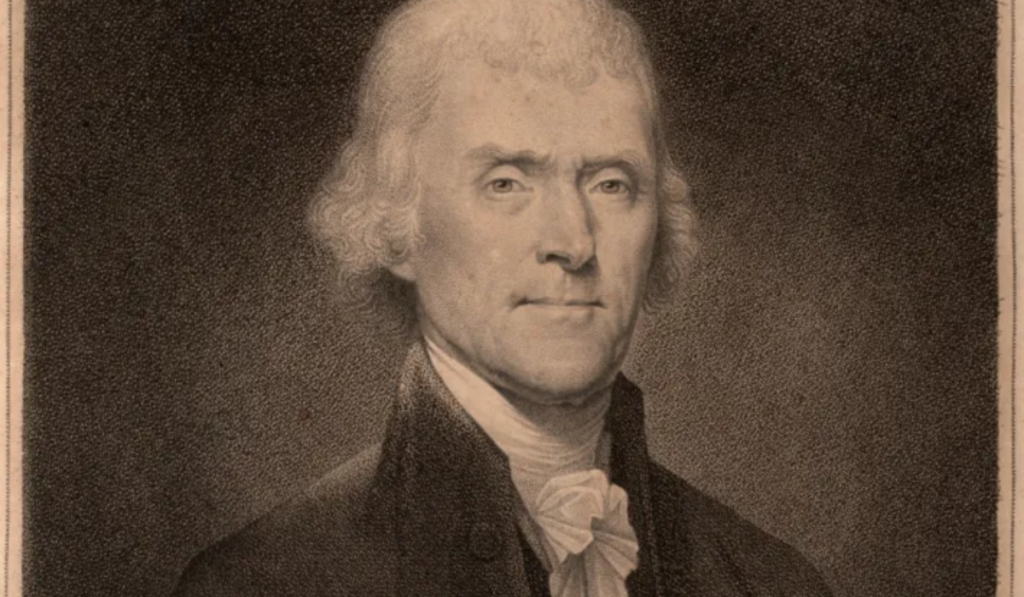
In January 1772, Thomas Jefferson married Martha Wayles Skelton, a gracious and cultured young widow who shared his deep appreciation for literature, music, and domestic tranquility. Their marriage significantly expanded his landholdings and enslaved workforce, anchoring his personal life around the construction of his beloved mountaintop estate, Monticello. Though their marriage was filled with intellectual partnership and mutual affection, it was also marked by personal tragedy, as multiple children passed away in infancy and Martha’s health steadily deteriorated. Her untimely death in 1782 devastated him profoundly, prompting a grieving Thomas Jefferson to immerse himself back into intensive political service to escape his profound personal sorrow.
Revolutionary Pamphleteer and Early Political Activism
Emerging onto the broader political stage during the early 1770s, Thomas Jefferson quickly gained renown through his sharp polemical writing against parliamentary overreach. His influential 1774 publication, A Summary View of the Rights of British America, boldly asserted that the colonies owed allegiance only to the Crown rather than the British Parliament. This widely circulated pamphlet catapulted him into the upper echelon of revolutionary leadership, establishing his reputation as a master theoretician of colonial grievances. As a member of the Virginia House of Burgesses, he worked closely with other radical patriots to organize resistance networks, laying the essential groundwork for unified inter-colonial defiance against imperial policies.
Drafting the Immortal Declaration of Independence
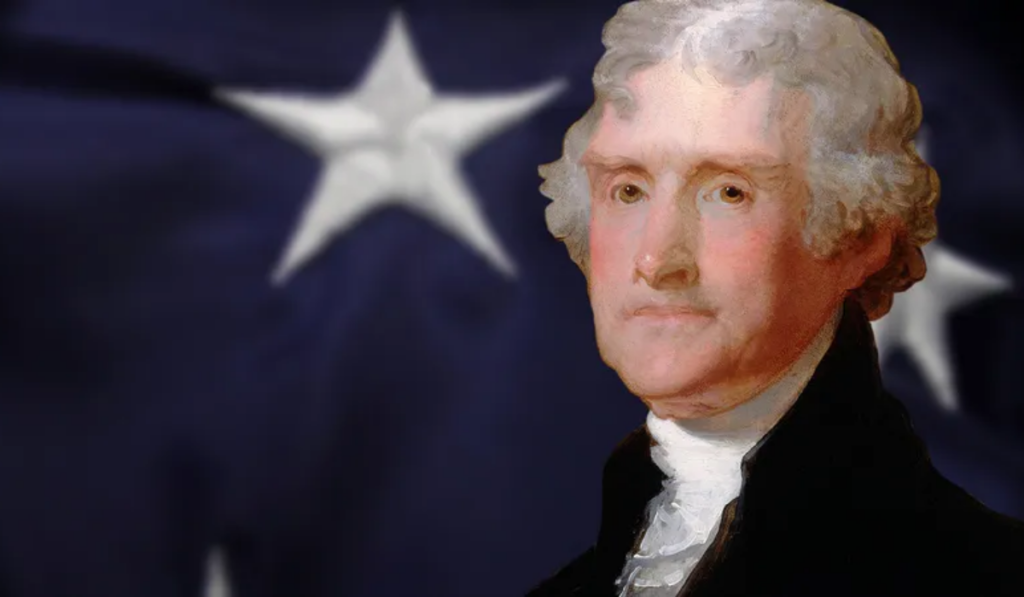
Appointed to the prestigious Continental Congress in Philadelphia, Thomas Jefferson was selected alongside Benjamin Franklin and John Adams to draft a formal justification for separation from Britain. Drawing upon Enlightenment principles regarding human equality and natural rights, Thomas Jefferson composed a soaring preamble that transformed a standard political secession into a universal declaration of human liberty. Congress debated and edited his text over several days before officially adopting the document on July 4, 1776, forever etching his name into world history. The powerful ideals embedded within this revolutionary text provided an inspirational blueprint for freedom-seeking movements across the globe for centuries to come.
Wartime Governor of Virginia and Crisis Management
Returning to his home state, Thomas Jefferson served as the second wartime governor of Virginia from 1779 to 1781 during a period of immense military peril. Facing invading British forces led by Benedict Arnold and Lord Cornwallis, his administration struggled with depleted military supplies, a lack of funding, and inadequate militia responses. When British troops eventually raided Monticello and forced the state government to flee into the mountains, Thomas Jefferson faced harsh criticism from political rivals for his handling of the defense crisis. Though this traumatic episode temporarily damaged his political standing, it ultimately prompted him to reflect deeply on executive power during times of national emergency.
Diplomatic Service in Paris and European Enlightenment
Appointed as a minister plenipotentiary to France in 1785, Thomas Jefferson spent five influential years representing American interests amidst the intellectual salons of pre-revolutionary Paris. Immersing himself in French culture, architecture, and cuisine, he cultivated close friendships with prominent European philosophers while actively negotiating vital trade agreements. He personally witnessed the early rumblings of the French Revolution, initially viewing it with sympathetic optimism as an extension of American republican ideals. This European sojourn deeply refined his sophisticated aesthetic tastes, influencing everything from his architectural designs at Monticello to his extensive personal book collection that later formed the Library of Congress.
Nation’s First Secretary of State Under George Washington
Returning to the United States in 1790, Thomas Jefferson accepted President George Washington’s appointment to serve as the nation’s inaugural secretary of state. In this executive capacity, he managed complex foreign affairs while navigating intense diplomatic friction between warring European empires, particularly Great Britain and revolutionary France. Concurrently, he engaged in fierce cabinet battles against Treasury Secretary Alexander Hamilton over the financial structure and constitutional scope of the federal government. While Hamilton championed a powerful centralized state and commercial economy, Thomas Jefferson stubbornly defended states’ rights and an agrarian republic, laying the ideological fault lines for America’s first official political parties.
Founding the Democratic-Republican Political Party
Deeply alarmed by what he perceived as monarchical tendencies within the Federalist administration, Thomas Jefferson allied with James Madison to organize the Democratic-Republican Party. This new political coalition sought to curb expansive federal powers, reduce the national debt, and champion strict adherence to the United States Constitution. Traveling across state lines and rallying local newspaper editors, Thomas Jefferson constructed a powerful grassroots political machine that successfully mobilized southern planters and northern farmers alike. This historic partisan mobilization forever transformed American politics, establishing an organized opposition framework that ensured competitive democratic elections and peaceful transfers of presidential power for future generations.
Vice Presidency and Constitutional Friction with Adams
Following a closely contested presidential election in 1796, Thomas Jefferson finished second in electoral votes and assumed the office of vice president under his rival John Adams. Presiding over the United States Senate, he utilized his extensive parliamentary knowledge to draft a comprehensive manual on legislative procedure that remains foundational to this day. However, policy divisions quickly strained their relationship, particularly when the Federalist-controlled Congress passed the draconian Alien and Sedition Acts of 1798. In response, a defiant Thomas Jefferson secretly authored the Kentucky Resolutions, asserting the revolutionary doctrine of nullification and arguing that states could declare unconstitutional federal laws null and void.
Historic Election of 1800 and the Peaceful Transfer of Power
Winning the contentious presidential election of 1800 over John Adams, Thomas Jefferson celebrated what he famously termed the “Revolution of 1800,” marking America’s first peaceful transfer of executive power between rival parties. Delivered inside the newly constructed capital of Washington, D.C., his inaugural address offered a conciliatory vision of national unity, famously declaring that “we are all republicans, we are all federalists”. Emphasizing limited government, decentralized authority, and individual liberty, his administration immediately set about dismantling Federalist excess by cutting taxes, reducing the federal budget, and shrinking the standing military. This historic political triumph validated the durability of the American constitutional experiment on the global stage.
The Monumental Louisiana Purchase of 1803
Undoubtedly the crowning diplomatic achievement of his presidency occurred in 1803, when Thomas Jefferson authorized the acquisition of the vast Louisiana Territory from Napoleon Bonaparte. Doubling the geographic size of the United States overnight for fifteen million dollars, this monumental land deal secured permanent control over the vital Mississippi River trade corridor. Although purchasing the territory required stretching his own strict constructionist interpretation of the Constitution, Thomas Jefferson recognized the generational opportunity to secure an agrarian empire for future citizens. This bold real estate transaction fundamentally transformed the United States into a continental powerhouse destined for immense geopolitical expansion.
Commissioning the Lewis and Clark Expedition
Eager to explore the newly acquired western territories, Thomas Jefferson secretly petitioned Congress to fund a transcontinental scientific expedition led by Meriwether Lewis and William Clark. Instructed to map river routes, document unfamiliar flora and fauna, and establish diplomatic relations with Native American tribes, the Corps of Discovery successfully reached the Pacific Ocean. Thomas Jefferson meticulously reviewed their collected specimens, maps, and journals upon their return to Washington, demonstrating his profound personal dedication to scientific discovery and geographical mapping. This landmark expedition catalyzed American westward migration, opening new frontiers for settlement, commerce, and scientific exploration across uncharted wilderness.
Foreign Policy Trials and the Embargo Act of 1807
During his second presidential term, Thomas Jefferson faced severe foreign policy crises as the Napoleonic Wars raged across Europe, threatening American maritime neutrality. Both Great Britain and France routinely seized American merchant ships and impressed sailors into foreign service, testing the peaceful resolve of the young republic. Seeking to avoid open warfare, Thomas Jefferson pushed the Embargo Act of 1807 through Congress, completely halting all international trade with foreign nations. While intended to coerce European powers into respecting neutral rights, the embargo severely crippled the domestic economy, particularly in New England, and remains one of the most heavily criticized policies of his administration.
Retirement Years at Monticello and Architectural Pursuits
Retiring from public office in 1809, Thomas Jefferson retreated to Monticello to spend his final decades managing his plantation, hosting distinguished guests, and corresponding with intellectual peers. He spent countless hours redesigning and expanding his neoclassical mountaintop mansion, experimenting with innovative agricultural techniques, and organizing his massive personal library. Despite his idyllic retirement lifestyle, his later years were increasingly plagued by mounting personal debt, failing agricultural crop yields, and financial obligations that threatened to bankrupt his estate. Nevertheless, his vibrant intellect remained sharp, and he continued writing thoughtful letters reflecting on liberty, governance, and the future trajectory of the American republic.
Founding the University of Virginia and Educational Vision
Devoting his final years to educational reform, Thomas Jefferson conceptualized, designed, and successfully established the University of Virginia, which opened its doors in 1825. Rejecting traditional sectarian college structures, he envisioned an innovative secular institution centered around an academic “academical village” that fostered independent student inquiry. He personally designed the striking Rotunda and surrounding pavilions, hired international professors, and curated the initial academic curriculum spanning the sciences and humanities. This visionary educational project reflected his lifelong belief that an educated citizenry represented the ultimate safeguard for maintaining a free, vibrant, and self-governing democratic society.
Complex Legacy Regarding Slavery and Race
No discussion of Thomas Jefferson is complete without confronting the profound historical contradiction between his eloquent defense of human liberty and his status as a lifelong slaveholder. Throughout his lifetime, he owned hundreds of enslaved individuals at Monticello, struggling internally with the institution of slavery while simultaneously benefiting economically from forced labor. Modern historical consensus, supported by extensive documentary and genetic evidence, also confirms that he fathered several children with Sally Hemings, an enslaved woman at his plantation. This painful duality highlights the complex moral compromises woven into the founding fabric of the United States, prompting continuous historical re-examination of his character and societal impact.
Final Hours and Historic Death on the Fourth of July
Thomas Jefferson passed away on July 4, 1826, coinciding precisely with the fiftieth golden anniversary of the adoption of the Declaration of Independence that he authored. Remarkably, his old political rival and dear friend John Adams died on the exact same historic day in Massachusetts, a poignant coincidence that deeply moved a mourning nation. Leaving behind an intricate web of personal debts, his beloved Monticello estate and remaining enslaved people were eventually sold off to settle creditors. Despite the personal trials and moral contradictions of his later life, Thomas Jefferson remains an immortal figure in American history, celebrated universally as an architect of freedom and democratic governance.
- What document is Thomas Jefferson most famous for writing?
- Thomas Jefferson is most famous for writing the Declaration of Independence.
- When did Thomas Jefferson serve as president?
- He served as the third president of the United States from 1801 to 1809.
- What major land acquisition occurred during his presidency?
- The Louisiana Purchase of 1803 doubled the geographic size of the United States.
- Which university did Thomas Jefferson found in his later years?
- He founded and designed the University of Virginia.
- On what date did Thomas Jefferson pass away?
- He passed away on July 4, 1826, exactly fifty years after the Declaration of Independence was adopted.